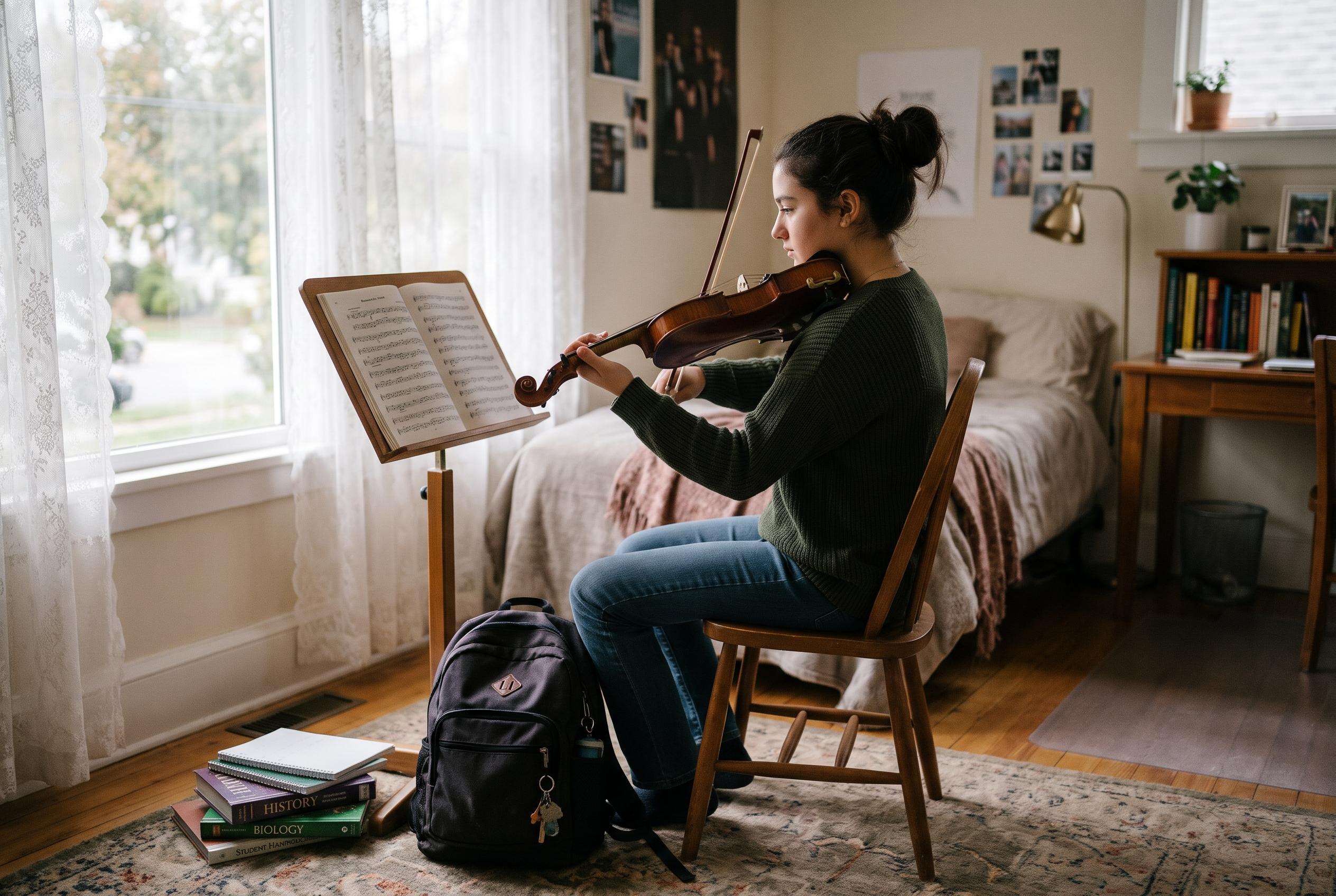

A realistic routine built around focused practice, rest and changing academic demands can help young musicians make progress without sacrificing schoolwork or wellbeing.
For many pupils, music is not a hobby that sits neatly beside school; it is another serious commitment that competes for time, attention and energy. The challenge is not to abandon either pursuit, but to build a routine that allows both to develop. Advice from Octaves Online frames that balance as a matter of planning, self-discipline and realistic expectations, rather than perfection.
Music education can support academic growth as well as artistic development. The University of Maryland has written that music courses strengthen problem-solving, analytical thinking and communication, while research discussed in Butler University’s health journal suggests music may also reduce anxiety and improve concentration. Taken together, those findings help explain why many educators encourage students to keep music in their lives even during demanding school terms.
The most effective approach is often a practical timetable. The Musicians Institute advises students to identify fixed commitments first, then allocate the remaining hours to homework, practice and rest. That approach matters because a schedule that ignores sleep, family time and recovery is unlikely to last. A workable routine should leave room for ordinary life as well as lessons, rehearsals and revision.
Short, focused practice sessions can be more useful than long, unfocused ones. Rather than trying to cover everything in one sitting, students can concentrate on one technique, one passage or one musical problem at a time. The Council of Education says this kind of prioritisation, along with weekend practice and the avoidance of procrastination, can help students make steady progress without letting schoolwork slide.
During exam periods or when major assignments pile up, music does not have to disappear altogether. Students can scale back practice temporarily instead of stopping entirely, preserving familiarity with pieces and technique while making room for study. Several of the related articles stress the value of clear priorities, achievable goals and open communication with teachers and professors, particularly when pressures rise. That same idea applies at school and at home: when adults know what a student is balancing, they are better able to support the plan.
Parents and music teachers also have a central role. The Musicians Institute and the Village Youth Conservatory both emphasise realistic scheduling, self-care and honest communication, while the broader education literature suggests that music can support focus rather than compete with it. For children and teenagers, the lesson is simple: progress in music and school rarely moves at the same pace every week. What matters most is consistency, flexibility and a routine that helps both commitments feel sustainable.
Disclaimer: This content is for informational purposes only and is not intended to be a substitute for professional medical judgment, advice, diagnosis, or treatment.