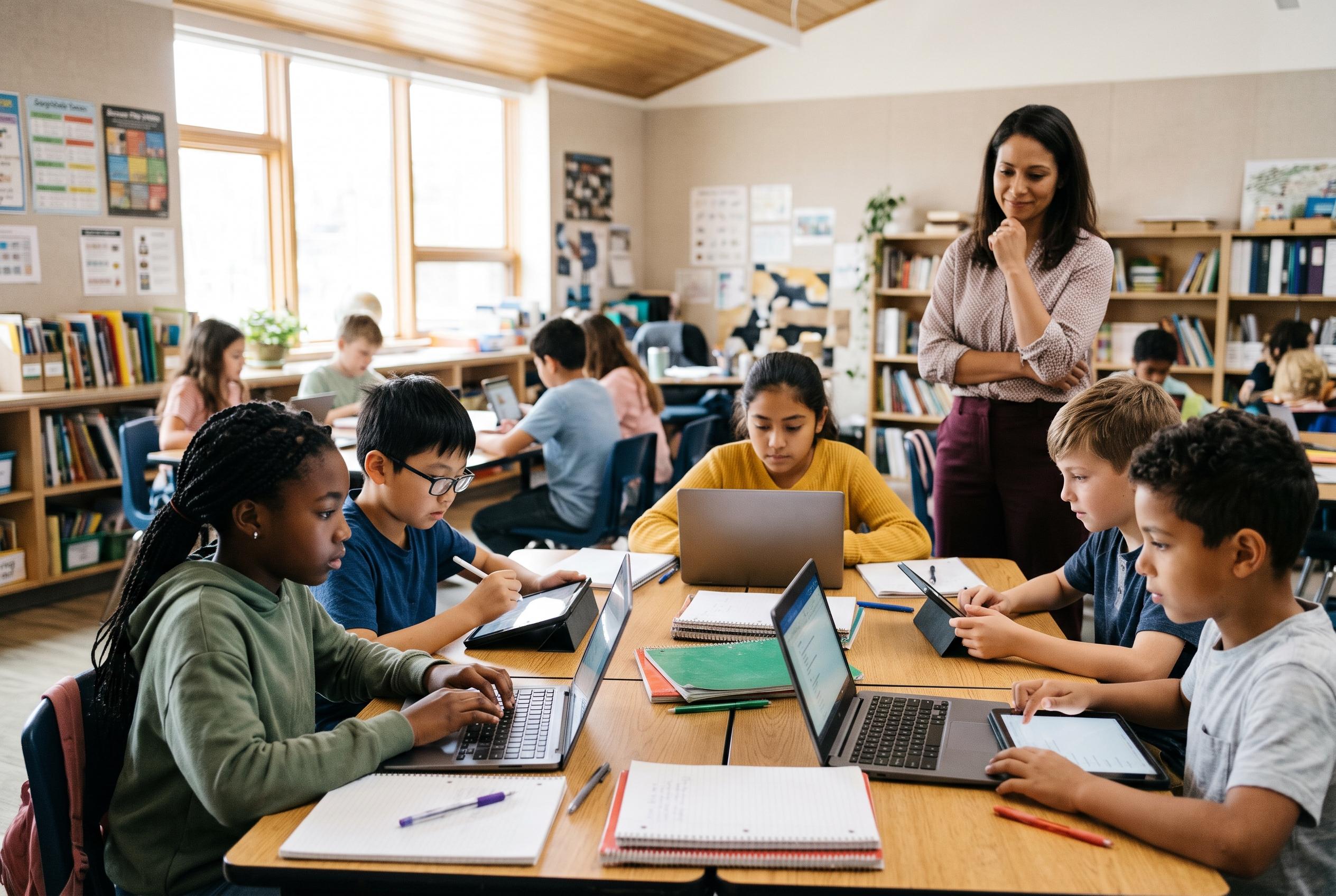

Millions of children are turning to AI for schoolwork and personal advice, prompting fresh concerns about learning, emotional reliance and the need for age-appropriate adult guidance.
Children are already using artificial intelligence at a far faster rate than adults, and the implications for schools, families and child development are only beginning to sink in. UNICEF says at least 20 million children aged 12 to 17 have used AI across ten countries, including Mexico, with about 13 million turning to it for help with schoolwork and more than 2 million asking it for advice on personal concerns. That shift matters because it means AI is no longer just a classroom convenience; it is becoming part of how young people learn, ask questions and seek reassurance.
The educational promise is real. AI can explain difficult ideas in different ways, adapt to a pupil’s level and provide quick feedback, which can be especially useful when children need extra support. But the OECD’s PISA 2025 findings suggest a more complicated picture: frequent use of AI for specific academic tasks is associated with weaker science performance, while students who use AI more generally, or who have had opportunities to build AI literacy at school, tend to perform more like their peers who do not use it. Andreas Schleicher, the OECD’s director for education and skills, has argued that learning depends on the effort of working through ideas, not simply consuming polished answers. That distinction is central: AI can support learning, but it can also short-circuit the struggle that helps knowledge stick.
The risks are not the same at every age. Research published in Pediatrics and cited by the article’s author warns that artificial intelligence has to be understood through a developmental lens, because the effects on a four-year-old, a ten-year-old and a teenager are very different. In early childhood, human interaction remains essential because young children are still learning the difference between people and representations. In adolescence, the stakes grow higher, since AI can start to function not just as a study aid but as an emotional sounding board. That raises concerns about privacy, misinformation and the danger that children may begin to treat a machine as a friend or caregiver rather than a tool.
The answer, however, is not to pretend AI can be kept out of childhood altogether. It is already embedded in daily life and will increasingly shape education, work and communication. The more realistic challenge is to decide which tools children should use, at what age, for what purpose and under what supervision. UNICEF’s figures, the OECD’s findings and newer paediatric research all point in the same direction: children need adults, not algorithms, to help them learn how to think critically, check evidence and handle uncertainty. Schools and families do not need to ban AI to protect children. They need to make sure it serves development rather than replacing it.
Disclaimer: This content is for informational purposes only and is not intended to be a substitute for professional medical judgment, advice, diagnosis, or treatment.