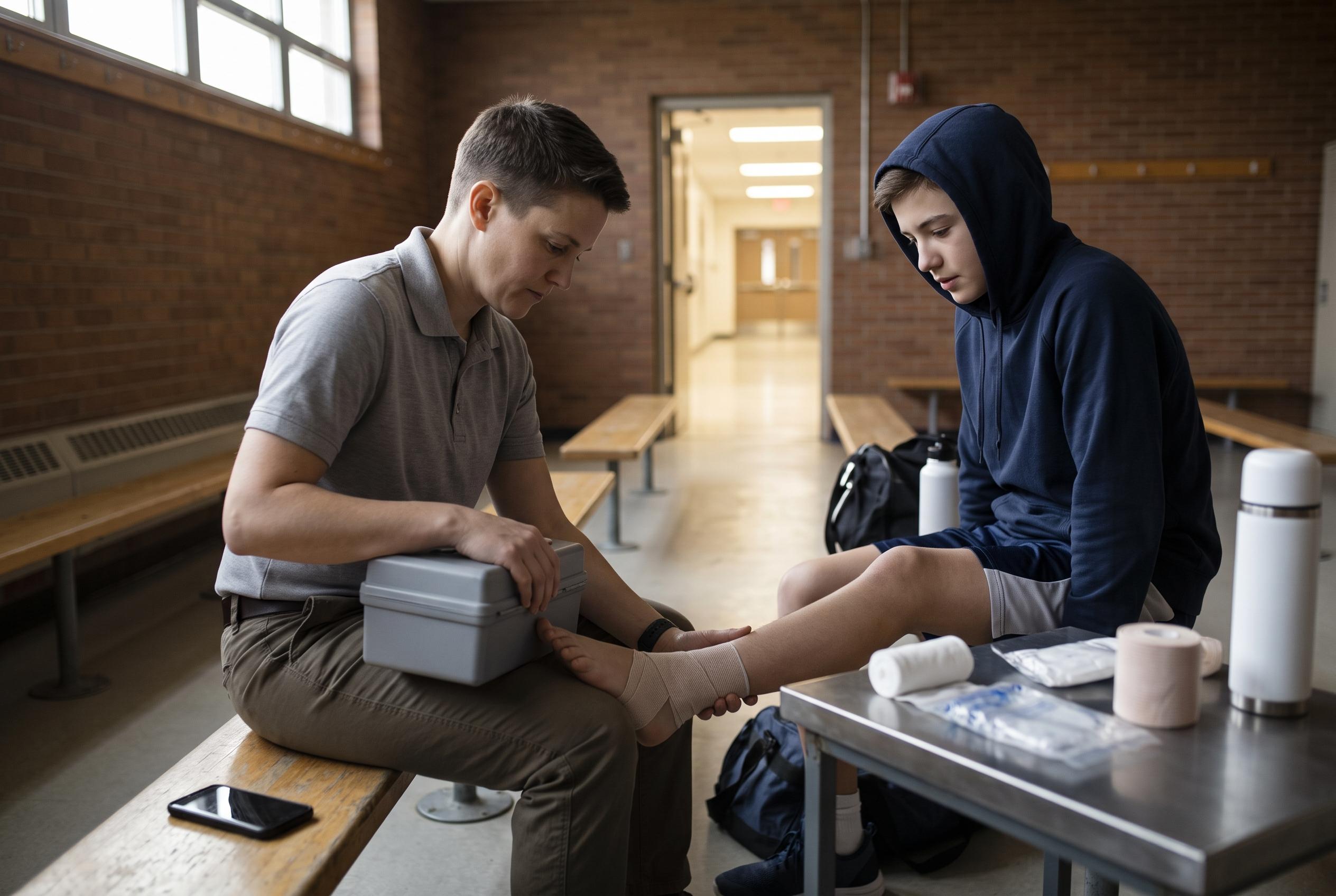

As North Dakota adopts more rigorous concussion regulations, gaps remain in rural areas, highlighting ongoing challenges in protecting young athletes from head injuries amid heightened scientific awareness.
In North Dakota, the old sports culture of shrugging off a head knock and carrying on is giving way to a stricter approach, but not evenly. Coaches, parents and medical staff say concussion awareness has improved markedly in recent years, yet gaps remain in rural communities and smaller schools where training, staffing and equipment can be limited. Andrea Watkins, a brain injury specialist with the North Dakota Brain Injury Network, said she still hears young athletes repeat warnings such as not to mention a concussion or risk being taken out of the game.
The change matters because the science has become harder to ignore. A study published at the end of August found that at least a quarter of NFL players who died between 2016 and 2021 had chronic traumatic encephalopathy, a degenerative brain disease linked to repeated head trauma, while signs of CTE appeared in more than 93% of the 338 donated brains examined. Although that condition is still rare in the general population, the findings have pushed brain injuries further into the public conversation, including among families of school-age athletes. North Dakota Health and Human Services said in a 2023 survey that more than one in five middle school students and more than one in six high school students reported a concussion in the previous year while taking part in sport or physical activity.
For Sarah Frauenberg, a family nurse practitioner in LaMoure who is certified in concussion evaluation, the danger is not just the initial blow. The real concern, she said, is returning too soon and suffering another hit before the brain has healed. Cassie Kramer, a nurse whose son sustained a serious concussion during football practice, said his school followed the testing and return-to-play protocol carefully, using balance and reaction assessments to decide when he could return. She said he was kept out longer when the results showed he had not yet reached baseline, and later sat out another injury as a precaution.
The state’s schools and sports bodies have built a clearer framework around those decisions. Justin Fletschock of the North Dakota High School Activities Association said state law requires schools to remove students from play immediately if a concussion is suspected, and that return is only allowed after clearance from a licensed clinician trained in concussion care. The law also requires coaches, athletic trainers and officials to complete concussion training every two years, while parents and students must review and sign information about the risks. Some teams are adding soft helmet covers in practice, and youth leagues are using size and weight limits to reduce dangerous collisions. The North Dakota Brain Injury Network says most traumatic brain injuries can be prevented, and it is holding a free online symposium on concussion, CTE prevention and treatment on Sept. 18.
Disclaimer: This content is for informational purposes only and is not intended to be a substitute for professional medical judgment, advice, diagnosis, or treatment.