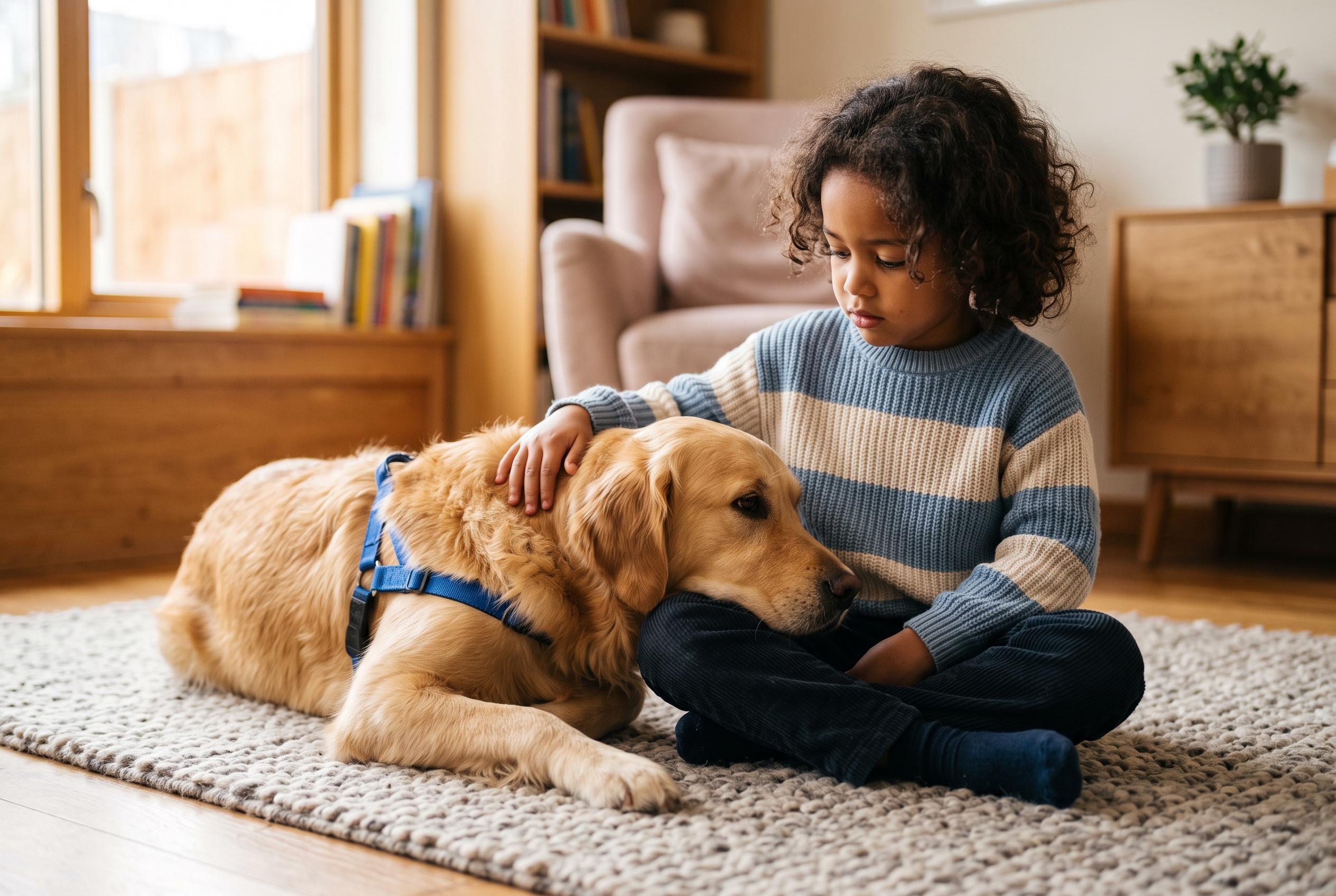

Emerging animal-assisted therapy provides a gentle, trust-building approach for children facing anxiety, trauma, and social challenges, with promising benefits and calls for further research.
Animal-assisted therapy is emerging as a gentle option for children who struggle to put painful feelings into words. For young people dealing with anxiety, bereavement, family upheaval, trauma or social strain, a calm interaction with a trained animal can make the first steps into therapy feel less daunting. Rather than relying immediately on conversation, the approach uses the animal’s presence to help children settle, engage and begin to build trust with the clinician.
The method is structured, not informal play. A licensed professional guides the session, and the animal has a specific role in the treatment plan. According to research published in a medical review on children and adolescents, animal-assisted therapy can help reduce anxiety, although the authors also said more extensive study is still needed to understand how and why it works over the long term. Other clinical sources say the animal can create a safer, less clinical atmosphere, making it easier for children to talk about feelings indirectly.
That indirect route can matter when children lack the vocabulary to describe fear, sadness or anger. Therapists may ask them to interpret an animal’s behaviour or body language, then connect those observations to the child’s own experience. In practice, this can support emotional awareness, self-control and coping skills. A study in the journal Children found that dog-assisted therapy in pre-school and primary school children was associated with reduced stress and greater relaxation, while hospital programmes for children have reported similar benefits in lowering anxiety and making difficult settings feel more familiar.
The appeal also lies in confidence-building. Simple, age-appropriate tasks such as giving a cue or helping with supervised care can give a child a small but meaningful sense of achievement. Psychology Today has noted that animal-assisted work with teenagers may also support social connection and reduce loneliness, suggesting the benefits are not limited to younger children. Even so, experts caution that results depend on the child’s needs, the therapist’s skill and the welfare of the animal. Used thoughtfully, the approach can offer a practical bridge to deeper emotional work.
Disclaimer: This content is for informational purposes only and is not intended to be a substitute for professional medical judgment, advice, diagnosis, or treatment.