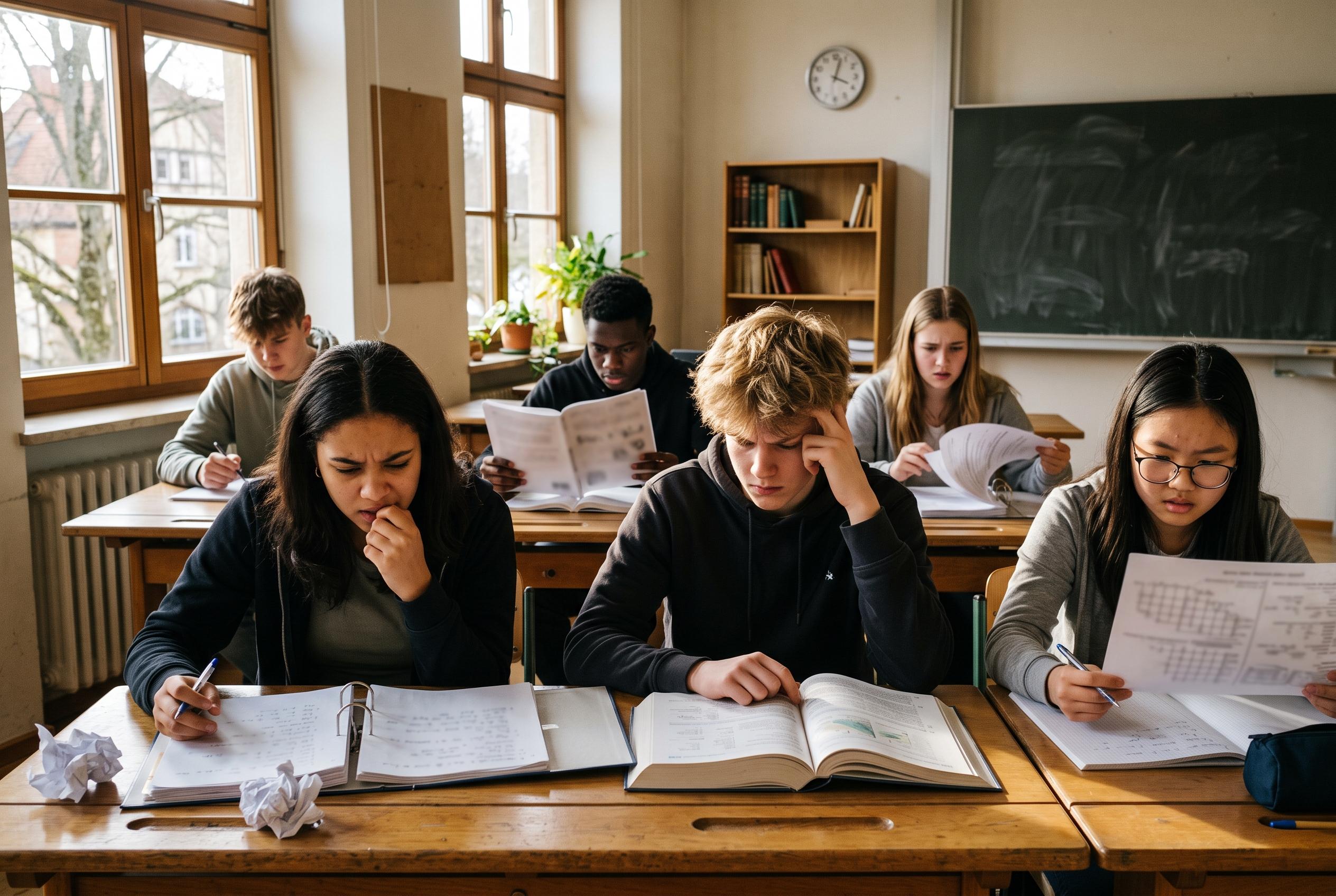

A recent study reveals that one in three Bavarian adolescents aged 14 to 17 experience significant school-related stress, driven by exams, social media, and wider geopolitical pressures, prompting calls for targeted support and resilience-building.
As schools reopen in Bavaria after the summer break, one in three 14-to-17-year-olds says school stress weighs heavily on daily life, according to a recent Sinus Youth Study commissioned by Barmer. The findings suggest the pressure is not evenly felt: 39% of girls and 27% of boys reported significant strain, with exam situations, performance expectations, family pressure, future worries and tightly packed timetables all cited as key drivers.
Regina Knape, a retired school psychologist who worked for 35 years in the profession, said the tension around schooling is not new, but it has become harder to manage when several pressures build at once. In her view, stress can be useful in small amounts, but it becomes damaging when it turns into a constant state, feeding anxiety, school refusal and social withdrawal. She linked the rise in strain not just to academic demands, but also to the pandemic, the war in Ukraine, political polarisation, economic uncertainty and the relentless comparison culture of social media.
Barmer’s state manager in Bavaria, Alfred Kindshofer, said parents and schools need to pay close attention to warning signs and act early when young people struggle. The survey, carried out online in October and November 2025 among 2,000 adolescents nationwide, underlines the need for regular periods when pupils can step away from school pressures and recover properly.
Knape argued that adults often make matters worse by trying to shield children from every setback. If a child has the ability to attend a demanding school, she said, the more helpful message is not that failure is impossible, but that setbacks can be managed with support. For her, schools and families should place more emphasis on encouragement, resilience and a healthier attitude towards mistakes.
Her advice to parents is to take morning distress seriously rather than brushing it aside. If a child cries, resists going to school or grows withdrawn over days or weeks, she said, the first step is to acknowledge the fear, speak to teachers and, if needed, involve school psychologists or targeted academic support. Her message to pupils is simple: stay curious, ask questions, accept that mistakes are part of learning and seek help when things become difficult.
Disclaimer: This content is for informational purposes only and is not intended to be a substitute for professional medical judgment, advice, diagnosis, or treatment.