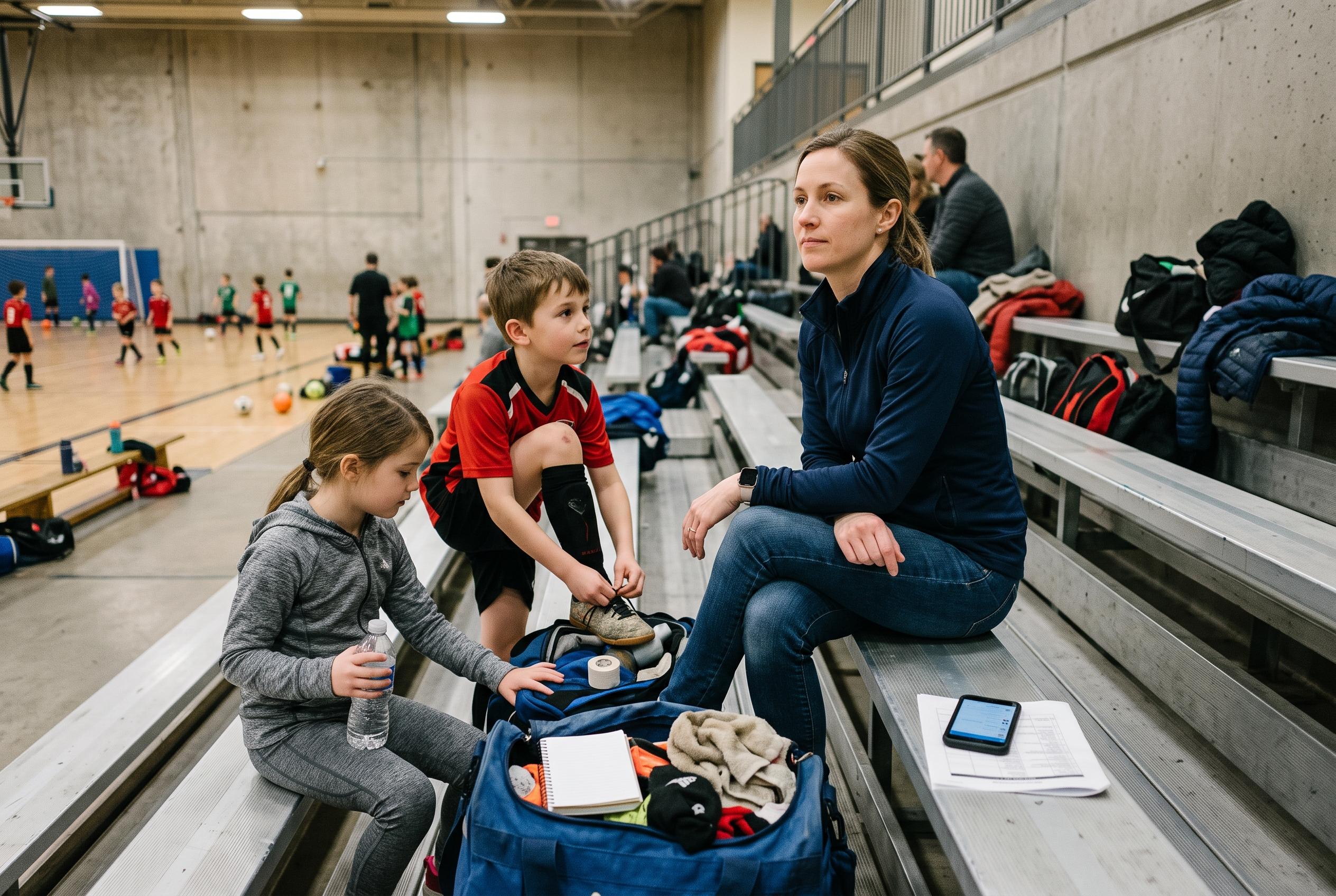

As participation costs escalate and private clubs expand, Canadian families grapple with balancing the benefits of sport against financial and emotional strain, raising questions about the future of youth sport in the country.
Lily Phelan’s path through youth volleyball is a familiar one for many Canadian families: a low-cost recreational start, a jump to elite competition, then a steady climb in fees, travel and pressure. What began with backyard rallies in Toronto during the pandemic soon became a serious commitment, with rep-level fees, specialised coaching, tournament travel and extra training pushing the family’s total spend to roughly $20,000 in three years, according to Maclean’s. By the time Lily was fighting for a place on a new team, the sport had become as much a logistical and financial undertaking as an athletic one.
That experience reflects a broader shift in Canadian youth sport. Parents increasingly see organised sport as an investment in health, confidence and social development, but also as a pathway that demands ever more time and money. Maclean’s describes a system in which children are nudged from community programmes into competitive streams, where year-round training, private coaching and travel teams have become normal rather than exceptional. For some families, that means hefty sacrifices; for others, it means locking kids into an intense schedule before they are old enough to understand the trade-offs.
The rise of this model has been accelerated by the growth of private clubs and specialised leagues. According to Own the Podium, Canada’s sport system has long been shaped by a high-performance mindset, and the organisation says the federal government’s recent $775 million, five-year investment is meant to make sport more inclusive and sustainable at every level. But the same performance logic that drives elite funding has also filtered down into youth sport, where private operators now sell development pathways with the promise of better coaching, more exposure and a shot at higher levels. Maclean’s notes that volleyball, soccer, hockey and gymnastics have all become more year-round and more expensive as a result.
The costs can be staggering. Maclean’s reports that some hockey academies charge between $20,000 and $50,000 a year, while even more modest competitive pathways can still run into the thousands. Independent cost surveys cited in the related material suggest that fees for youth soccer can vary widely across Canadian cities, with added charges for kits, affiliation and multiple seasons quickly inflating the bill. Equipment alone can be a major burden: one Quebec guide puts entry-level hockey gear at several hundred dollars, with competitive sets costing far more. For families without deep pockets, that can put organised sport out of reach.
The pressure is not only financial. Coaches and researchers quoted by Maclean’s warn that children can start to feel responsible for justifying the money their parents spend, turning sport into a source of anxiety rather than enjoyment. The article also highlights a familiar pattern: children who once loved a game begin to associate it with constant evaluation, travel and loss of free time. Some pull back, and often thrive once they do. In one Toronto family, a teenager’s marks improved after stepping down from an elite soccer team, while another parent described the loss of family time as the hidden cost of chasing high-level hockey.
Yet many parents keep going because the benefits are real. Their children gain friends, structure, resilience and a sense of belonging. Lily herself still sees volleyball as one of the defining experiences of her teen years, even after missing out on a team place and watching the family budget swell. Maclean’s argues that the question is no longer whether sport is good for kids, but what kind of sport system Canada wants: one that keeps as many children playing as possible, or one that asks families to pay ever more for a narrowing chance at excellence.
Disclaimer: This content is for informational purposes only and is not intended to be a substitute for professional medical judgment, advice, diagnosis, or treatment.