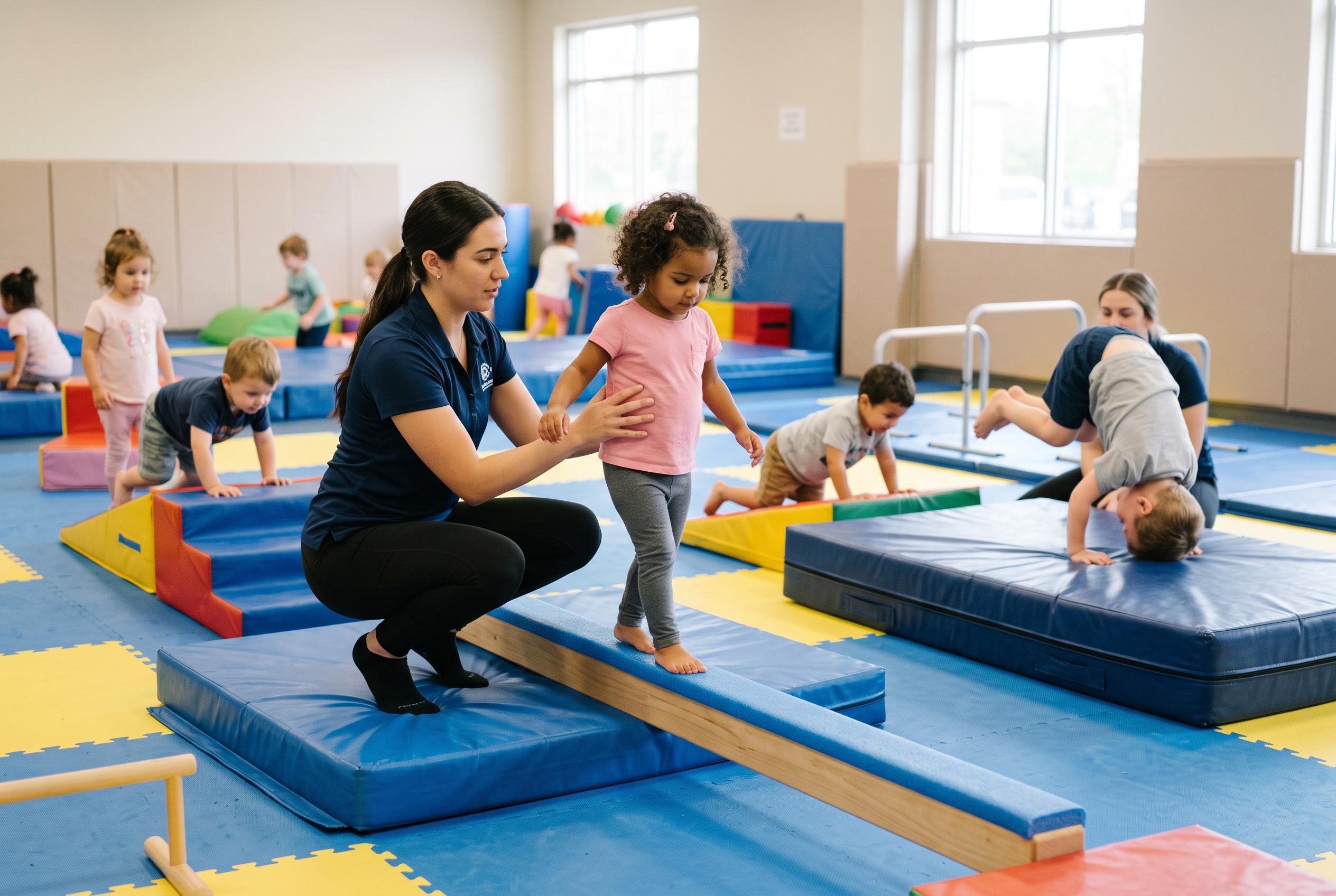

HelloNation highlights that a child’s safety in gymnastics depends on programme design, instructor training, and age-appropriate equipment, emphasising a tailored approach for preschoolers.
HelloNation has published a guide aimed at parents weighing up whether gymnastics is suitable for preschool children, arguing that safety depends less on the label of the activity and more on how the programme is built, who teaches it and whether the curriculum matches a young child’s stage of development. The article features Rebecca Marson of Crystal Coast Gymnastics in Morehead City, North Carolina, and focuses on movement basics such as crawling, rolling, jumping, landing and balance.
According to the piece, families should ask about instructor training, curriculum design and whether a class was created specifically for preschoolers rather than adapted from lessons for older children. That emphasis reflects a broader approach seen across gymnastics education resources, where structured routines, step-by-step lesson plans and gradual progression are presented as central to helping young children build confidence while reducing avoidable risk.
The article also says the physical set-up matters: equipment should be age-appropriate, padded and well maintained, with close supervision and clear demonstrations from instructors. Industry training providers and curriculum guides similarly stress safety notes, teaching points and progressive skill development, especially when introducing higher-risk movements or building gross motor skills such as climbing, balancing and rolling.
Marson’s view, as presented by HelloNation, is that parents should watch a class before enrolling and pay attention to how children respond. A well-matched class should keep preschoolers engaged without pushing them beyond what they can manage. The article argues that when instruction, equipment and curriculum all align, gymnastics can be a controlled and supportive way for young children to learn movement skills.
Disclaimer: This content is for informational purposes only and is not intended to be a substitute for professional medical judgment, advice, diagnosis, or treatment.