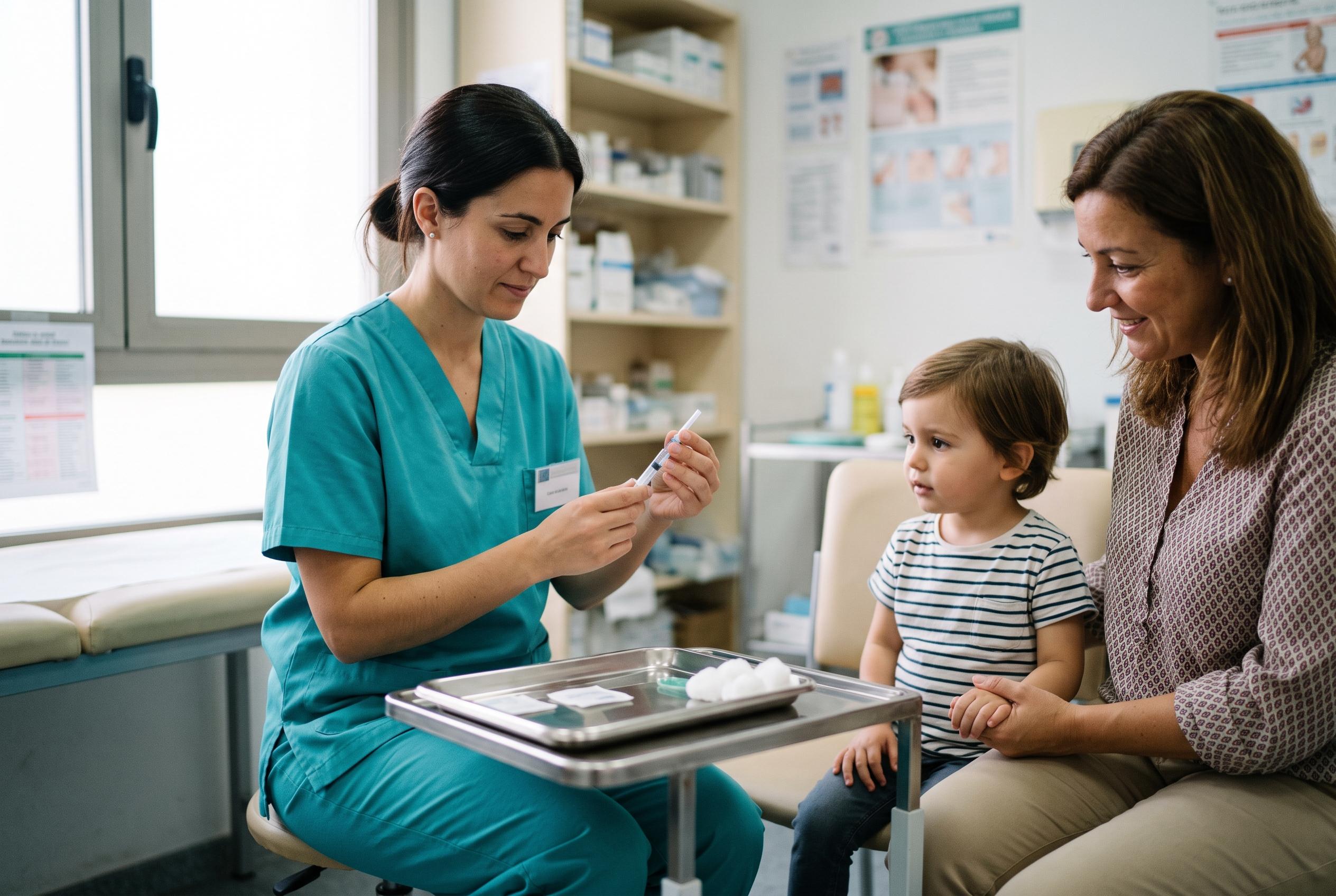

Spain has rapidly advanced to become Europe’s top country for childhood flu vaccination after just three seasons, achieving notable regional disparities and emphasising the importance of increased coverage in vulnerable groups at a critical juncture in flu seasons.
Spain has become Europe’s leading country for childhood flu vaccination after only three seasons of routine immunisation in children, according to a report published in Anales de Pediatría. In the 2025-26 campaign, 52.4% of children aged one to four received the jab, up from 45.5% the year before and well ahead of Finland’s 32.9% and Iceland’s 22.2%.
The report, prepared by the Spanish Vaccinology Association, the vaccination advisory committee of the Spanish Association of Paediatrics and the Spanish Society of Paediatric Infectious Diseases, said regional uptake in Spain was uneven but strong in several parts of the country. Andalucía recorded 64.6%, placing it among the best-performing regions behind Galicia at 71.1%. Asturias reached 62.6% and La Rioja 56.4%. The Spanish health ministry’s coverage platform tracks vaccination data from the country’s autonomous communities and says provisional figures are later replaced by definitive totals.
Ignacio Salamanca de la Cueva, one of the report’s authors and a paediatrician at the Instituto Hispalense de Pediatría in Seville, said the 2025-26 season was dominated by influenza A(H3N2). He noted that the virus showed a marked antigenic drift, with the K subclade identified in 99.4% of A(H3N2) cases, meaning the circulating strain had diverged more than usual from the vaccine component. Even so, the report said the vaccine remained effective in children, with estimated protection of 51% to 82% against A(H3N2) in European paediatric populations, compared with 5% to 35% in adults aged 18 to 64. Salamanca said childhood vaccine effectiveness can still reach about 70% even in seasons when the virus is not an exact match.
The report also pointed to gaps that still need attention, especially in infants under one year old, who are among the most vulnerable to complications. Salamanca said that in Andalucía, vaccination in pregnancy is close to 82%, but coverage among babies aged six to eleven months is around 60%, leaving what he described as a significant protection gap in a high-risk period. Looking ahead to the 2026-27 campaign, the authors called for higher uptake among risk groups, stronger efforts to counter the idea that flu is a mild illness, easier access to vaccination and less regional inequality, with a longer-term goal of universal paediatric flu vaccination up to age 17. The Spanish Association of Paediatrics recommends flu vaccination for all children aged six to 17, while several regions have already broadened their own age thresholds. The report also identified low vaccination among health workers, at 45.5%, as a weakness that may affect how strongly families are advised to vaccinate.
Disclaimer: This content is for informational purposes only and is not intended to be a substitute for professional medical judgment, advice, diagnosis, or treatment.