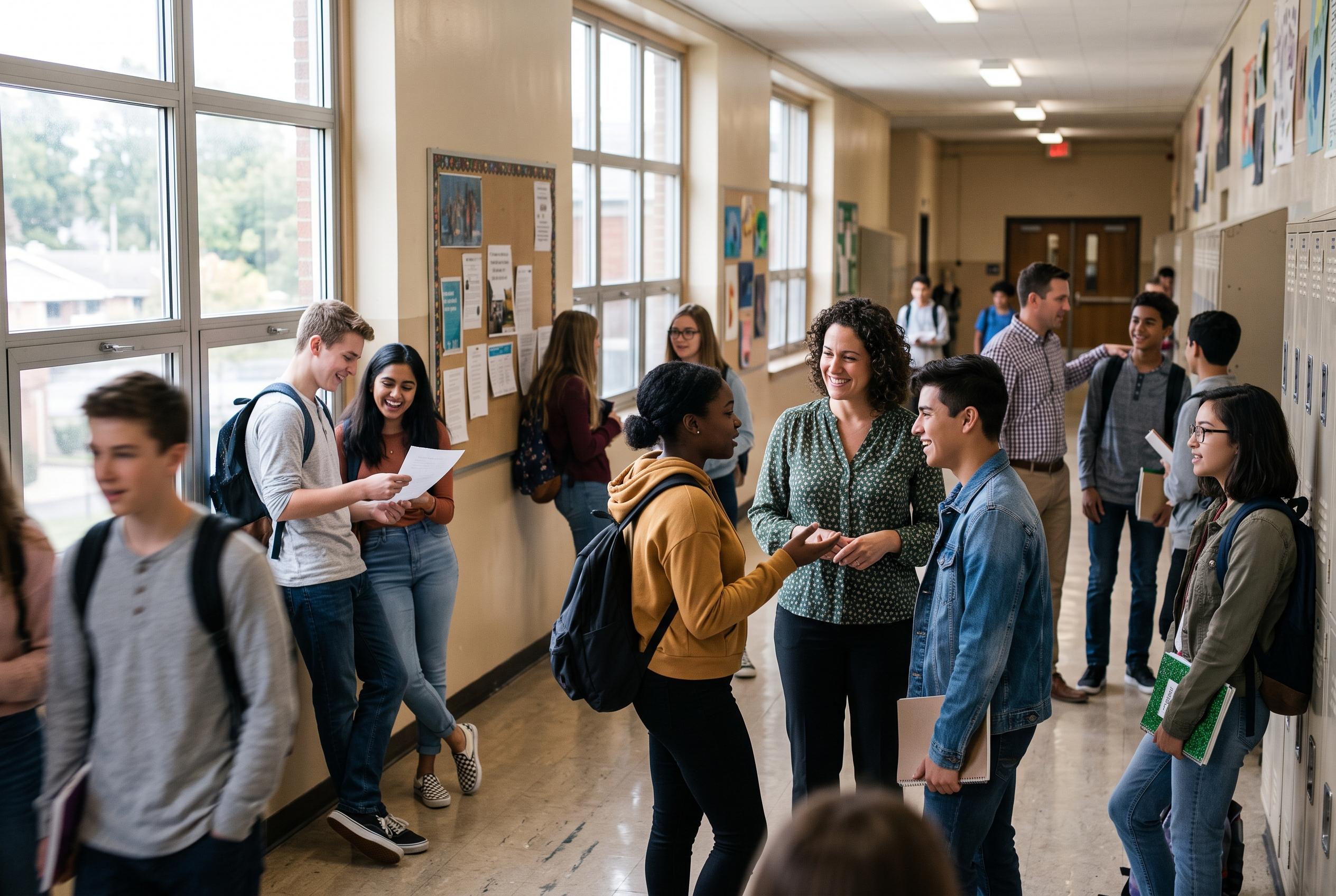

As pandemic-related disruptions persist, researchers highlight the critical role of school environment and student connection in reducing absenteeism, urging reforms focused on belonging and support rather than punitive measures.
Chronic absenteeism remains one of the most persistent after-effects of the pandemic-era disruption to schooling in the United States. By the federal definition, students are chronically absent when they miss at least 10% of the school year, and the problem has stayed far above pre-pandemic levels even as rates have eased from their peak. The U.S. Department of Education says chronic absenteeism reached about 31% in the 2021-22 school year before falling to roughly 28% in 2022-23, while the National Equity Atlas puts the national rate at 27% in 2022-23. Other recent estimates place it in the low-to-mid 20s, still well above the roughly 15% recorded before COVID-19.
Researchers increasingly argue that the reasons students stay away from school are not limited to transport, housing instability or poverty, though those remain major barriers. Studies from the University of Chicago Consortium on School Research, along with recent work cited by education scholars in Georgia, New York City and Chicago, point to a different but closely related factor: how school feels to students. When young people feel safe, connected and supported, they are more likely to attend regularly. When that climate weakens, absences can rise quickly.
The new analysis described by the Georgia researchers draws on nearly a decade of student survey data and finds that school climate is strongly tied to attendance. Of the climate measures examined, connectedness stood out most clearly, with safety and a clear structure for learning also linked to lower chronic absence. The pattern held across middle and high school students and across racial groups. The authors say the most vulnerable students often see the sharpest increase in absences when they perceive their schools as less welcoming or less supportive, with Black and Latino students especially affected.
That finding matters because many school responses still focus on nudging attendance from the outside rather than improving the experience inside the building. A 2025 survey of principals in Georgia and Michigan found attendance was a top concern, but the most common responses were phone calls, letters to parents and reward schemes for students. The researchers say those efforts may help at the margins, but they do little to address whether students feel they belong, whether adults know them and whether the school environment is orderly and safe.
The broader policy picture suggests the challenge is still widespread. RAND and CRPE analysis cited by the National Association of Pupil Services Administrators found that about one in 10 districts had chronic absenteeism at 30% or higher in the 2023-24 school year. The National Equity Atlas also shows the burden falls unevenly, with especially high rates in high-poverty schools and among Native American, Pacific Islander and Black students. That is why scholars behind the Georgia study argue schools should not wait for every outside problem to be solved before acting. Simple steps such as reviewing suspensions, assigning every student a trusted adult and asking students what would make them want to come to school may not solve chronic absence on their own, but they can help create the kind of climate that brings students back.
Disclaimer: This content is for informational purposes only and is not intended to be a substitute for professional medical judgment, advice, diagnosis, or treatment.