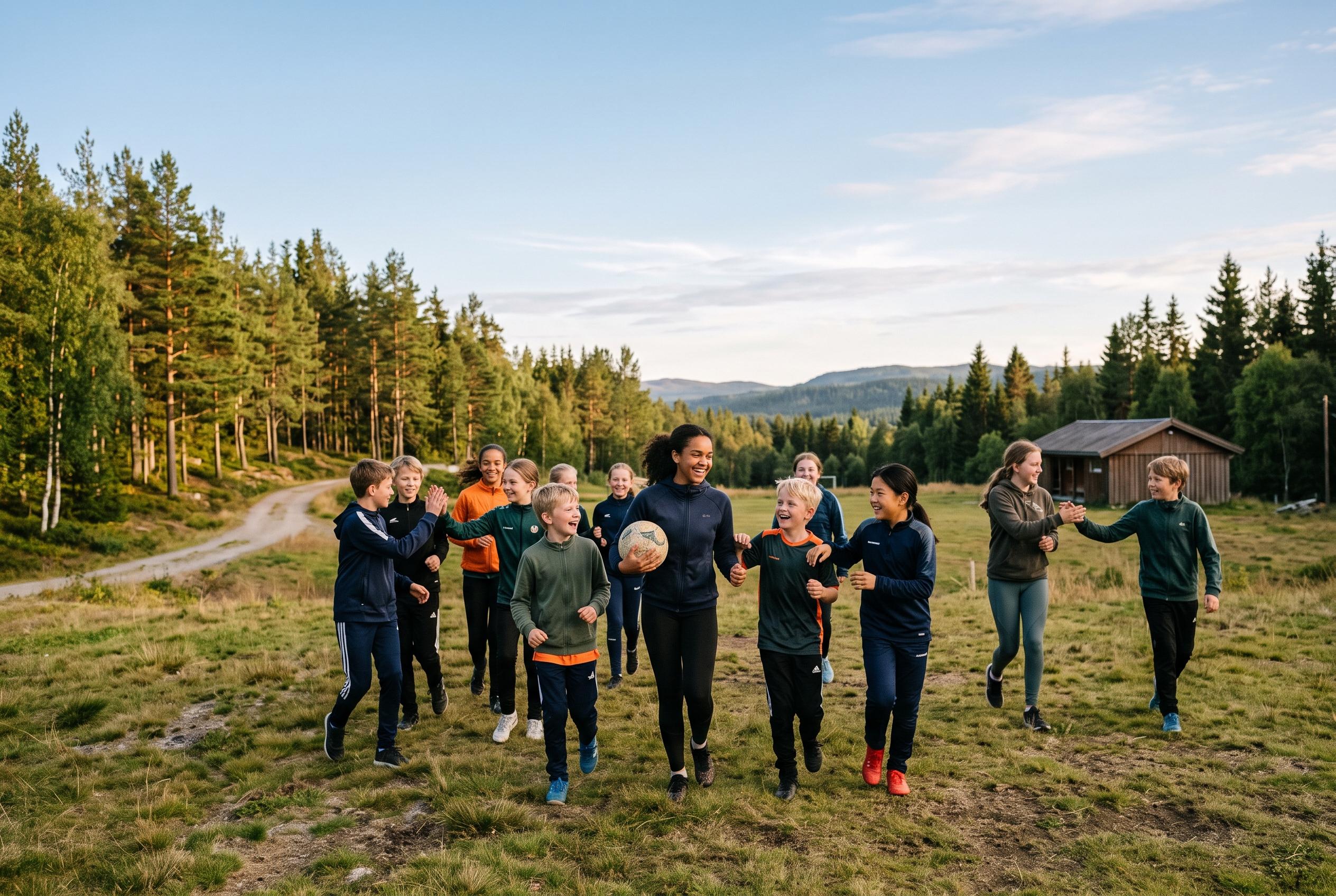

The Norwegian sports system is sustained by a culture prioritising joy, belonging, and long-term growth, rather than just medals, according to experts. Despite pressures, its inclusive approach continues to attract international admiration.
Norway’s sports model is often praised as if it were a single formula, but the real strength appears to lie in the way its parts work together. In a commentary published by Aftenposten, the authors argue that politicians, coaches and international observers all point to different ingredients: volunteerism, local clubs, national bodies, elite training and access to facilities and nature. Yet, they say, the decisive factor is the shared culture that connects those pieces.
At the centre of that culture are values that Norwegian sport has long tried to protect: enjoyment, belonging, achievement and honesty. According to the Aftenposten article, those ideas are embedded in rules for children’s and youth sport and shape everything from parental behaviour to coach education and talent pathways. The emphasis is not on producing champions at all costs, but on creating an environment in which children and young people can grow, stay safe and feel part of something.
The article uses Karsten Warholm and Martin Ødegaard to show that there is no single route to the top. Warholm developed through a broad mix of activities before later specialising, while Ødegaard was exposed to intense football from an early age and advanced through focused training. Their careers suggest that Norway’s system can accommodate different development paths, so long as the underlying principles remain the same.
That balance between broad participation and elite performance is often cited as a defining feature of the Norwegian model. A background note from the Norwegian Ski Federation’s Innlandet branch says the model has attracted attention and debate in the United States, where observers have looked closely at how Norway combines success with inclusion. A related explanation from Store norske leksikon describes breddeidrett, or grassroots sport, as part of a structure in which mass participation and high-level competition sit within the same national framework.
Still, the authors of the Aftenposten commentary warn that the model is under pressure. They point to young people dropping out too early, rising performance pressure, earlier selection and growing social inequality. A 2017 government report on the sports model also argued that Norway’s system would need to adapt to a new era while preserving the values that had helped define it. The concern, then, is not whether the model has prestige, but whether everyday practice still matches its ideals.
In the end, the article argues that Norway has no secret training trick or magic shortcut to medals. Its advantage is more modest, and perhaps more durable: a sporting culture built on joy before results, mastery before ranking, people before athletes, health before performance and long-term development before short-term gain. That, the authors suggest, is why the model is admired abroad and debated at home.
Disclaimer: This content is for informational purposes only and is not intended to be a substitute for professional medical judgment, advice, diagnosis, or treatment.