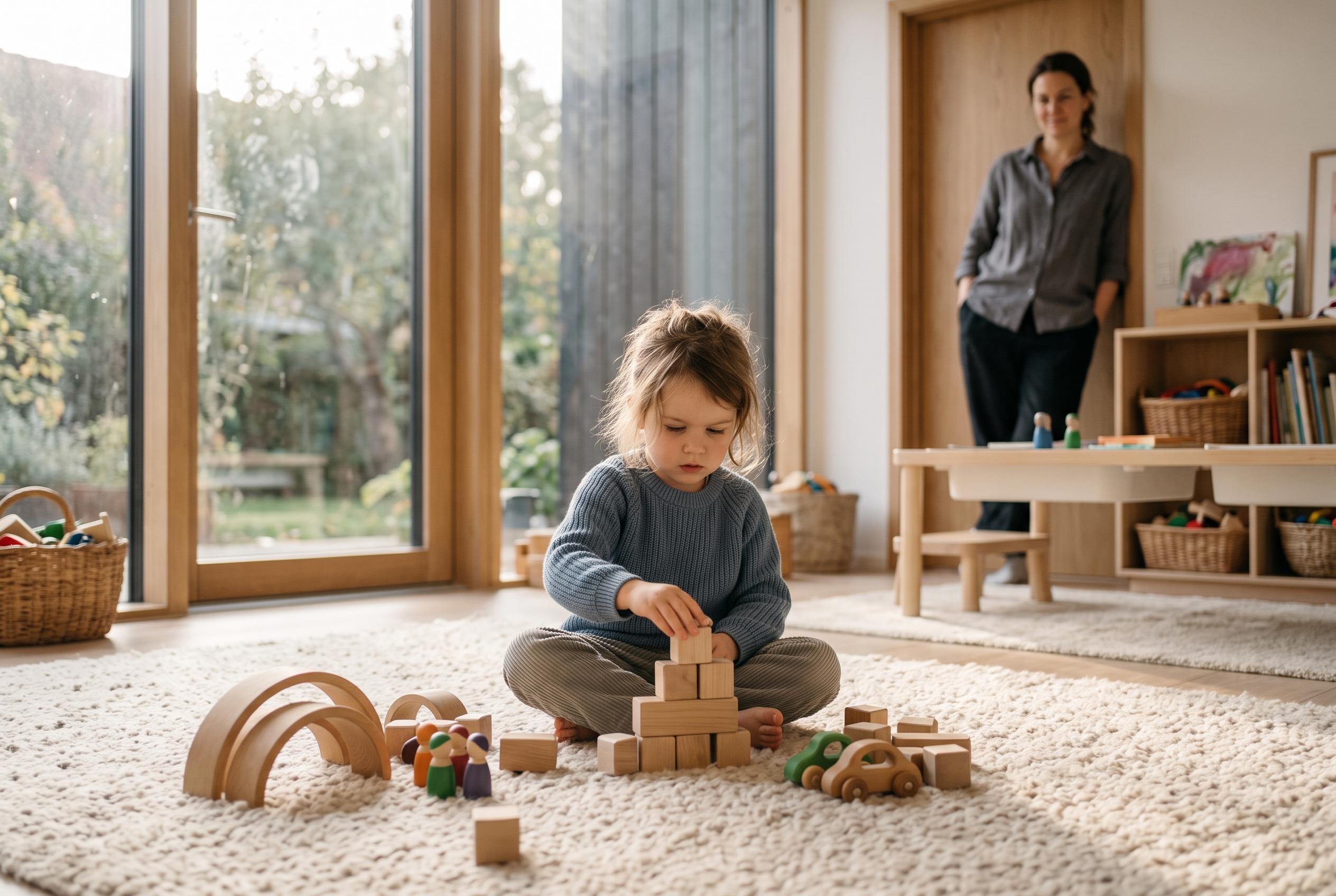

Emerging research suggests that while guidance can narrow preschoolers’ curiosity, providing children with space for self-directed exploration fosters better self-control, highlighting a nuanced approach to fostering independence.
The idea that independent children are made by a neat list of parental lessons is attractive, but the evidence behind it is far thinner than the folk wisdom suggests. A stronger case comes from two research strands: one showing that explicit teaching can narrow a preschooler’s curiosity in the moment, and another suggesting that more self-directed time in early childhood is linked with better self-guided control later on. Taken together, they point less to a recipe for independence than to a delicate balance between guidance and room to explore.
In one well-known experiment, Elizabeth Bonawitz, Patrick Shafto and colleagues gave 85 preschoolers a toy in a museum setting and varied the way an adult introduced it. Children who were directly taught about one feature of the toy tended to concentrate on that feature and looked for fewer other possibilities than children who saw the same action framed as accidental, interrupted, or not demonstrated at all. The taught group spent more of their play on the example they had been shown, explored fewer functions overall, and stopped sooner. The researchers argued that the children were not being dull or passive; they were making a sensible inference that an adult who says, in effect, “this is how it works” has probably already revealed the important part.
The finding became even sharper in the second experiment. According to the study, children restricted their exploration after overhearing teaching aimed at another child like them, but not when they watched an adult perform the same action without a teaching frame. That suggests young children are not just reacting to demonstrations, but to the social meaning of teaching itself. A lesson directed at someone perceived as a peer can be treated as a lesson for the listener too, which means the form of instruction matters almost as much as the content.
A separate study from Colorado looked at a different question: whether the shape of a child’s week relates to the kind of self-control that does not rely on an adult’s directions. Jane Barker, Yuko Munakata and colleagues asked parents of 70 six-year-olds to reconstruct the previous week in half-hour blocks and had raters sort the entries into structured and less-structured time. Children with more less-structured time tended to do better on a measure of self-directed executive function, even after accounting for age, vocabulary, gender and household income. More structured time showed a weaker, only marginal, link in the opposite direction, while neither form of time predicted externally guided control. The authors also cautioned that the sample was relatively affluent and suburban, the diary method relied on parents’ recollections, and the study was correlational rather than causal.
That is why the most responsible reading is not that teaching is bad or that children should be left alone. The teaching study itself notes that direct instruction is often the fastest route to learning what an adult already knows well. The more useful lesson is timing: when children are given a chance to investigate first, they may discover more on their own; when adult guidance comes too soon or too firmly, it can unintentionally close off possibilities. The broader research on guided play points in the same direction, arguing for a middle ground in which adults support learning without crowding out independent discovery. For parents and caregivers, the practical takeaway is simple: let children try, notice what they find, and then step in. In some cases, independence is not taught at all. It is protected.
Disclaimer: This content is for informational purposes only and is not intended to be a substitute for professional medical judgment, advice, diagnosis, or treatment.