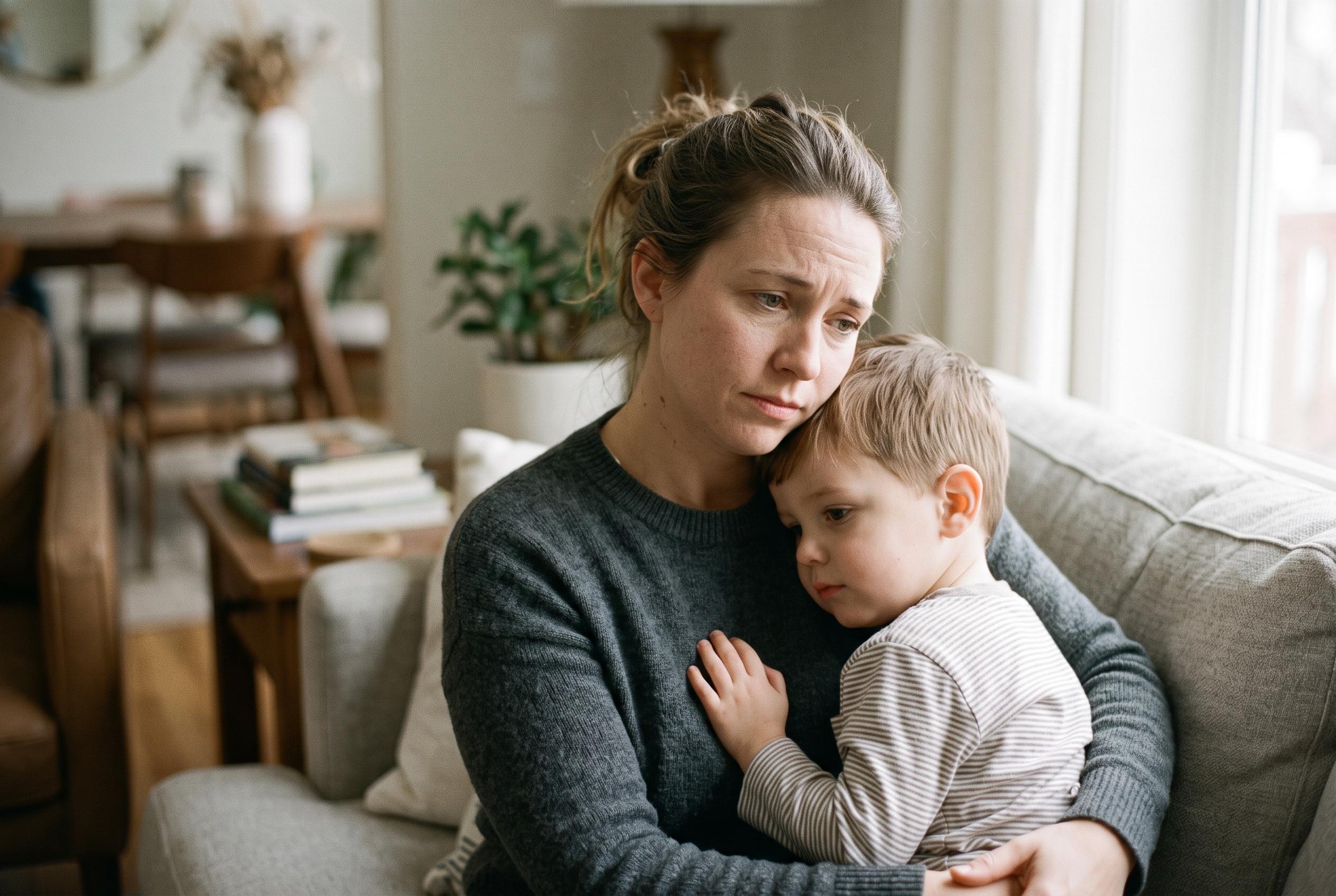

A new Guangzhou study reveals that parents’ psychological distress, rather than children’s symptom severity, most significantly affects family wellbeing during early autism intervention, highlighting the urgent need for supportive and adaptive caregiver services.
For families arriving at an autism centre in Guangzhou with a preschool child newly diagnosed or about to begin help, the child’s symptom level was not the best guide to how the main carer was coping. A study of 424 caregivers found that the clearest predictor of anxiety, depression and poorer day-to-day wellbeing was the parent’s own distress. That matters because the research captured families at the point when support begins, a stage that other work on early autism services has described as emotionally disorientating and administratively draining for caregivers trying to absorb a diagnosis while navigating a complex system.
The new paper, published in the Journal of Autism and Developmental Disorders, analysed baseline assessments from families attending the Child Development and Behavior Center of the Third Affiliated Hospital of Sun Yat-Sen University. Most respondents were mothers, making up 84.2 per cent of the sample, and the children were aged from 18 to 59 months. Fang Wang and colleagues tested five outcome models, covering anxiety and depression symptoms and four domains of quality of life, after first entering child measures and then parent and family variables. Across that whole set of models, parental distress measured on the Parenting Stress Index-Short Form was the most consistent factor linked to worse outcomes.
The size of that association was notable. According to Scienmag’s account of the paper, the standardised coefficient for mental health symptoms was 0.384, while the quality-of-life coefficients ranged from minus 0.327 to minus 0.466. The study also found that children’s social motivation difficulties were tied to poorer psychological and environmental quality of life for caregivers, and that those effects appeared to work partly through higher parental distress. One result cut against a simple burden narrative: carers with more than one child tended to report better psychological, social and environmental quality of life than those raising an only child.
The coping findings make the picture more useful for clinicians. Positive coping was associated with better psychological quality of life, and “positive reframing” was linked to fewer mental health symptoms and better scores in the environmental domain. By contrast, “self-blame” and religious coping strengthened the link between distress and anxiety or depression symptoms. That pattern fits broader coping research published in Frontiers in Rehabilitation Sciences, which described dysfunctional responses among parents of autistic children as including denial, self-blame and negative thoughts, while placing positive reframing, planning, acceptance and active coping in a more functional group.
The Guangzhou findings also sit within a growing Chinese literature showing that caregiver wellbeing is shaped by far more than the child’s diagnosis alone. A 2025 study in BMC Public Health of 405 caregivers across five institutions in Lianyungang, eastern China, reported a mean quality-of-life score of 26.09 and found worse outcomes among mothers, rural families, carers with insomnia and those reporting higher parenting stress. Better family functioning and higher-rated medical services were linked to better quality of life. An earlier study in Current Medical Science focusing on 80 mothers in southern China found heavier parenting stress and more neuropsychiatric symptoms among mothers of children with lower-functioning autism, while also concluding that greater social support was needed, especially for that group. Taken together, those papers suggest the new Guangzhou result does not mean child characteristics are irrelevant; rather, once several pressures are considered together, the parent’s distress may be the factor most closely tied to whether family life is holding up.
That interpretation is consistent with work beyond China. A 2025 paper in the same Springer journal said parents of children with autism often report substantially more stress than parents of neurotypical children and parents of children with other neurodevelopmental conditions such as Down syndrome. It also noted that reported stress has been associated with more physical health problems and poorer health-related quality of life. In that study, mental health problems in parents of young autistic children were reported at roughly twice the rate seen in the norm population.
There is also a practical service message. In the qualitative paper titled “What My Son Needs Is Me. What I Need Is… Guidance”, researchers interviewed 19 caregivers and found that even where early help was publicly funded, families’ time and mental load were under pressure, affecting employment and relationships at home. Participants wanted support that was adaptable, practical and neuroaffirming, and they especially valued “authentic emotional support” from therapists they trusted. The Guangzhou study helps explain why that kind of support may matter so much: if distress is the variable most tightly bound up with parental mental health and quality of life, services that focus only on the child may miss the person most at risk in the room.
The study does not prove cause and effect. Because it was cross-sectional and based on one specialist urban centre, it cannot show that reducing distress will automatically improve every outcome, and it may not reflect families in poorer-served or rural settings. Even so, the consistency of the findings across all five models points towards a clear change in emphasis. Screening parents for distress and self-blame when a child enters services, strengthening family support, and teaching more adaptive coping strategies look less like optional extras and more like core parts of autism care.
Disclaimer: This content is for informational purposes only and is not intended to be a substitute for professional medical judgment, advice, diagnosis, or treatment.