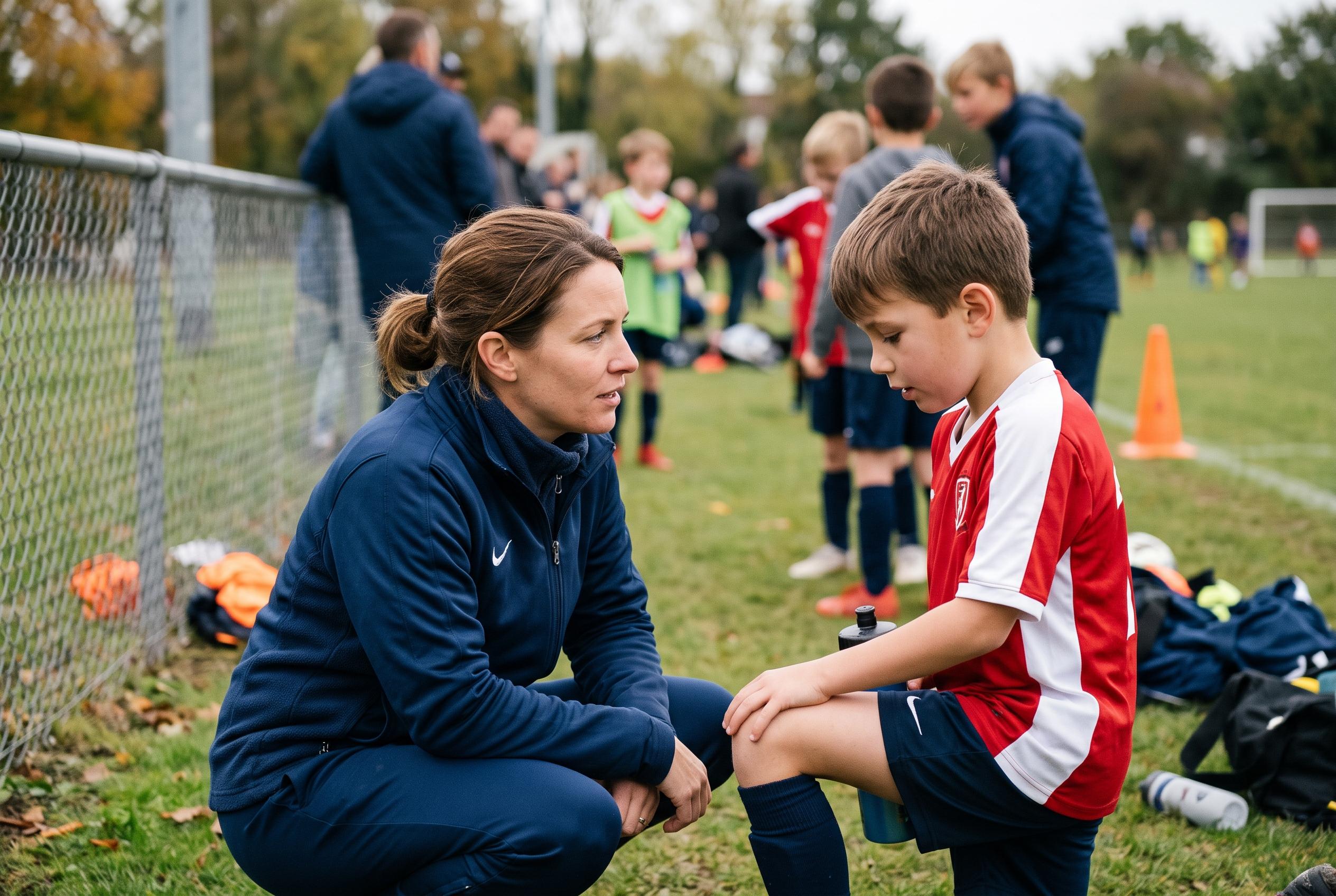

Studies reveal that addressing the environment and communication early can curb abusive behaviour on sidelines, challenging the reliance on sanctions alone to combat misconduct in youth sports.
As one Australian basketball club hangs the names of banned spectators at its venue, researchers studying junior sport say the ugliest scenes on the touchline are not simply the work of a few rogue parents. Their argument is that bad behaviour is learnt, copied and tolerated over time, especially as children move into older age groups and the pressure around selection, status and winning intensifies.
The latest flashpoint came in an ABC 7.30 report broadcast on 7 September 2026, which said Geelong United had referred 14 incidents of abusive behaviour to tribunal since April and seen two people handed two-year bans. Emily Todorov, the club’s community general manager, said a public board naming those penalised by Basketball Victoria was introduced after internal warnings and suspensions failed to stop repeat misconduct. “We have refs here as young as 12. It’s appalling. They don’t see a child out there.”
That impulse to punish is understandable, but a paper published in Managing Sport and Leisure on 12 August 2026 argues that removing one loud adult does not necessarily change the environment that produced the problem. Led by researchers at Liverpool John Moores University with Flinders University’s Associate Professor Sam Elliott, the study examined junior rugby league through the lens of Social Learning Theory, with support from England’s Rugby Football League. Elliott’s central point, quoted by Flinders University and EurekAlert, was blunt: “But behaviour doesn’t occur in a vacuum. It is a product of culture.”
The research base behind that claim was broader than a single bad afternoon. According to Liverpool John Moores University’s repository entry, the team observed 14 junior matches at two English rugby league clubs, interviewed 14 parents and ran four focus groups with players from under-7 to under-16 teams. The analysis used Akers’ Social Learning Theory, sorting evidence through the categories of differential association, definitions, differential reinforcement and imitation. What emerged was a clear divide: younger matches were more likely to be encouraging and family-orientated, while older age groups featured more swearing, harsher criticism, aggressive coaching and spectators urging physical aggression.
The researchers’ point is not that older children somehow cause adults to behave worse. It is that the environment around them changes. That wider pattern now looks familiar well beyond rugby league. In the ABC report, 18-year-old referee Thomas Selig said he had been dealing with abuse, harassment and violence at children’s basketball since he was 13. He also described a July incident at an under-16 game in which a man angry at a foul call berated a 13-year-old referee and had to be removed.
National data suggest those experiences are not isolated. ABC reported that Sport Integrity Australia’s first 2025 survey of athletes on poor behaviour at community sporting events found verbal abuse accounted for 33 per cent of incidents, bullying 23 per cent, body shaming 20 per cent, racism 18 per cent and physical abuse 10 per cent. Almost half of the verbal abuse came from parents. The same report said a coach in Melbourne’s south-west received a 17-game suspension from Football Victoria in May after verbally abusing a referee, while a Watsonia Heights junior coach recounted a recent match in which a 14-year-old official finished in tears after sustained shouting from an opposing coach.
Even so, the emerging research suggests clubs will keep chasing incidents after the fact unless they tackle the issue much earlier. In a separate 2025 paper, “Engage me!”, published in Sport, Education and Society, Elliott and colleagues examined how clubs deal with parents at the beginning of a season across Australian football, netball, swimming and tennis. Using 320 hours of field observation and 41 collaborative interviews with parents, coaches and club leaders, the study found that early communication was often inconsistent and that parents could be left feeling dismissed, misunderstood or undervalued.
The practical lessons were strikingly ordinary, which is partly the point. The Taylor & Francis abstract says parents valued clear and varied communication, including informal conversations, weekly check-ins and scheduled consultations. Flinders University’s repository summary says the most useful elements clustered around three themes: personalising the onboarding experience, thanks and recognition, and regular chats. In other words, clubs that want calmer sidelines may need to spend less time designing ever more detailed codes and more time making sure families know who the coach is, what the club stands for and how concerns can be raised before resentment hardens into habit.
That leaves junior sport with a choice. It can keep treating each outburst as a one-off disciplinary breach, or it can accept the harder conclusion from the latest studies: sidelines tend to reflect what clubs reward, ignore and normalise week after week. With the issue due to be discussed again at Flinders University’s National Youth Sport Conference in Adelaide from 18 to 20 November 2026, the debate is no longer whether sanctions have a place. It is whether sporting organisations can build a culture in which they are needed less often.
Disclaimer: This content is for informational purposes only and is not intended to be a substitute for professional medical judgment, advice, diagnosis, or treatment.