

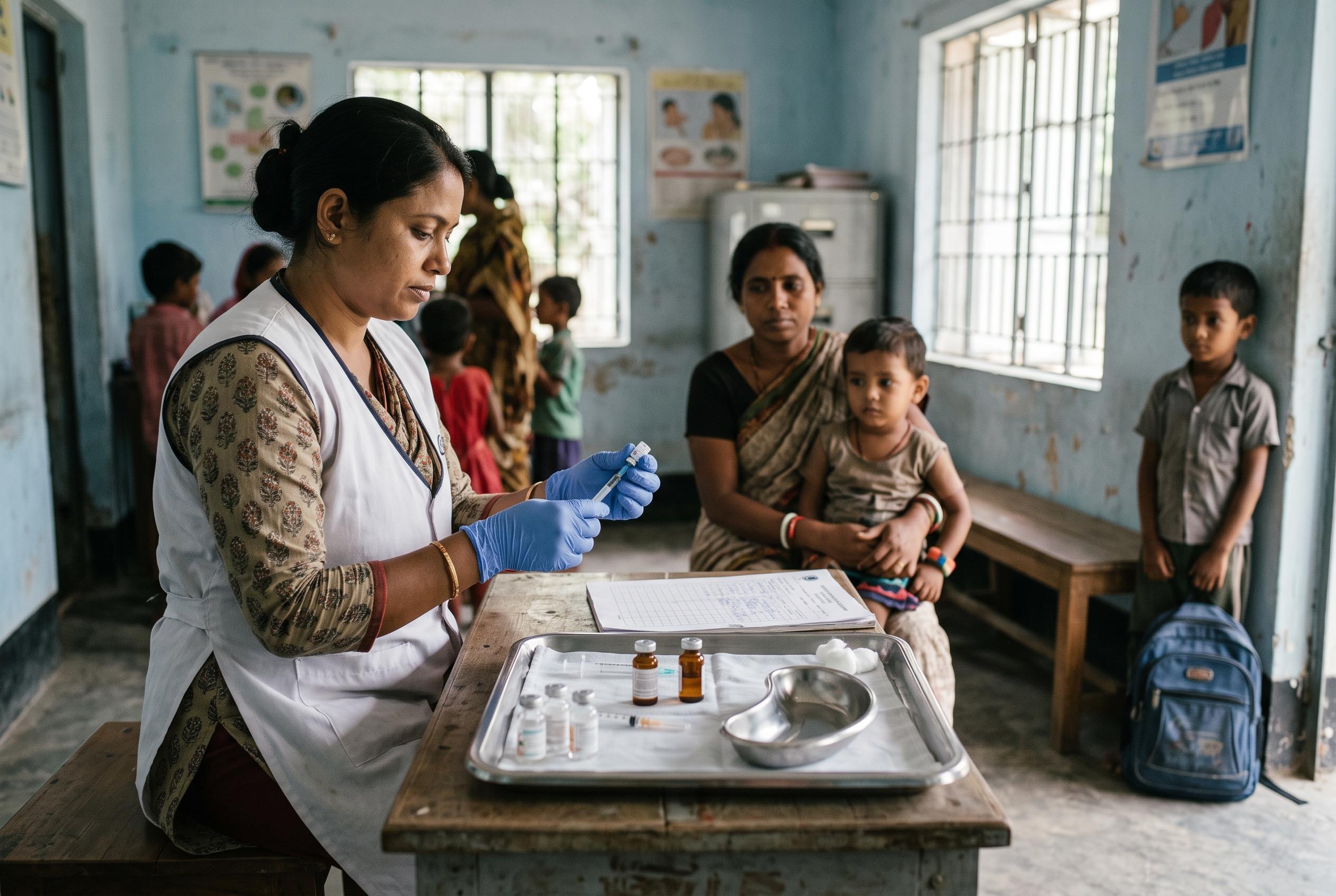

Despite reaching record vaccination rates, health experts in New Delhi caution that immunity gaps among children and adolescents threaten the region’s measles elimination progress, urging targeted, subnational strategies.
Immunisation experts gathering in New Delhi have warned that high routine coverage across the WHO South-East Asia Region is not enough on its own to stop measles and other vaccine-preventable diseases from returning. The region has reached the highest global levels of childhood immunisation, yet WHO says outbreaks continue because immunity gaps remain among children and adolescents, particularly in communities that are harder to reach. According to the WHO South-East Asia office, officials used the 17th meeting of its Regional Immunisation Technical Advisory Group to press for tighter monitoring, better use of local data and more rigorous programme review.
Nilesh Buddha, the officer in charge of the WHO South-East Asia Region, told the meeting that progress must not lead to complacency. He said countries need to close immunity gaps, strengthen surveillance and make sure every child and community is reached with life-saving vaccines. Rakesh Aggarwal, who chairs the advisory group, said the focus should move beyond overall coverage and towards subnational pockets where children are still being missed. That approach, he said, would allow health authorities to direct resources more effectively and reach the most vulnerable groups.
WHO data show why the warning matters. In 2025, the region recorded 94% coverage for the third dose of the routine diphtheria, tetanus and pertussis vaccine, the highest level reported worldwide. The number of zero-dose children fell by 65% from 2021, while the estimated number of unvaccinated and under-vaccinated children dropped from 4.5 million in 2019 to 2 million in 2025. Even so, the organisation says these gains have not been evenly shared, leaving clusters of susceptible children that can sustain outbreaks. Measles remains the most pressing concern, with WHO saying older children and teenagers are helping drive continuing transmission.
The region is still short of its measles elimination goals. According to WHO, only four of the ten member states have eliminated measles, compared with seven that have eliminated rubella. A separate WHO update in June said recent outbreaks had shown how quickly immunity gaps can reignite transmission and called for urgent, targeted action at subnational level. The South-East Asia office also said the advisory group is reviewing wider priorities, including vaccination across the life course, the introduction of under-used vaccines such as typhoid conjugate, pneumococcal conjugate and rotavirus vaccines, and the weak uptake of the HPV vaccine, which stood at 7% in 2025. Experts are also examining financing, workforce capacity, surveillance, laboratory systems, misinformation and the added strain from climate change, migration, urbanisation and humanitarian emergencies as they prepare guidance for the next regional vaccine plan beyond 2026.
Disclaimer: This content is for informational purposes only and is not intended to be a substitute for professional medical judgment, advice, diagnosis, or treatment.



