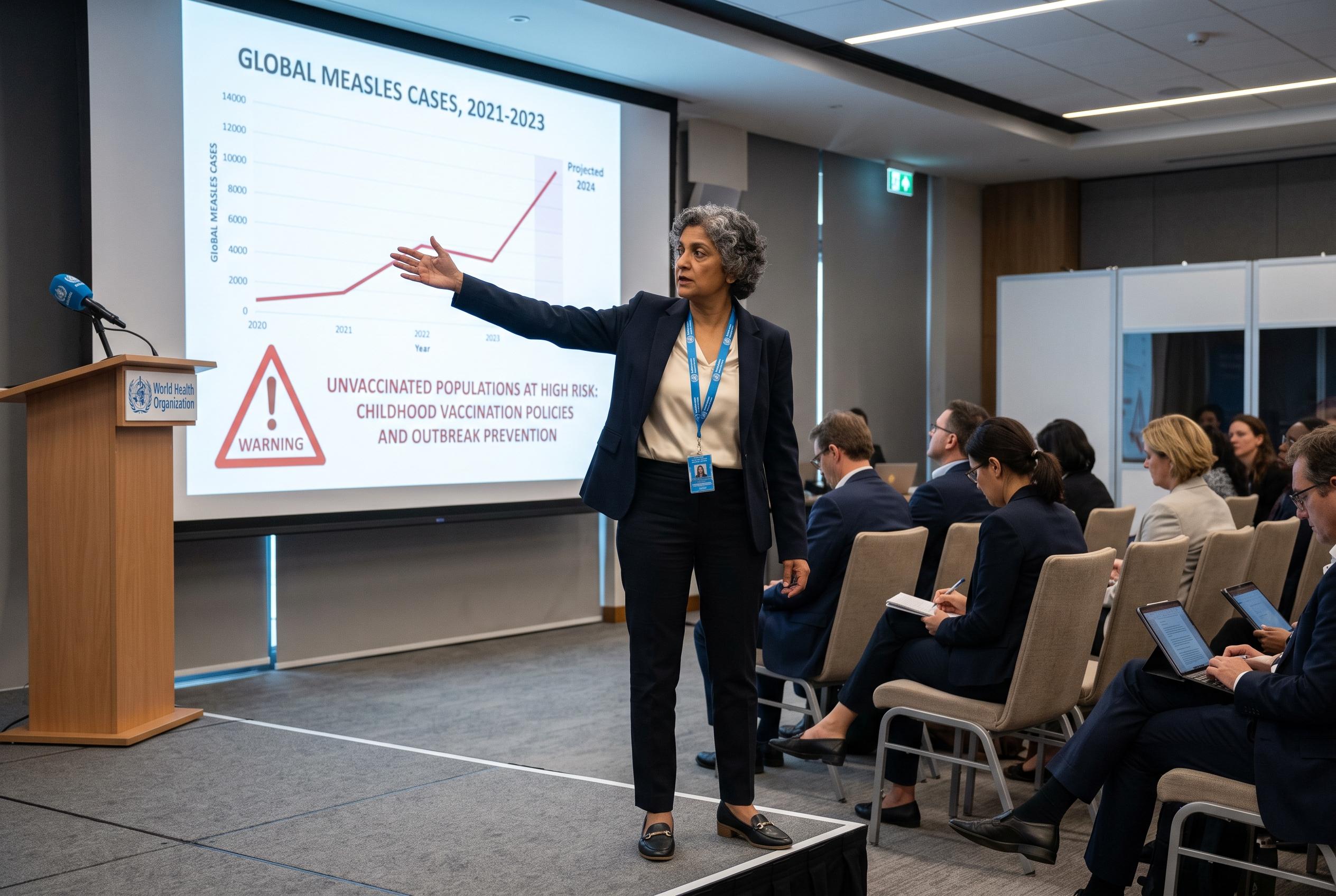

Tedros Adhanom Ghebreyesus, head of the WHO, condemns the US administration’s new childhood vaccination policies, warning they could undermine decades of scientific consensus and leave children more vulnerable to preventable diseases amid rising measles cases.
Tedros Adhanom Ghebreyesus, the director-general of the World Health Organization, has sharply criticised the Trump administration’s new childhood vaccination policy, saying it runs counter to “decades of evidence” and risks leaving children less protected against preventable disease.
In a post on X, Tedros said vaccine policy should rest on “a rigorous, independent and transparent review” of the best available science rather than political pressure. His comments came after President Donald Trump signed an executive order narrowing the list of illnesses for which the federal government recommends routine childhood vaccination, while also creating new risk-based or shared-decision categories for several shots.
The policy shift, unveiled with Health Secretary Robert F. Kennedy Jr., reduces the number of diseases covered by the universal recommendation from 18 to 11. It also puts vaccines for flu, COVID-19, hepatitis A and B, rotavirus and meningitis into narrower categories and orders a review of the federal childhood immunisation schedule. Earlier reporting by The Guardian said Trump had already directed the CDC in May to cut the number of recommended childhood vaccines, and The Associated Press reported that the administration then moved again in August to encourage spacing out doses, including splitting the MMR shot into separate visits.
Public health experts have warned that the changes could fuel confusion and undermine confidence in vaccination programmes. Tedros said evidence shows when children are most vulnerable to infection, how many doses are needed and which vaccines can be given safely together. He added that delaying or unnecessarily separating shots does not make them safer and can leave children exposed for longer. The White House has linked the policy to concerns about autism, despite long-running research failing to establish a causal connection between vaccines and autism, while the United States has already recorded its highest number of measles cases in decades this year.
Disclaimer: This content is for informational purposes only and is not intended to be a substitute for professional medical judgment, advice, diagnosis, or treatment.