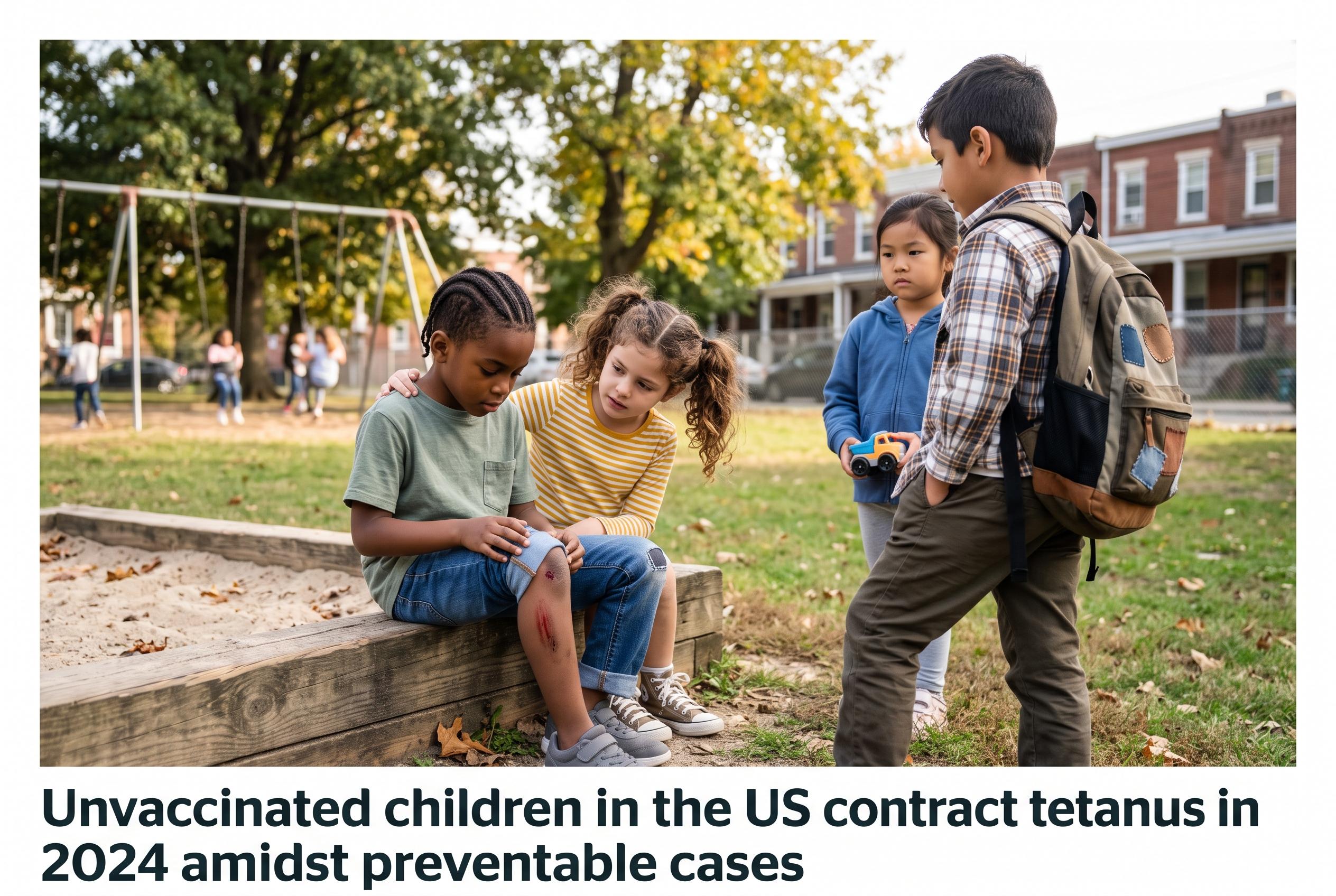

Four children across the US develop tetanus despite the disease being largely preventable through routine vaccination, highlighting persistent gaps and risks following everyday injuries.
Four children in the United States developed tetanus in 2024 despite the disease being almost entirely preventable with routine vaccination, according to the Centres for Disease Control and Prevention. The cases, recorded in Idaho, Minnesota, Missouri and Wisconsin, involved children aged one to 15 who had not completed their primary tetanus series. Two spent time in inpatient rehabilitation after hospital stays lasting from eight to 45 days.
What makes the report especially sobering for parents is that tetanus does not behave like the childhood infections many families know to guard against. It is not spread from child to child, so a neighbour’s vaccinations, a school’s coverage or a community’s overall uptake do not shield an unvaccinated child. The risk comes from the environment, not from contact with other people.
The injuries that led to illness were, by all accounts, the sort of everyday accidents families recognise: a compound ankle fracture, a puncture wound from an animal bone and a crushing foot injury caused by a horse hoof while a child was barefoot. In one case, the source of infection was never identified. The CDC said none of the children received either tetanus vaccine or tetanus immunoglobulin after injury and before symptoms appeared, even though those steps can prevent disease in an unvaccinated child if given promptly after a wound.
For parents, the practical lesson is less about rare diagnosis and more about what happens after a cut, puncture or crush injury. The CDC stressed that wounds contaminated with soil or manure, as well as burns, frostbite and injuries with dead tissue, deserve medical attention rather than simple home care alone. Clinicians decide whether a child needs a tetanus-containing vaccine, immunoglobulin or both based on the wound and immunisation history. Adults are generally advised to have a booster every 10 years, though a high-risk wound can bring that recommendation forward.
The wider surveillance picture adds context. In a separate CDC report covering 2009 to 2023, there were 402 tetanus cases nationwide and 37 deaths, with many linked to acute wounds and a large share occurring in people who had never received a tetanus-containing vaccine. The disease is uncommon, but it remains serious because there is no person-to-person transmission to interrupt and no lasting immunity from simply surviving an infection. A child who recovers still needs vaccination to be protected in future.
That is why catch-up matters. The Vaccines for Children programme covers eligible children at no cost, including those on Medicaid and many who are uninsured, and most private insurance plans cover routine immunisation without cost-sharing. Parents unsure about a child’s status can ask their paediatrician or state immunisation registry for records and arrange a catch-up schedule. In this case, the best protection is not panic after an injury, but having the conversation before one happens.
Disclaimer: This content is for informational purposes only and is not intended to be a substitute for professional medical judgment, advice, diagnosis, or treatment.