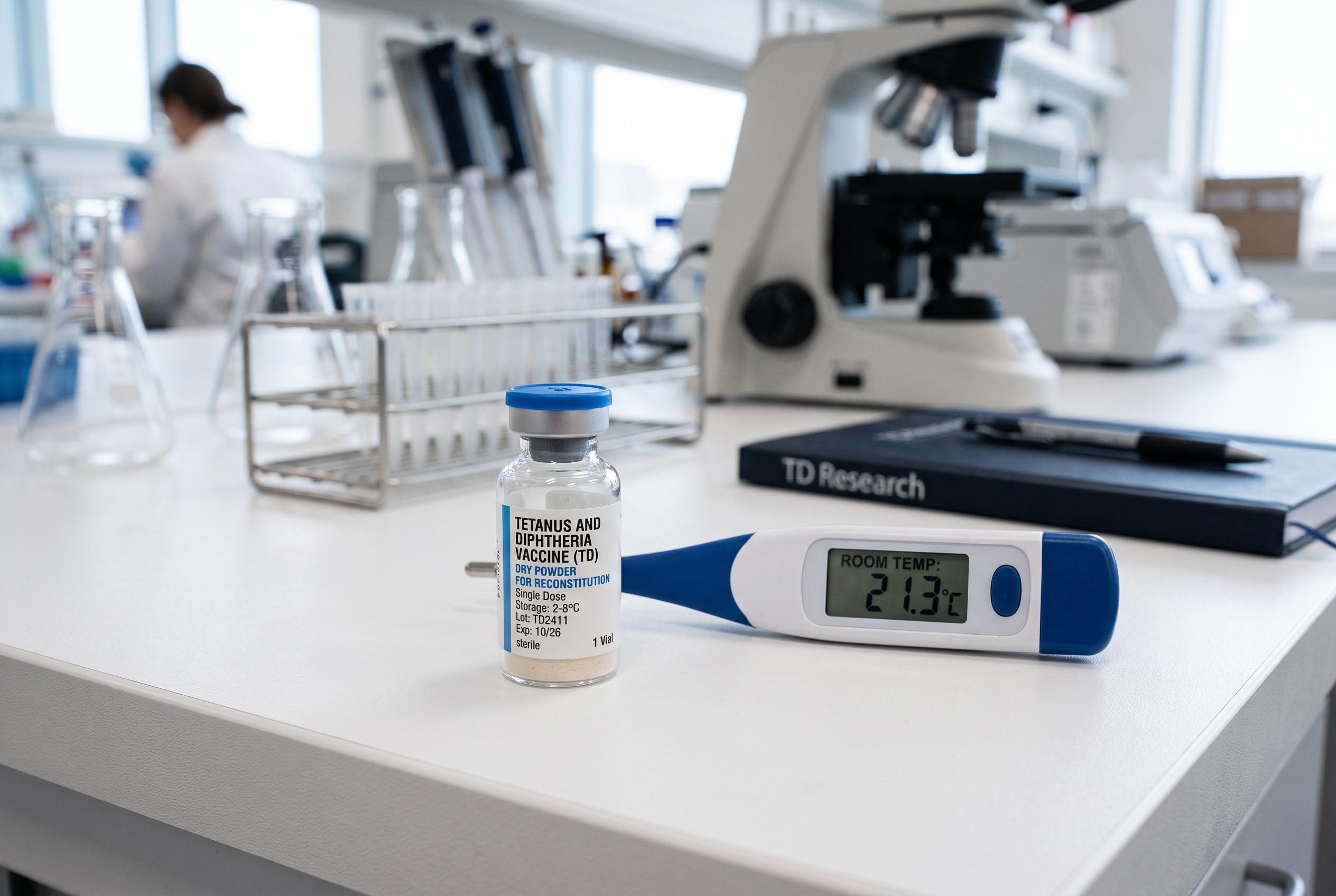

Researchers in the UK have created a dry powder vaccine for tetanus and diphtheria that remains stable at room temperature, potentially transforming vaccine logistics worldwide by reducing waste and cold chain reliance, pending larger clinical trials.
Scientists in the UK have reported promising early results for a tetanus and diphtheria vaccine that can be stored as a dry powder at room temperature, a development they say could cut waste and ease pressure on fragile vaccine supply chains. BBC reported that the work, backed by the National Institute for Health and Care Research, converted a liquid vaccine into powder using trehalose, a sugar that helps protect cells in nature during periods of drought.
The team rehydrated the vaccine after keeping it at room temperature for a year and tested it on 60 volunteers. According to the researchers, the shot produced immune responses comparable with those triggered by the standard tetanus-diphtheria vaccine and was well tolerated. They also said laboratory data suggested the ingredients remained stable across a broad temperature range, from -20C to 40C.
The wider significance is clear. The World Health Organization has said roughly half of the vaccines produced globally are discarded because of transport damage, expiry, unused doses or failures in the cold chain, the temperature-controlled system needed to keep many vaccines viable. The UK Health Security Agency has separately highlighted work with Stablepharma on a fridge-free tetanus and diphtheria vaccine, known as SPVX02, while other UK researchers are pursuing different approaches to room-temperature vaccine storage, including RNA stabilisation and low-cost heat-damage tests.
The new technique takes inspiration from plants that survive dry spells by switching into a dormant state and reviving when rain returns. The researchers said the same trehalose-based principle could help protect active vaccine ingredients until they are needed. They are now planning a larger clinical trial involving 160 people in the coming months, and if the results hold, the approach could reduce reliance on cold storage in places where refrigeration is costly, unreliable or simply unavailable.
Disclaimer: This content is for informational purposes only and is not intended to be a substitute for professional medical judgment, advice, diagnosis, or treatment.