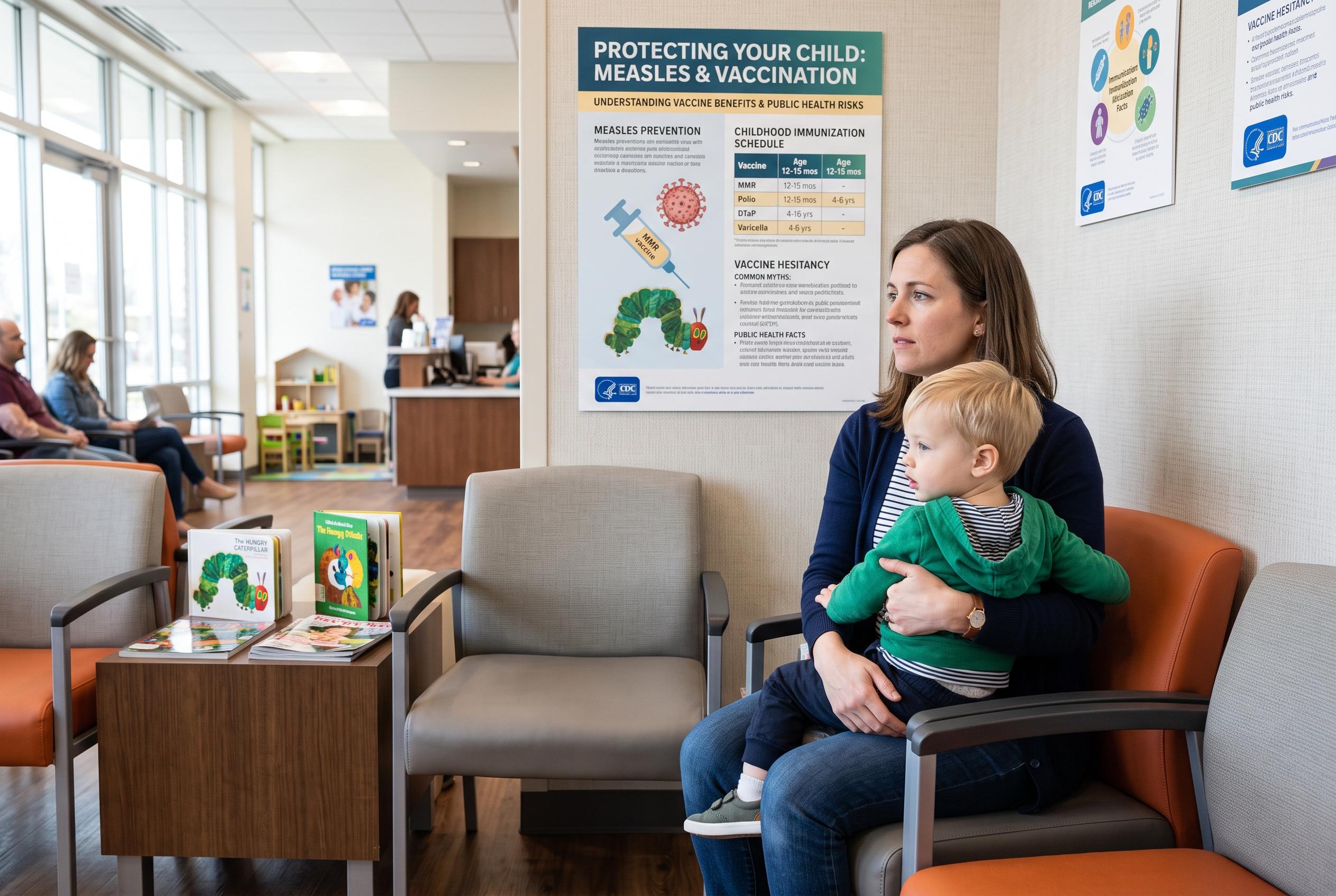

Medical experts warn that President Trump’s executive order to separate childhood vaccines could exacerbate vaccine hesitancy amid rising measles cases and declining immunisation rates, raising fears of public health setbacks.
Doctors are warning that President Donald Trump’s new executive order on vaccines could deepen parental anxiety at a time when measles is spreading, immunisation rates are slipping and families are preparing for the new school year. Molly O’Shea, a paediatrician in Michigan, said many parents are already working through back-to-school checklists that include routine check-ups and vaccinations, and argued that casting doubt on established childhood shots at this moment is badly timed.
Signed on Monday, the order calls for the combined measles, mumps and rubella jab to be broken into three separate injections and for childhood immunisations to be given in different appointments where possible. It also revives changes to the childhood vaccine schedule that Trump’s health department had previously tried to advance before a federal judge blocked them. The department is led by Robert F. Kennedy Jr., a long-time figure in the anti-vaccine movement.
Trump again raised discredited claims linking vaccines to autism, suggesting that the number and timing of childhood injections may be connected to the rise in diagnoses. Doctors say that claim has been examined for years and repeatedly rejected. Paul Offit, a vaccine researcher at Children’s Hospital of Philadelphia and a former government adviser, said the president’s remarks were not grounded in science and were especially irresponsible during what is now the country’s worst measles outbreak in more than three decades.
Paediatricians also pushed back on Trump’s suggestion that the combined MMR vaccine could be harmful. They said the shot has undergone extensive testing and years of safety monitoring, and that there is no evidence that splitting it would improve its performance. Andrew Racine, who heads the American Academy of Pediatrics, said research from around the world has found no link between childhood vaccines and autism. The academy continues to recommend immunisation against 18 diseases in its 2026 schedule, while the Trump administration-backed approach would narrow that protection and create conflicting signals for families and clinicians.
Medical Economics reported that no manufacturer currently sells separate measles, mumps or rubella vaccines in the United States, meaning any return to one-disease-at-a-time shots would require new clinical trials and separate federal approval. Experts quoted by The Guardian and other outlets warned that such a change could delay protection, raise costs and add confusion at a time when public health officials are trying to keep vaccination rates up.
Disclaimer: This content is for informational purposes only and is not intended to be a substitute for professional medical judgment, advice, diagnosis, or treatment.