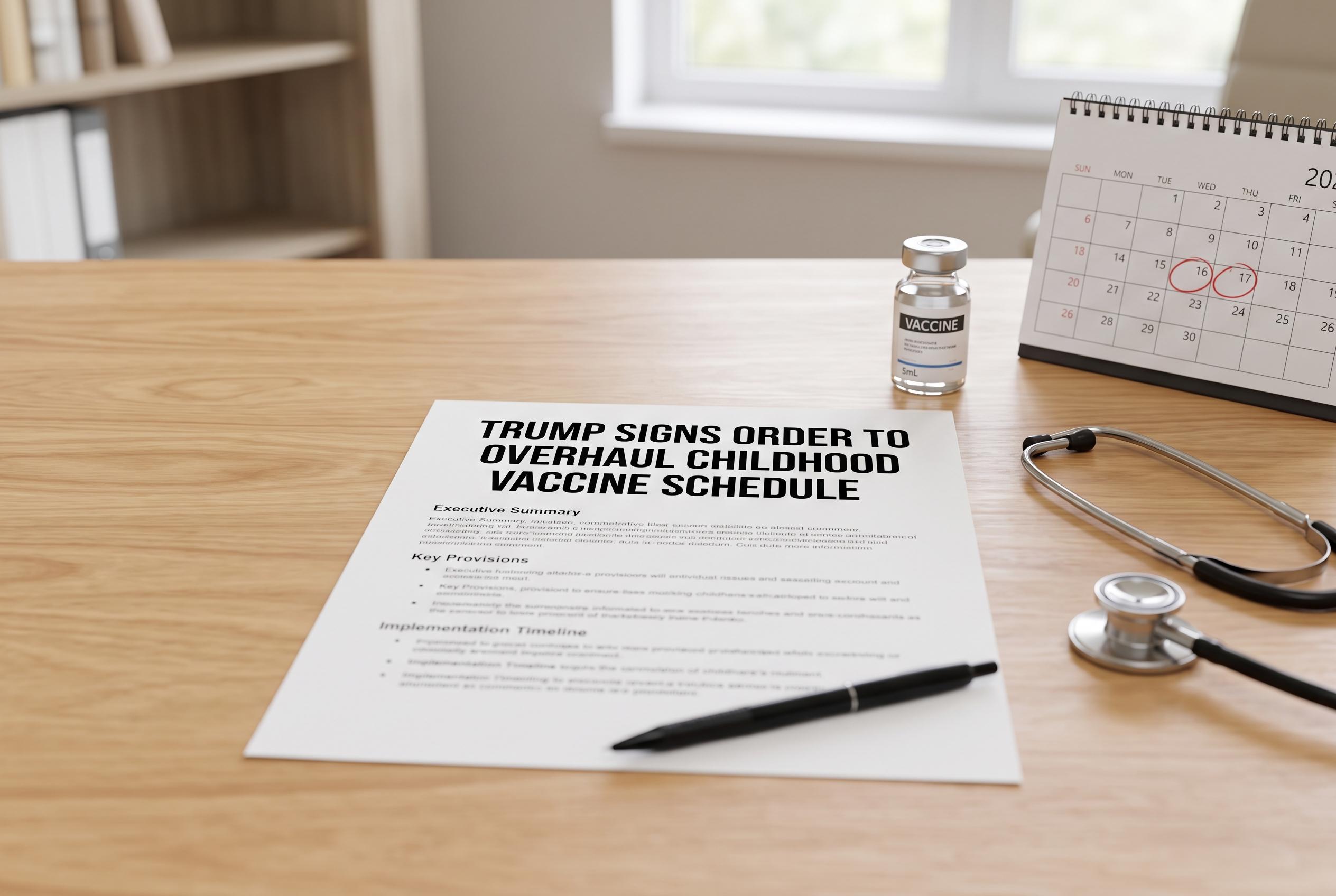

President Donald Trump has signed an executive order intended to simplify the childhood vaccine schedule, sparking criticism and concern as debates over vaccine safety and public health priorities intensify during a measles outbreak.
President Donald Trump on Monday signed an executive order aimed at overhauling the federal government’s approach to childhood vaccinations, according to CNN and The Washington Post. The move would lower the number of immunisations recommended in the earliest years of life and divide the childhood schedule into three categories, marking the latest and most aggressive step yet in a wider administration effort to reshape vaccine policy.
The order also calls for the combined measles, mumps and rubella vaccine to be broken into three separate shots, even though no such individual vaccines are currently available in the United States. That proposal runs counter to broad medical consensus and would require new formulations before it could be put into practice. Trump said from the Oval Office that the administration was “reducing” the number of vaccines children receive and spreading them out across more doctor visits.
Under the new recommendations described in the draft order, all children would still be advised to receive vaccines for measles, mumps, rubella, diphtheria, tetanus, pertussis, polio, Hib, pneumococcal disease, HPV and chicken pox. But several other shots now recommended broadly, including hepatitis A, hepatitis B, meningococcal B, meningococcal ACWY and dengue, would be limited to high-risk groups. Other vaccines, including those for rotavirus, flu, Covid-19 and meningococcal disease, would be left to shared decision-making between parents and doctors.
The announcement builds on a long-running push by Trump and Health Secretary Robert F. Kennedy Jr. to revisit the childhood vaccine schedule and investigate claims about possible links between vaccines and autism, a connection that extensive research has repeatedly failed to support. It also arrives as public health experts warn that delaying routine inoculations could leave children vulnerable to preventable disease, while the administration’s push to urge states to align school vaccine mandates with federal recommendations remains limited by the fact that immunisation requirements are set by states. The timing, in the middle of back-to-school season and amid a measles outbreak, is likely to intensify an already fierce political and medical fight.
Disclaimer: This content is for informational purposes only and is not intended to be a substitute for professional medical judgment, advice, diagnosis, or treatment.