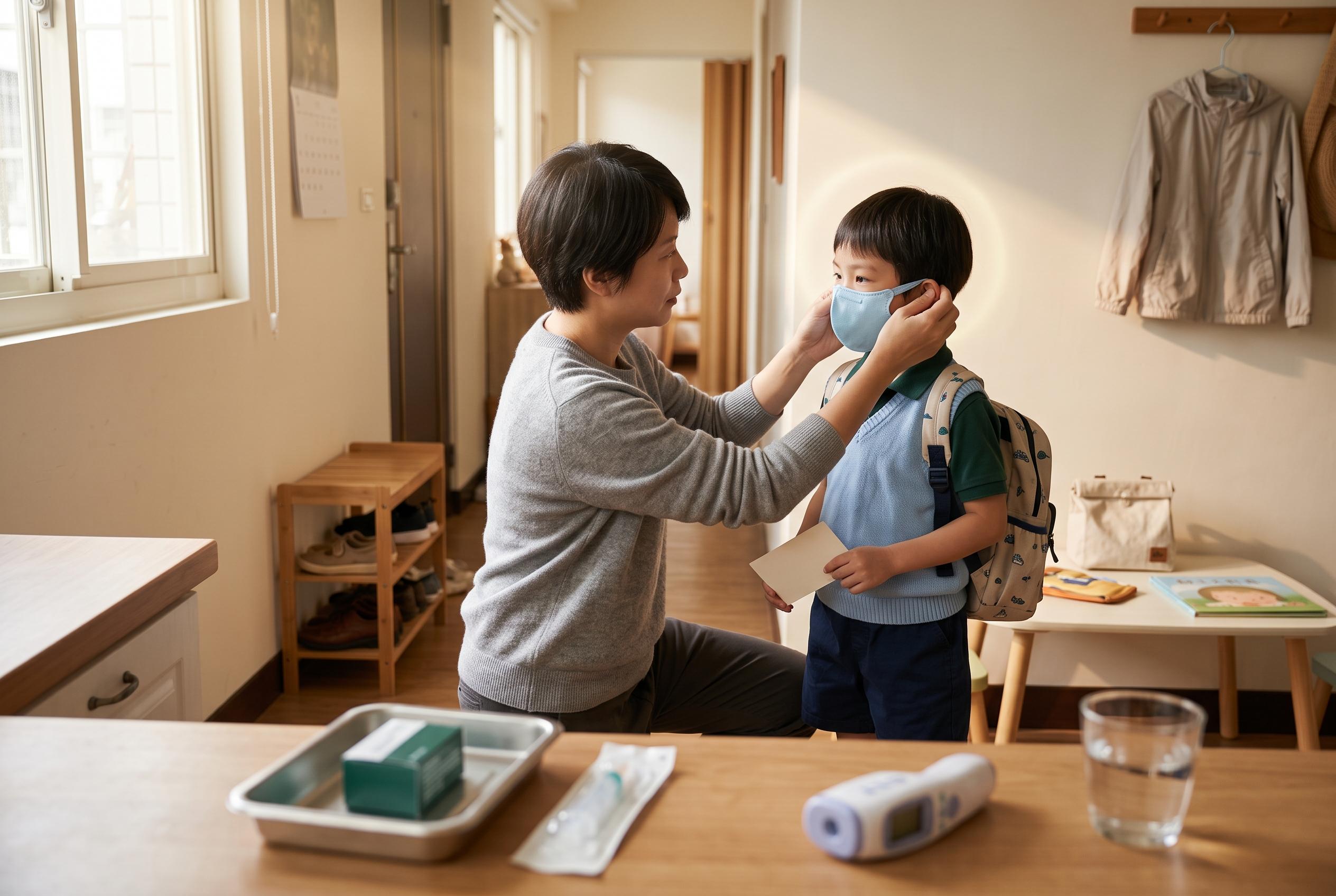

As the new school term begins, Taiwanese doctors warn of the shifting patterns of influenza and Covid-19, urging timely vaccination and vigilant care to prevent severe illness among children amidst the resurgence of respiratory infections.
As the new school term approaches, Taiwanese doctors are warning parents not to treat flu as a seasonal nuisance. With influenza A and B alternating in circulation and Covid-19 also rising recently, clinicians say the return of classroom contact could make respiratory infections spread more quickly among children and families.
Taipei Veterans General Hospital paediatric infection specialist Lee Ping-ying, speaking for the Taiwan Vaccine Promotion Association, said recent patterns show flu is not confined to winter. He noted that Taiwan saw A(H3N2) dominate last autumn, B influenza surge in March and A strains rise again from June, underscoring the need for vaccination before the virus spreads widely. Taiwan’s Centres for Disease Control recommends annual flu shots for everyone aged six months and above, with particular emphasis on young children, older adults, pregnant women and people with chronic illness.
Lee also stressed that flu in children can be severe. Beyond pneumonia, it can lead to encephalitis, brain inflammation and myocarditis, a serious infection of the heart muscle. He said research suggests children are about five times more likely than adults to pick up influenza outside the home, making them a common starting point for transmission back into households and across schools.
At Linkou Chang Gung Memorial Hospital, paediatric infectious disease specialist Huang Yu-cheng described a case in which a 12-year-old boy developed acute necrotising encephalitis after catching A influenza and deteriorated rapidly. Huang urged parents to seek urgent medical care if a child with flu develops rapid breathing, altered consciousness, unusual sleepiness or a marked drop in activity. Taiwan’s paediatric guidance also highlights handwashing, mask use and staying home until at least 24 hours after a fever has gone.
Parents now have another option besides the standard injection. Taiwan introduced a nasal spray flu vaccine last year for eligible children and teenagers aged two to 17, which may be easier for those who are afraid of needles, though it is not publicly funded. Health authorities and paediatric groups still say the key point is to vaccinate before the flu season peaks, because protection wanes over time and yearly immunisation remains the best defence against severe illness and complications.
Disclaimer: This content is for informational purposes only and is not intended to be a substitute for professional medical judgment, advice, diagnosis, or treatment.