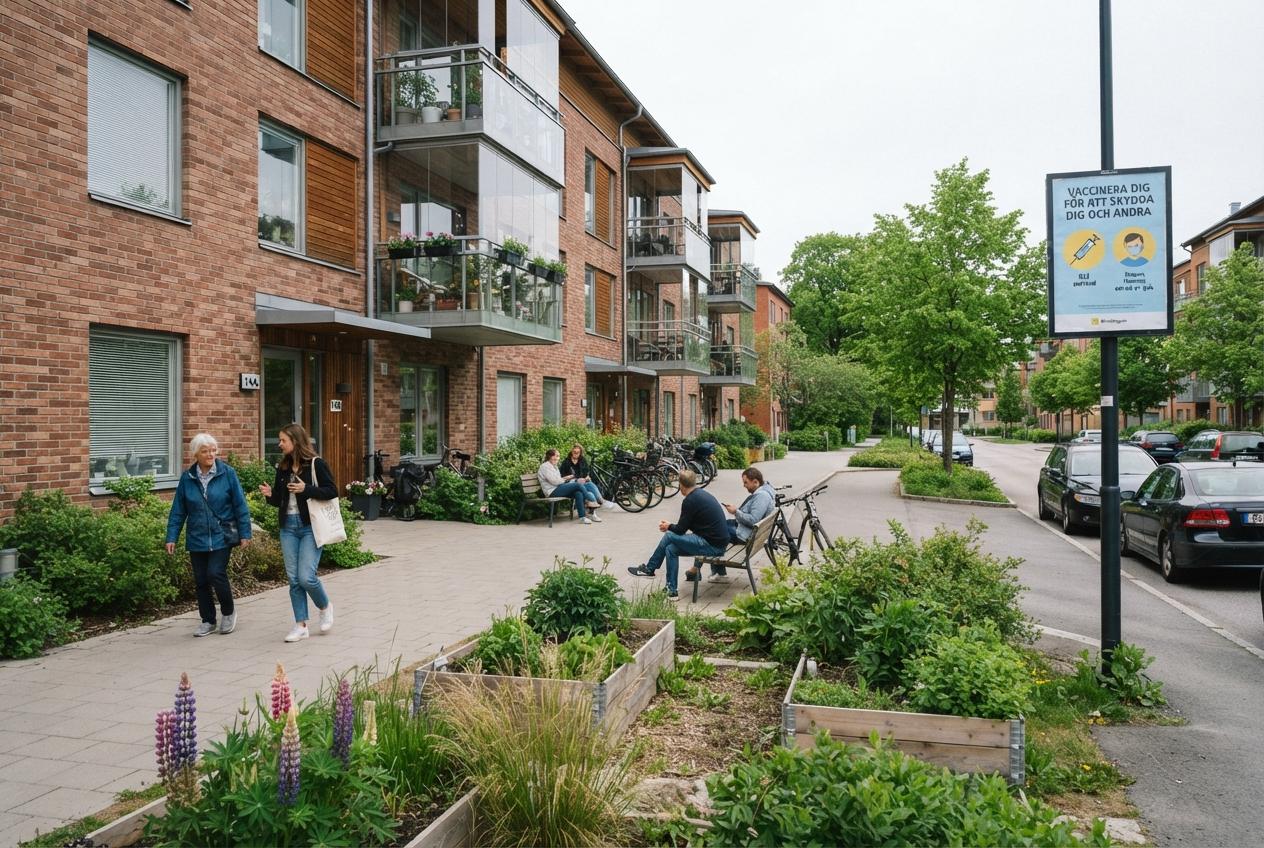

Sweden announces the inclusion of chickenpox vaccination in its national immunisation schedule, backed by new surveillance measures, in a strategic move to reduce disease transmission and monitor potential shifts in shingles patterns.
Sweden has moved to make chickenpox vaccination part of its national childhood immunisation programme, ending years of hesitation over a disease long dismissed as routine. The government’s amendment to the country’s communicable disease rules also means confirmed cases of varicella must now be reported to public health authorities, giving officials a surveillance system for a virus they have said they cannot eliminate without tighter monitoring.
The change marks a significant shift in a country where childhood vaccines are generally free, voluntary and delivered through the national programme overseen by the Public Health Agency of Sweden. That programme already covers protection against 11 diseases, and the agency’s own criteria for adding another vaccine require that it can curb transmission, be cost-effective and meet ethical and humanitarian standards.
Officials have argued that chickenpox meets that test. Swedish data show the illness causes more than 300 hospital admissions a year and around 110,000 cases in total, while a hospital study in Stockholm and Gothenburg found complications in most admitted children, including dehydration, skin infections and neurological problems. The study also found that serious outcomes were not confined to children with underlying conditions.
The new policy is designed around a two-dose schedule and a catch-up campaign. Children born from 1 July 2025 will receive a first dose at 18 months through child health clinics and a second dose in school years one and two. Those under 18 who are still susceptible will be offered free catch-up vaccination from spring 2027, with the government targeting full offer coverage by 2033.
The Public Health Agency’s assessment also took account of a concern that has slowed chickenpox programmes elsewhere: the possibility that reducing circulation of the virus could, in the short term, affect shingles patterns in older adults. Swedish and international modelling has concluded that a broad two-dose programme, combined with rapid catch-up coverage, should compress that transitional period. The agency has also highlighted the importance of having proper notification data in place so any change in disease trends can be tracked early.
That surveillance gap is now being closed. Under Sweden’s updated rules, confirmed chickenpox cases will have to be reported by healthcare workers to regional communicable disease doctors and to the Public Health Agency through the national reporting system used for notifiable infections. RSV has been added to the same reporting framework. Public health experts say the move is essential if Sweden is to judge whether the programme is doing what ministers say it should: drive down transmission and, eventually, eliminate wild-type varicella circulation.
The government’s confidence is bolstered by experience abroad. Finland introduced universal chickenpox vaccination in 2017 and Iceland followed in 2020, and the World Health Organisation’s advisory panel backed universal varicella vaccination in 2025. Sweden’s planners have also pointed to large reductions in hospital admissions in countries that began vaccinating earlier, including the United States, Uruguay, Canada and Germany, while Swedish parent surveys suggest strong willingness to vaccinate once the jab is included in the free national programme.
Disclaimer: This content is for informational purposes only and is not intended to be a substitute for professional medical judgment, advice, diagnosis, or treatment.