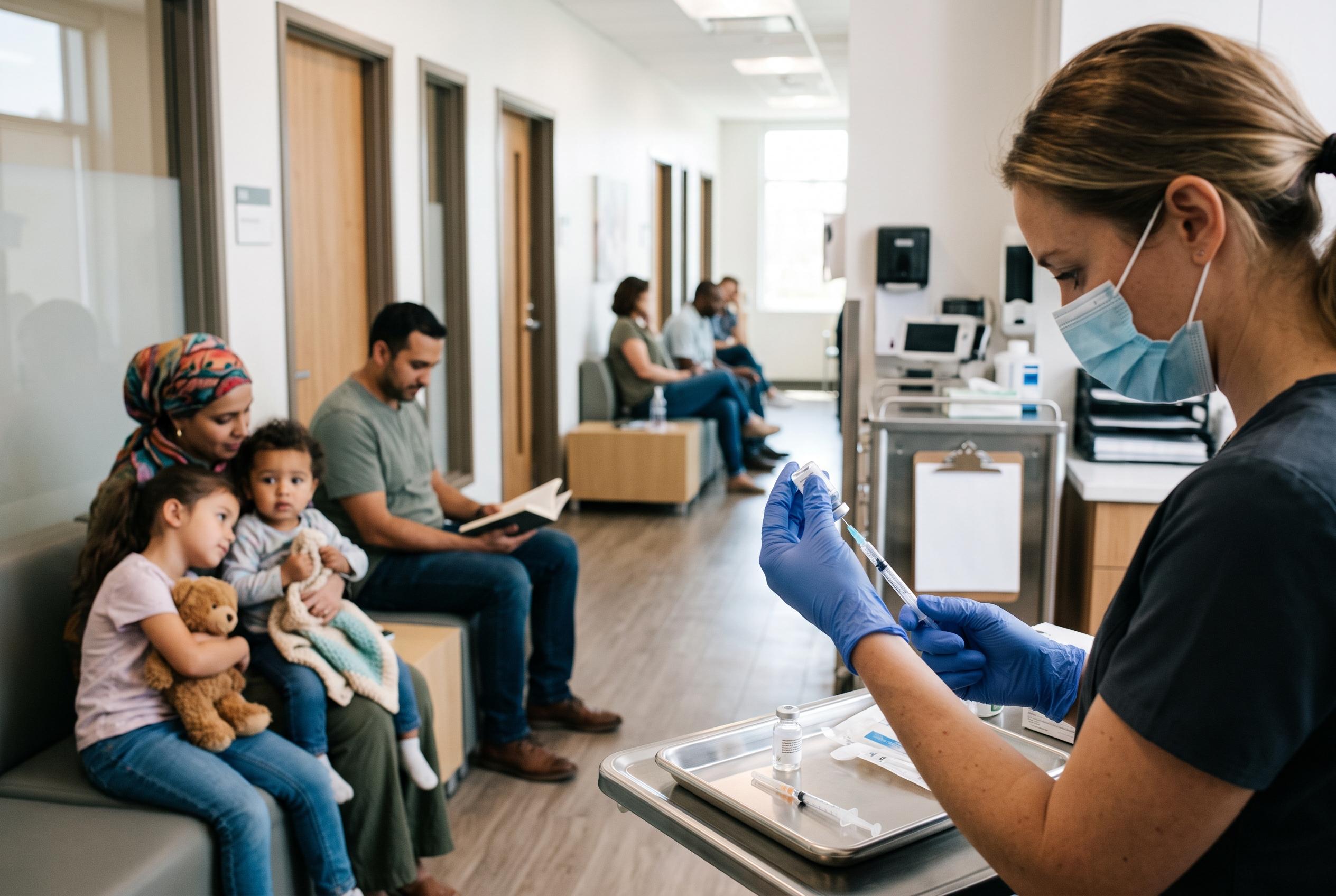

South Carolina has declared the end of its largest measles outbreak in decades, with nearly 1,000 confirmed cases over six months. The response included mass vaccination efforts, contact tracing, and quarantine measures, leading to increased immunisation rates amidst ongoing national concerns.
South Carolina has brought its massive measles outbreak to an end after nearly 1,000 confirmed cases over about six months, state health officials said on Monday. The Department of Public Health said no new linked infections had been reported for more than 42 days, a benchmark that covers two measles incubation periods and indicates that transmission has stopped.
The outbreak, which began in October, became the largest the United States has seen in decades and helped drive what public health experts say is a record year for measles cases nationwide. State officials said the final count reached 997 cases, with the last confirmed infection reported on 15 March. At least 21 people were hospitalised, underscoring how quickly the virus can spread in communities where vaccination levels are too low to block it.
South Carolina health leaders said the response combined vaccination with contact tracing, case investigation and quarantine measures. Dr Brannon Traxler, deputy director and chief medical officer at the state health department, said at a briefing that vaccination, together with “other opportunities for good, solid public health work”, had helped bring the outbreak under control. The state said the effort cost about $2 million.
Public health data suggest that the outbreak also prompted a jump in measles, mumps and rubella vaccination. South Carolina said tens of thousands of MMR doses were given during the outbreak, with doses in Spartanburg County, the centre of the outbreak, nearly doubling from the previous year and statewide vaccinations rising 31%. That mirrors a tentative national shift: data from the US Centres for Disease Control and Prevention show MMR coverage among 3-year-olds rose to about 97% in 2025 from 93% in 2024. Experts cautioned that the survey is based on a relatively small sample and that the trend is not yet confirmed across other vaccines or age groups.
Even so, the outbreak’s end does not mean the threat is gone. The CDC has already reported 1,792 measles cases in 2026, with more outbreaks still active in other parts of the country, including a long-running cluster on the Utah-Arizona border. South Carolina also recorded a separate measles case this month that was not linked to the main outbreak, but it still exposed more than 40 people. Traxler said the state was “certainly not letting our guard down”, while vaccine experts said the recent rise in coverage may reflect a growing public reaction to the disease’s return and renewed concern about anti-vaccine messaging.
Disclaimer: This content is for informational purposes only and is not intended to be a substitute for professional medical judgment, advice, diagnosis, or treatment.