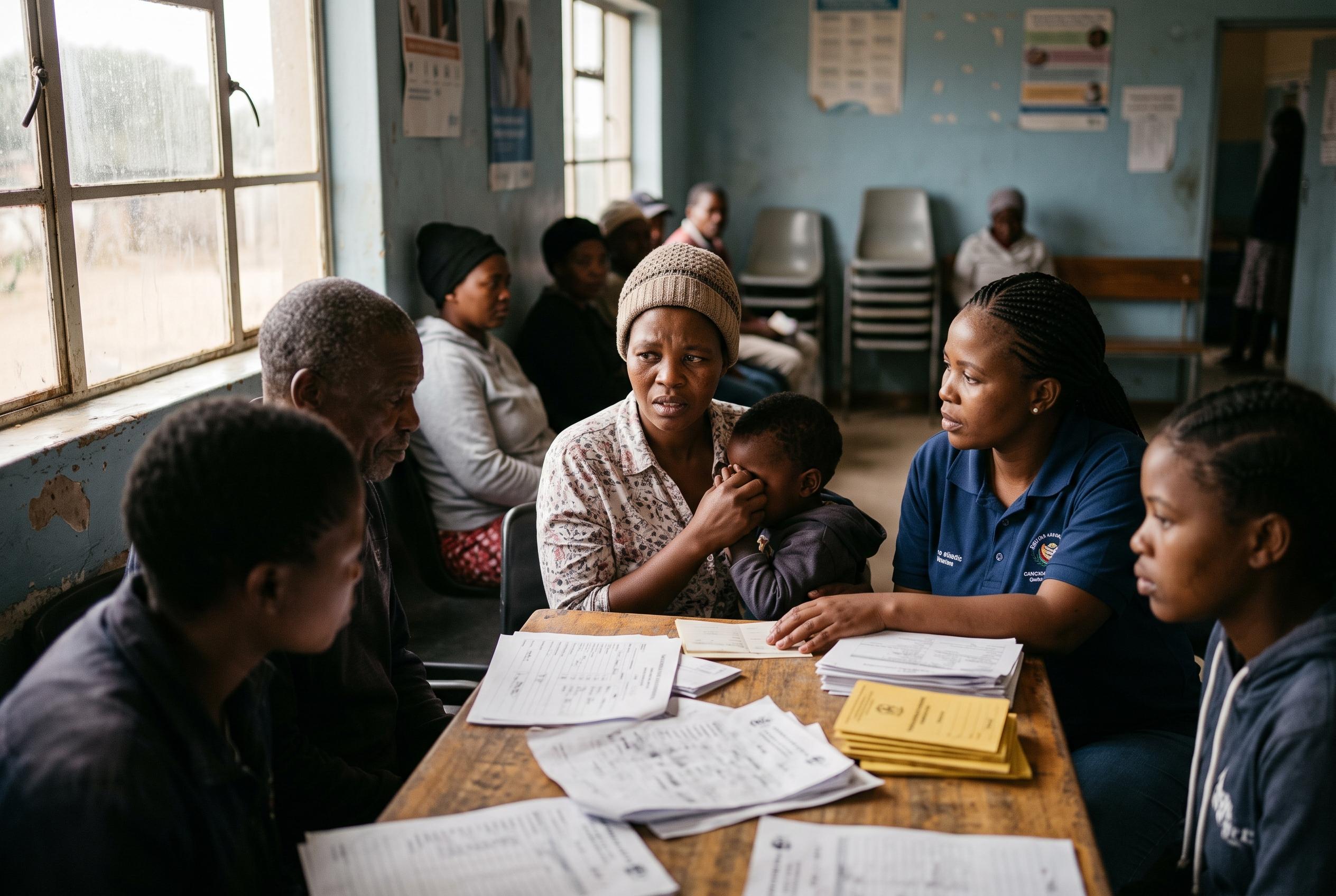

South Africa’s measles cases surpass 4,000 amid declining childhood immunisation coverage, with authorities warning of a growing public health emergency driven by vaccine mistrust and misinformation.
South Africa’s measles outbreak has now passed 4,000 laboratory-confirmed cases, and health officials are linking that surge to a sharp collapse in routine childhood immunisation. In its latest weekly surveillance update, the National Institute for Communicable Diseases (nicd.ac.za) said 4,063 measles cases were recorded nationally between 29 December 2025 and 23 August 2026. At the same time, the Department of Health, quoted by Sowetan (sowetan.co.za), has warned that more than one in three infants under one received no vaccines at all between January and April 2026 and described the wider slump as “a public health emergency characterised by childhood disease outbreaks”.
The decline is not confined to a few missed appointments or a handful of districts. Figures cited by Foster Mohale, the health department spokesperson, show first-dose coverage among children under one fell from 87% in 2021 to 67% in 2025, while coverage for the hexavalent six-in-one infant vaccine dropped from 87% to 60.5% over the same period, with every one of South Africa’s 52 districts affected (sowetan.co.za). Mohale said South Africa is unlikely to meet the World Health Organization’s 90% childhood immunisation threshold without urgent action (sowetan.co.za). Separate background analysis published by Financial Mail from Spotlight’s reporting (fm.co.za) found that only 75.1% of children had received all recommended vaccines by their first birthday in 2024/25, down from 83% five years earlier.
The outbreak data show how quickly the situation is moving. When Mohale spoke on 26 August, the department was still citing about 3,462 confirmed measles cases and almost 400 rubella cases nationwide, with outbreaks in the Western Cape, Free State, KwaZulu-Natal, Northern Cape and elsewhere (citizen.co.za). The NICD’s later update took the confirmed measles total to 4,063 and the rubella total to 496, adding 172 new measles cases and 16 new rubella cases since the previous report (nicd.ac.za). Earlier departmental figures reported by The Citizen (citizen.co.za) also showed that 70.9% of measles cases were in children aged one to 14, underscoring that this is chiefly a paediatric outbreak rather than a statistical anomaly.
Other warning signs are appearing beyond measles and rubella. The Citizen reported (citizen.co.za) that imported poliovirus strains had been detected in Cape Town wastewater, even though South Africa remains polio-free. The same report said pertussis, or whooping cough, had been identified in several provinces, largely in babies younger than six months who are too young to be fully vaccinated (citizen.co.za). Since that article was published, the NICD has issued a newer diphtheria situational report (nicd.ac.za) showing 38 confirmed respiratory diphtheria cases and 10 asymptomatic carriers between 29 December 2025 and 30 August 2026, with 32 of those 38 cases in the Western Cape.
Officials are not blaming a single cause. Dr Nonhlanhla Ndlovu, the Department of Health’s deputy director general for HIV, AIDS, TB, Maternal, Women and Child Health, told Eyewitness News (ewn.co.za) that many parents had limited knowledge of the vaccination timetable and were not always using the Road to Health chart as intended. She also pointed to vaccine mistrust, misinformation on social media and broader mistrust of the health system, adding that the decline was especially troubling in metropolitan areas where clinics are generally close at hand (ewn.co.za). Ndlovu’s warning was blunt: “We are losing our herd immunity.” She added that an unvaccinated child could spread infection through early childhood development centres and schools, telling the broadcaster, “This is not a health department issue. It’s a community societal issue.”
The government is trying to answer that mistrust with both reassurance and catch-up drives. SAHPRA, the medicines regulator, said in a statement on 20 August that routine childhood vaccines used in South Africa remain safe and that there is no scientific evidence requiring it to reconsider their safety or effectiveness (sahpra.org.za). The regulator said vaccines are checked before authorisation and continue to be monitored afterwards through vaccine safety surveillance and pharmacovigilance systems (sahpra.org.za). Eyewitness News reported (ewn.co.za) that the health department is running a communications campaign and working through community health workers, while the Department of Health’s immunisation guidance says vaccines are free at public clinics and that children should still return at 18 months for two injections, including the second measles dose (health.gov.za).
That matters because South Africa’s immunisation programme is not a marginal service. Spotlight’s analysis, republished by Financial Mail (fm.co.za), noted that the national schedule covers 12 of the 13 pathogens the WHO recommends for universal childhood vaccination, including polio, TB, measles, pertussis, diphtheria, tetanus, hepatitis B, Hib, pneumococcal disease, rotavirus, rubella and HPV for girls. It also said South Africa does not yet provide a universal birth-dose hepatitis B vaccine for all newborns or maternal RSV vaccination in the public sector (fm.co.za). The same analysis explained that SAHPRA authorises vaccines for use, while the National Advisory Group on Immunisations advises the health department on which products should be rolled out and how (fm.co.za).
The immediate task, though, is not redesigning the schedule but getting children back into it. Mohale has said the department is prioritising catch-up campaigns for children who have missed doses in all districts (sowetan.co.za), while Ndlovu said the department also plans to work with education authorities to reach families through schools and early years settings (ewn.co.za). The warning from Western Cape health authorities, cited earlier this year by Spotlight’s reporting (fm.co.za), was that falling uptake had already contributed to outbreaks of measles, rubella and diphtheria. With measles now above 4,000 confirmed cases in the latest official surveillance, that warning looks less like a forecast than a description of what is already happening.
Disclaimer: This content is for informational purposes only and is not intended to be a substitute for professional medical judgment, advice, diagnosis, or treatment.