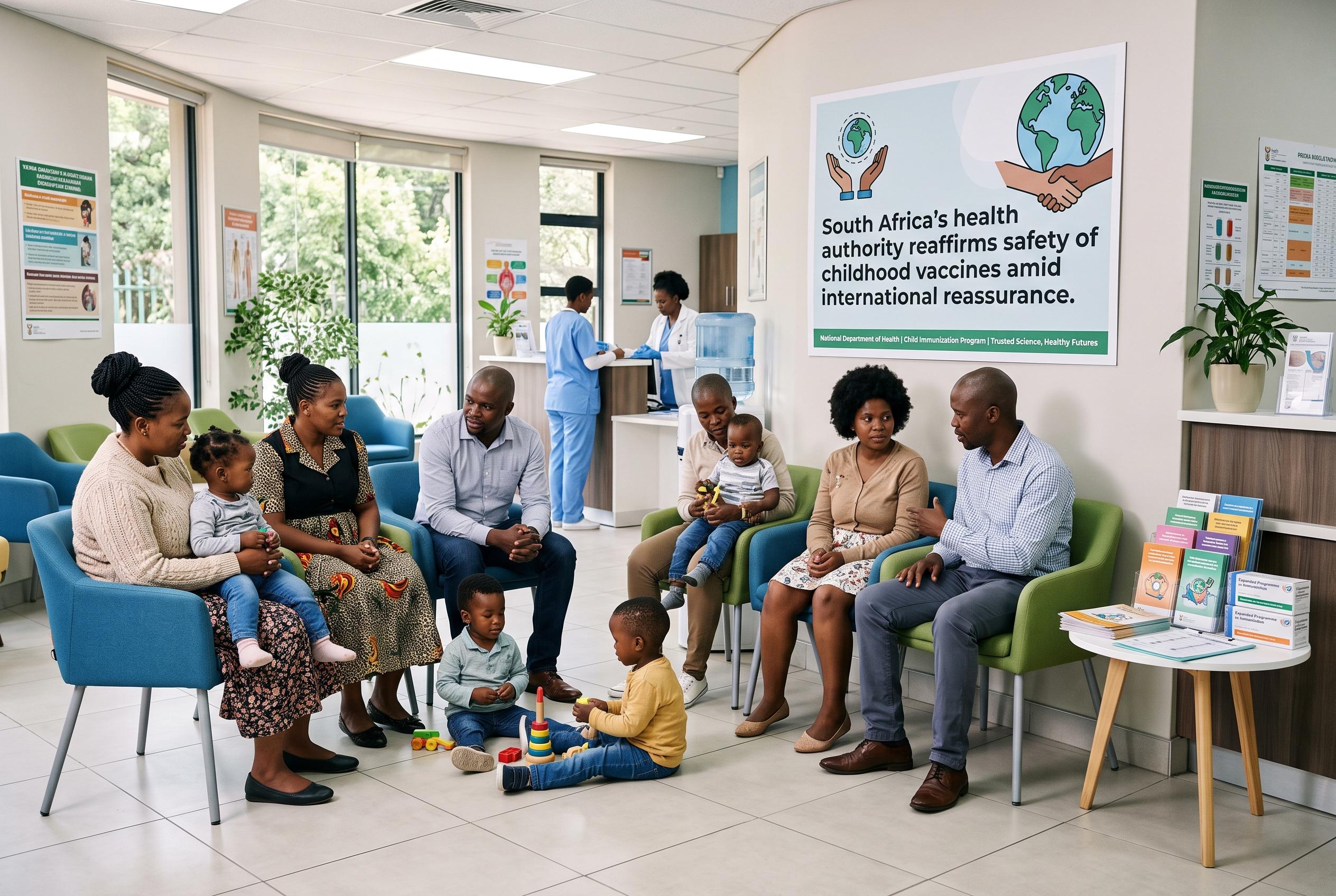

South Africa’s medicines regulator has confirmed that routine childhood vaccines remain safe and effective, aligning with global standards and reassuring concerned parents amid ongoing monitoring and international consensus on vaccine safety.
South Africa’s medicines regulator has moved to reassure parents that routine childhood vaccines used in the country remain safe, saying ongoing monitoring has not changed its assessment of their effectiveness or quality.
The South African Health Products Regulatory Authority said vaccination remains one of the most effective ways to protect children from serious infectious diseases, and that every vaccine on the routine schedule is reviewed before approval and monitored throughout its use. The authority said the evidence continues to support the national childhood immunisation programme, which is also backed by the National Department of Health, the National Institute for Communicable Diseases and the World Health Organization.
SAHPRA said most reactions after immunisation are mild and temporary, such as a slight fever, soreness, redness or swelling at the injection site. It said more serious adverse events must still be reported and investigated, because not every health problem that follows a vaccination is caused by the vaccine itself. The authority urged parents and caregivers to raise any concerns with a healthcare professional and to follow the Expanded Programme on Immunisation schedule.
Its reassurance comes amid broader international guidance that childhood vaccines have a strong safety record. The World Health Organization says vaccines go through extensive testing before approval and that safety monitoring continues after rollout. The US Centres for Disease Control and Prevention also says childhood vaccines are very safe, and that giving several recommended vaccines early in life does not overload a child’s immune system.
SAHPRA said it will update the public if new scientific evidence requires a change in current advice.
Disclaimer: This content is for informational purposes only and is not intended to be a substitute for professional medical judgment, advice, diagnosis, or treatment.