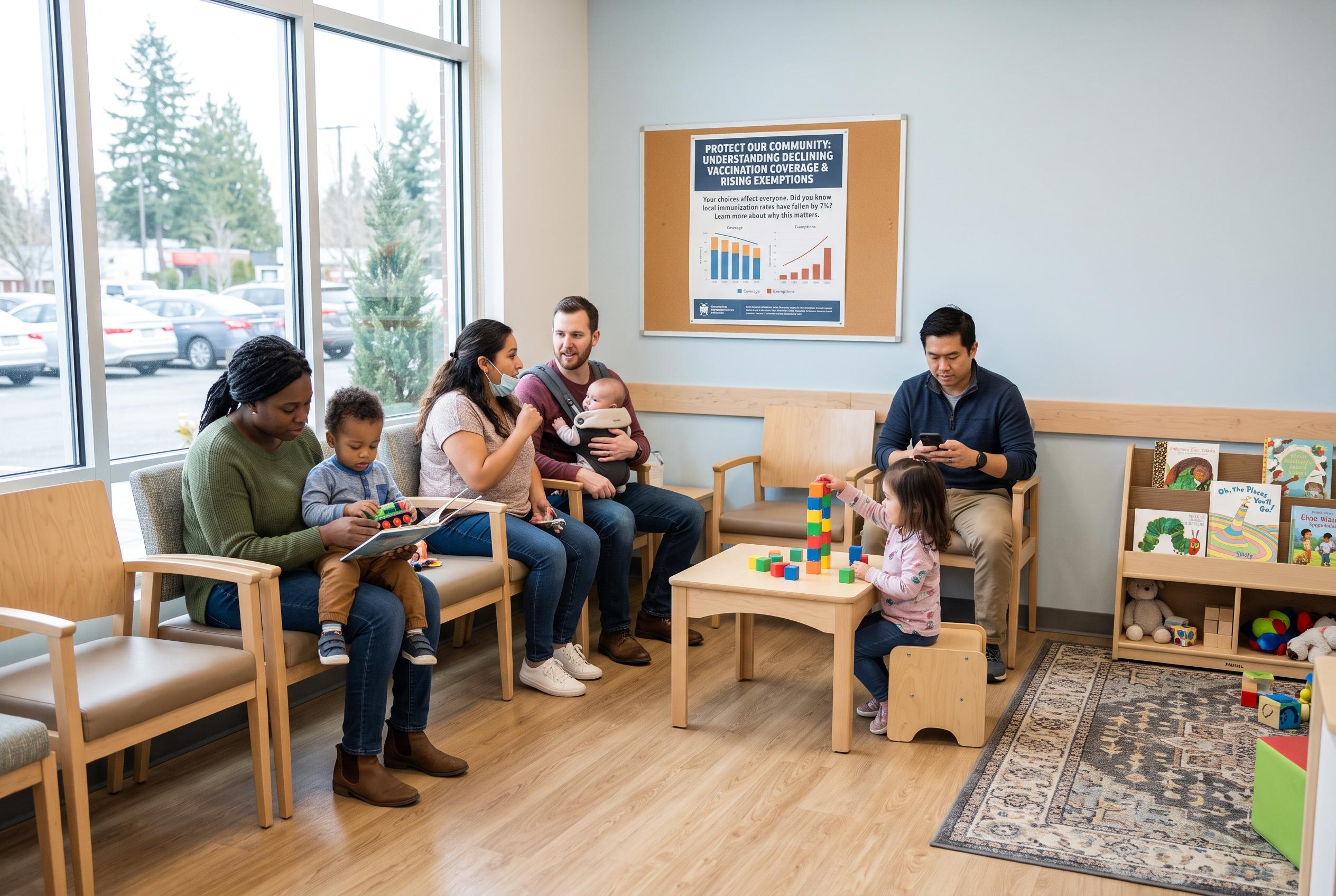

U.S. childhood vaccination rates are slipping amid record-high exemptions, risking a resurgence of preventable diseases as state-by-state disparities grow wider, prompting concerns among health officials about the future of herd immunity.
New school forms are landing just as the latest federal data shows childhood vaccination coverage in the U.S. is still slipping. The Centres for Disease Control and Prevention said kindergarten exemptions for routine shots reached 4.2% in the 2025-26 school year, a record high and a sharp rise from 3.6% the year before. Most of those exemptions were for non-medical reasons, underscoring a broader drift away from long-established school immunisation norms.
The CDC’s latest figures also show several routine vaccines losing ground or failing to recover to pre-pandemic levels. Coverage for measles, mumps and rubella fell to 92.4%, below the 95% level public health experts generally say is needed to help keep measles spread in check. DTaP, the vaccine that protects against diphtheria, tetanus and pertussis, edged down to 92%, while varicella coverage slipped to 93.4%. Hepatitis B coverage held steady, but the overall picture points to a slow, persistent erosion in protection among children entering school.
Nationwide numbers mask wide state-by-state differences. CDC data shows Idaho had the highest kindergarten exemption rate at 17.5%, followed by Utah, Oregon, Arizona and Nevada. At the other end of the scale, California, New York and West Virginia reported exemption rates of 0.1%, with Connecticut and Maine also among the lowest. Axios reported that MMR coverage also varied sharply across states, ranging from 98.9% in West Virginia to 75.2% in Idaho, highlighting how quickly local risk can diverge even within the same national trend.
Public health officials say the causes are not yet fully settled, but they point to a mix of confusion, disruption and weakened trust. David Margolius, who leads the Cleveland Department of Public Health, told ABC News that the pandemic disrupted many families’ connections with paediatric care and that some are only now re-establishing routine visits. He also said there is growing apathy and uncertainty around vaccine-preventable diseases. The Associated Press reported that experts have linked the rise in exemptions partly to shifting federal vaccine guidance and to political messaging that has created uncertainty for parents ahead of the new school year.
For families, the practical lesson is simple: school vaccine rules are still set largely at state level, and exemption policies can differ widely depending on where a child lives. The new CDC data does not predict what will happen next year, but it does confirm that the slide seen since the pandemic has continued. With exemption rates at a record high and several routine vaccinations still below earlier benchmarks, health officials are warning that schools may be entering the year with more children left vulnerable to preventable illness.
Disclaimer: This content is for informational purposes only and is not intended to be a substitute for professional medical judgment, advice, diagnosis, or treatment.