

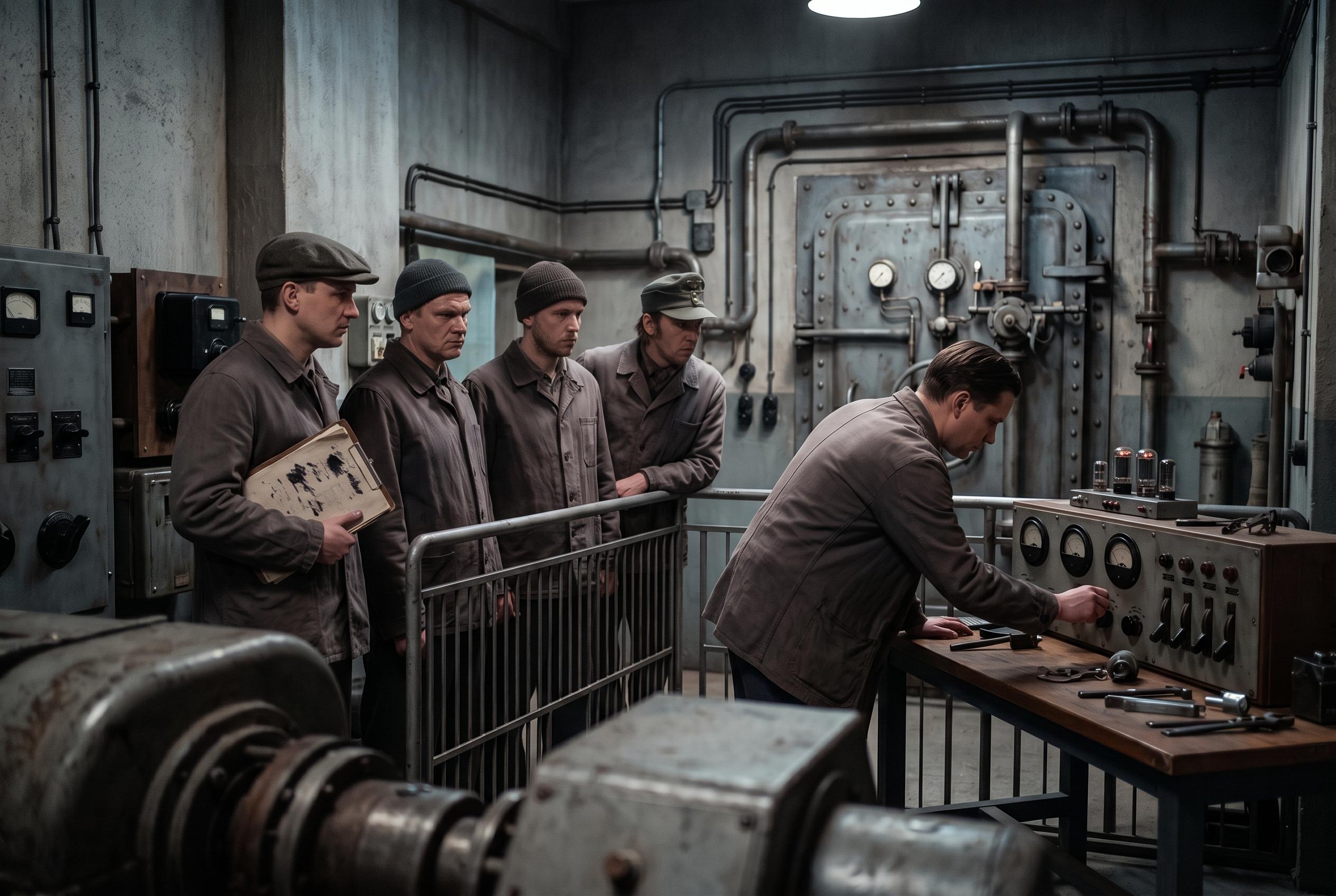

New study reconstructs the final wartime experiment at Haigerloch, indicating Nazi Germany lacked sufficient materials and scientific capability to achieve a self-sustaining nuclear chain reaction, challenging longstanding assumptions about their atomic ambitions.
New research suggests Nazi Germany was much further from building a working nuclear reactor than physicist Werner Heisenberg later implied. By reconstructing the final wartime B8 experiment at Haigerloch, researchers found that the assembly fell short of the threshold needed to sustain a chain reaction. The study, published in PNAS Nexus, puts the reactor’s neutron multiplication factor at about 0.94, below the 1.0 required for self-sustaining fission.
The model also points to a simple but decisive problem: Germany did not have enough material. According to the researchers, the reactor would have needed about 3.1 tonnes of uranium and 3.5 tonnes of heavy water, more than the country is thought to have possessed during the war. Heavy-water production in occupied Norway was also badly damaged by Allied attacks, further limiting supply. That means the oft-repeated idea that Germany came close to achieving reactor criticality appears to have been overstated.
The findings add fresh detail to a long-running historical debate about the Nazi atomic programme. They suggest the project was constrained not only by scientific limitations, but by severe shortages of the key ingredients needed to make nuclear fission work on a useful scale. In other words, the gap between ambition and capability was wider than some post-war accounts suggested.
Disclaimer: This content is for informational purposes only and is not intended to be a substitute for professional medical judgment, advice, diagnosis, or treatment.



