

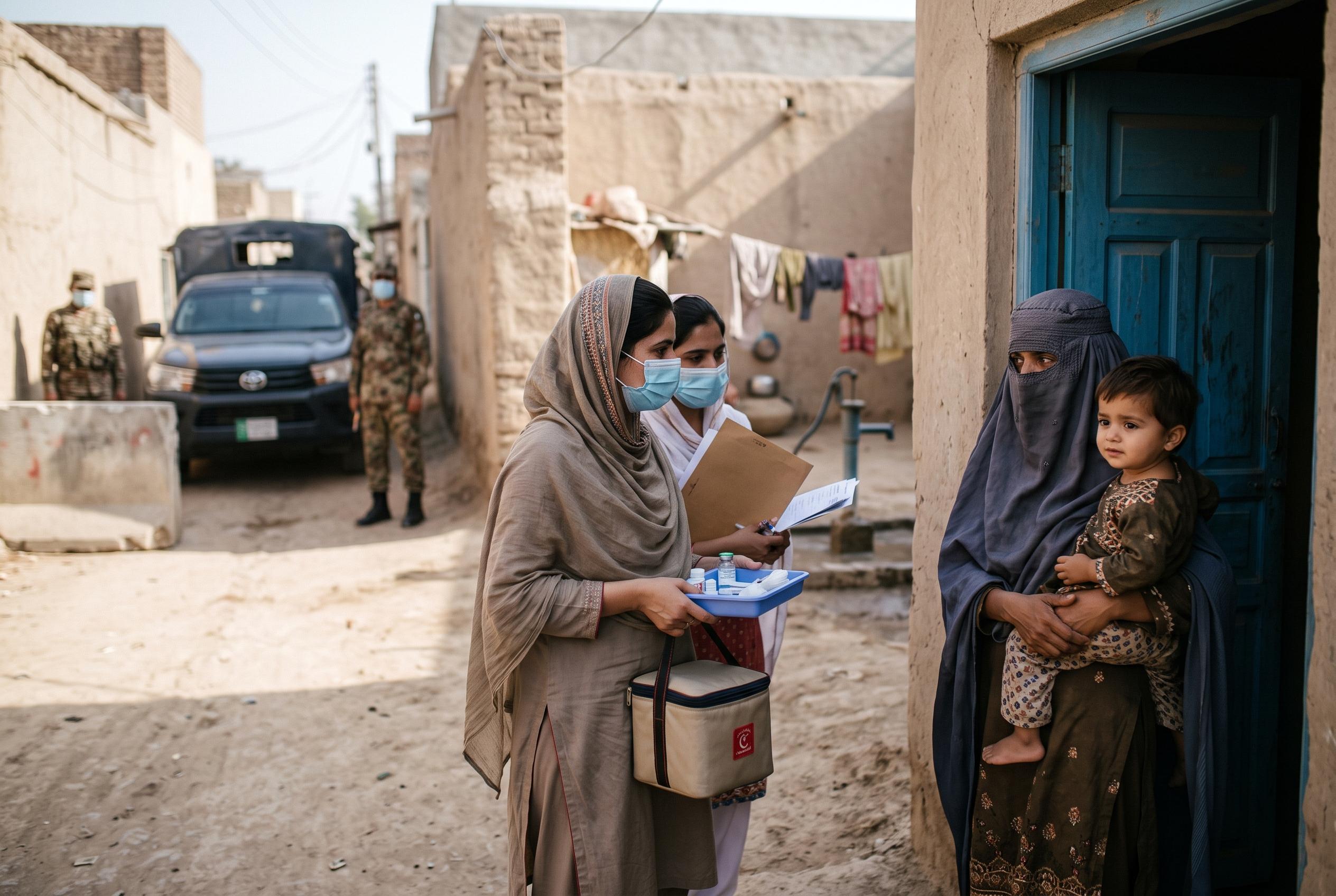

Pakistan has reported its fifth polio case of 2026, with ongoing security issues in Bannu hampering vaccination efforts and risking further virus transmission in the region.
Pakistan has confirmed its fifth polio case of 2026, with the virus detected in a 17-month-old girl from Bannu district in Khyber Pakhtunkhwa, health officials said on Monday.
According to Dawn, the child is from Khandar Khankhel union council in Domel tehsil. Officials from the National Emergency Operations Centre said four of the country’s five cases this year have now come from Bannu division, including three from Bannu district, underscoring the area’s continuing role as a hotspot for the virus.
The national polio eradication programme also confirmed the case on its website and said transmission remains active in southern Khyber Pakhtunkhwa. Health authorities have repeatedly pointed to access problems in the region, where security concerns have disrupted vaccination campaigns and made it harder for teams to reach children consistently.
Pakistan had recorded four cases by 11 September, when the National Emergency Operations Centre said the latest infection at that point was in Bannu district and urged parents to vaccinate children during a door-to-door campaign scheduled for 21 to 27 September. Several local reports said the drive aimed to reach about 31 million children nationwide, reflecting the scale of the effort still needed to interrupt transmission.
Bannu has remained a particular concern for eradication workers. Local and national reports have said insecurity has limited access for vaccination teams since 2025 in some union councils, leaving pockets of children under-immunised. Health experts have warned that such gaps can allow the virus to circulate and then re-emerge elsewhere if coverage remains uneven.
Polio is a highly contagious disease that can cause permanent paralysis and, in severe cases, death. There is no cure once infection occurs, but vaccination remains the most effective protection, and health officials continue to urge parents and caregivers to make sure children receive all recommended doses.
Disclaimer: This content is for informational purposes only and is not intended to be a substitute for professional medical judgment, advice, diagnosis, or treatment.



