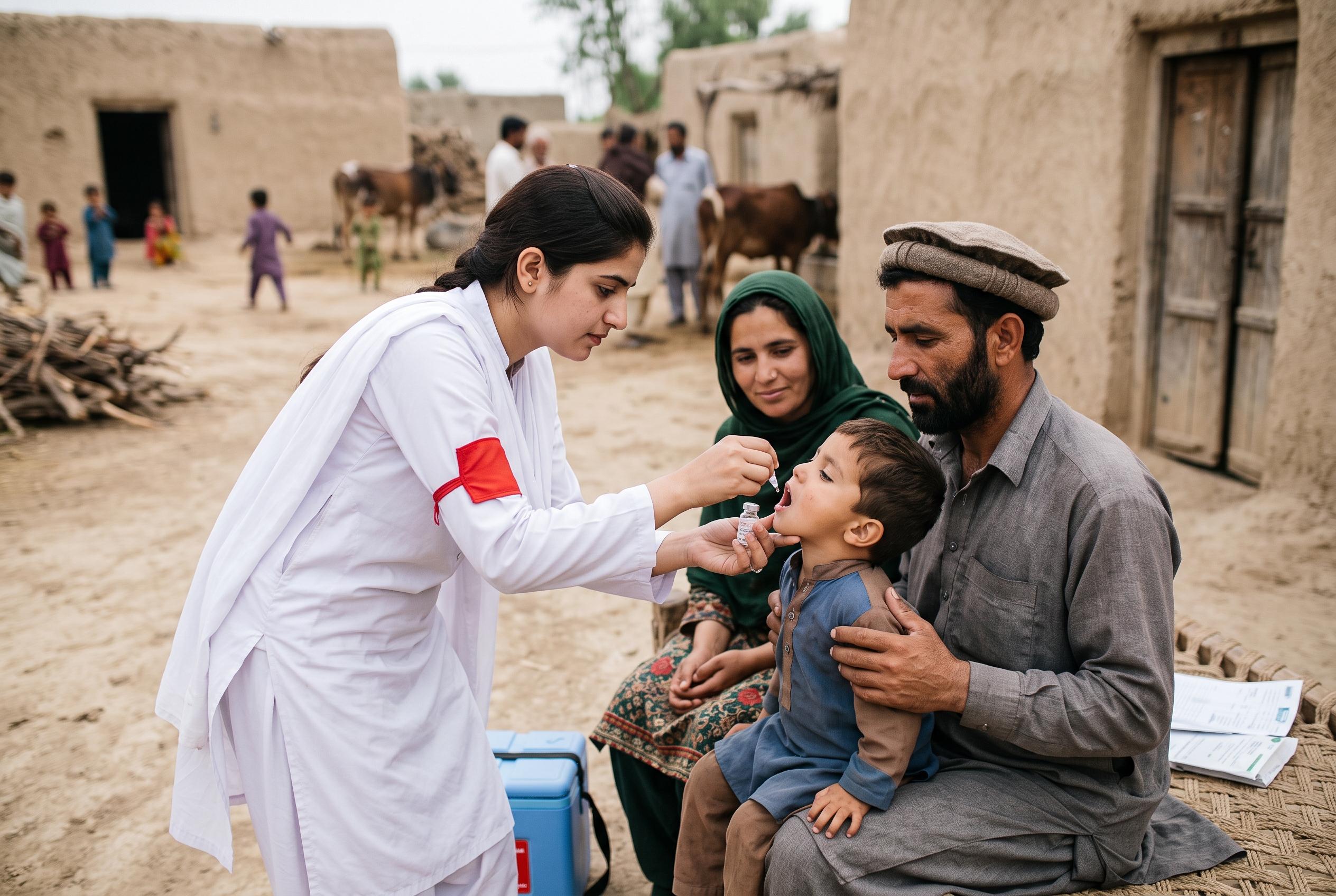

A new polio case has been confirmed in Pakistan’s Khyber Pakhtunkhwa province, highlighting persistent transmission in the region amid ongoing vaccination efforts and access issues due to insecurity.
Pakistan has confirmed its fourth polio case of 2026, after a child in Bannu district, in southern Khyber Pakhtunkhwa, tested positive for wild poliovirus, according to the National Emergency Operations Centre and the Associated Press of Pakistan. The latest case adds to concern about ongoing transmission in the province’s south, where access problems linked to insecurity have made it harder for vaccination teams to reach some communities consistently.
Officials said three of the four cases recorded this year are in Bannu Division, highlighting the area as a persistent weak point in the campaign to eliminate the disease. The child affected is from Nurar Union Council in Tehsil Miryan, where health workers have not been able to maintain regular access since 2025.
The government-backed Polio Eradication Initiative has urged parents and caregivers to make sure children receive vaccinations during the next nationwide door-to-door drive, set for 21 to 27 September, as well as in every campaign that follows. The initiative says regular immunisation remains essential if Pakistan is to prevent further disability and move closer to wiping out the virus altogether.
Pakistan has made major progress against polio over the past three decades, with officials saying cases have fallen by 99.8 per cent from an estimated 20,000 in the early 1990s to 31 in 2025. But the country remains one of the world’s last places where wild poliovirus is still circulating, and authorities say transmission continues to be most stubborn in southern Khyber Pakhtunkhwa.
The coming campaign is expected to target nearly 31 million children, part of a broader effort that has already included three large-scale vaccination rounds this year, according to the government. Earlier this month, the Polio Eradication Initiative also announced a 28 per cent rise in daily stipends for more than 400,000 campaign workers, in an effort to support the frontline teams who carry vaccines door to door across high-risk districts.
Health officials have repeatedly stressed that stopping polio will require more than one-off campaigns. They say communities, religious leaders and the media all have a role to play in countering misinformation and helping ensure that every child receives all recommended doses, including routine immunisations.
Disclaimer: This content is for informational purposes only and is not intended to be a substitute for professional medical judgment, advice, diagnosis, or treatment.