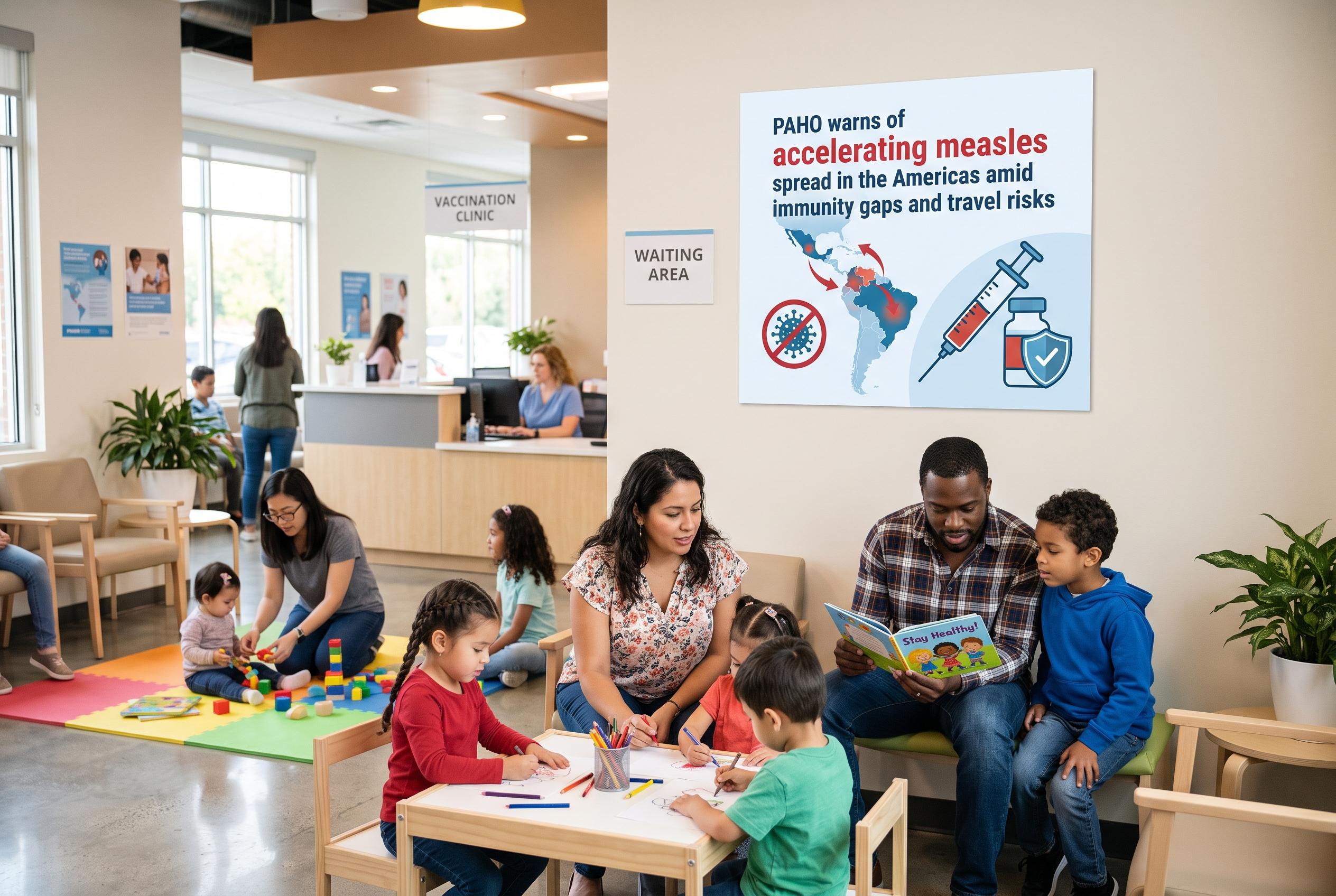

The Pan American Health Organisation has issued a renewed epidemiological alert for the Americas, urging nations to intensify vaccination efforts and surveillance as measles cases continue to surge in 2026, driven by immunity gaps and international travel.
The Pan American Health Organisation has issued a fresh epidemiological alert urging countries across the Americas to step up measles vaccination, surveillance and rapid outbreak response as the disease continues to spread through the region. PAHO said the surge in cases seen through 2025 has carried into 2026, with the pattern prompting renewed concern over immunity gaps and delayed detection.
In its latest guidance, the organisation said health authorities should carry out active case-finding, strengthen laboratory and community surveillance and move quickly when infections are suspected. PAHO has linked the wider spread partly to unvaccinated populations, international travel and mass gatherings, all of which can carry the virus into new areas.
The warning comes after the region had already seen a sharp rise last year. PAHO said in September that confirmed cases had climbed to 11,313 across 10 countries by mid-September 2025, compared with 358 in the same period a year earlier. Earlier alerts in March and October 2024 also pointed to growing clusters of infection, underscoring how measles has re-emerged despite the Americas having been certified free of endemic transmission in 2016.
Measles remains one of the world’s most contagious diseases and is spread through the air or respiratory droplets. Symptoms include high fever, cough, runny nose, conjunctivitis and a skin rash, and the illness can lead to severe complications such as pneumonia, encephalitis, blindness or death. PAHO says vaccination remains the most effective way to prevent infection and stop further transmission.
Disclaimer: This content is for informational purposes only and is not intended to be a substitute for professional medical judgment, advice, diagnosis, or treatment.