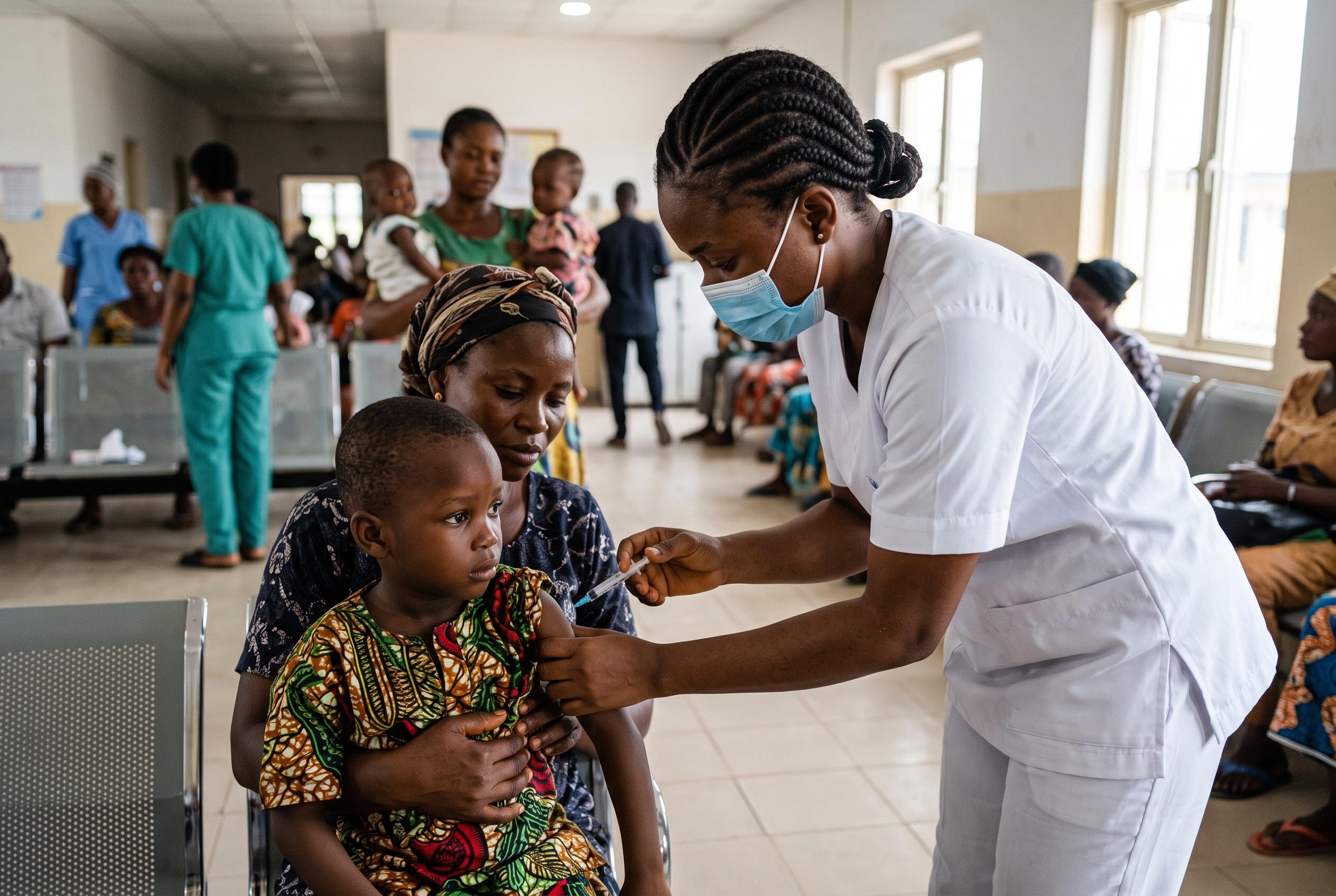

An alarming diphtheria surge in Nigeria, driven by immunity gaps and misinformation, prompts emergency vaccination and response measures across key states to prevent further transmission among children aged 1 to 14.
Nigeria’s diphtheria outbreak is being driven by large gaps in immunity, with the Academy of Medical Sciences warning that the disease has now spread far beyond isolated clusters and could keep moving unless authorities step up vaccination and response measures. In an advisory issued on September 17, the academy said eight states account for the vast majority of the more than 10,000 confirmed cases recorded this year, with children between one and 14 bearing the heaviest burden.
The advisory, signed by academy president Osato Giwa-Osagie and rapid response committee chair Obinna Onwujekwe, said the outbreak is concentrated in Kano, Kaduna, Katsina, Borno, Bauchi, Plateau, Sokoto and Zamfara. It linked the spread to low vaccine coverage, crowded living conditions and poor ventilation, while warning that delayed treatment can make cases more severe and place extra strain on hospitals that may need more isolation beds, oxygen, intensive care and diphtheria antitoxin.
The academy also cautioned that misinformation could worsen the crisis if rumours about supposed cures or vaccine safety discourage families from seeking care or completing immunisation. It urged federal and state authorities to expand outbreak response immunisation in affected areas and nearby high-risk communities, prioritise children and other under-immunised groups, and close missed opportunities in routine vaccination. It also called for better contact tracing, stronger infection control in health facilities and public advisories in local languages.
The warning comes as the Federal Government has activated an emergency task force to contain cases in parts of Katsina and Kano, with officials saying the response includes 500,000 vaccine doses, stronger surveillance and faster access to treatment. The Nigeria Centre for Disease Control and Prevention has also said vaccination coverage must improve, especially among children who have never been vaccinated or have only received part of the recommended schedule.
In Lagos, officials have said there is no widespread outbreak in the state, but they have stepped up surveillance after confirming six cases this year and investigating additional suspected infections. Health Commissioner Akin Abayomi said the state is acting cautiously because infected people can travel across state lines, while national reporting has shown that thousands of confirmed infections and hundreds of deaths have already been recorded this year.
Disclaimer: This content is for informational purposes only and is not intended to be a substitute for professional medical judgment, advice, diagnosis, or treatment.