

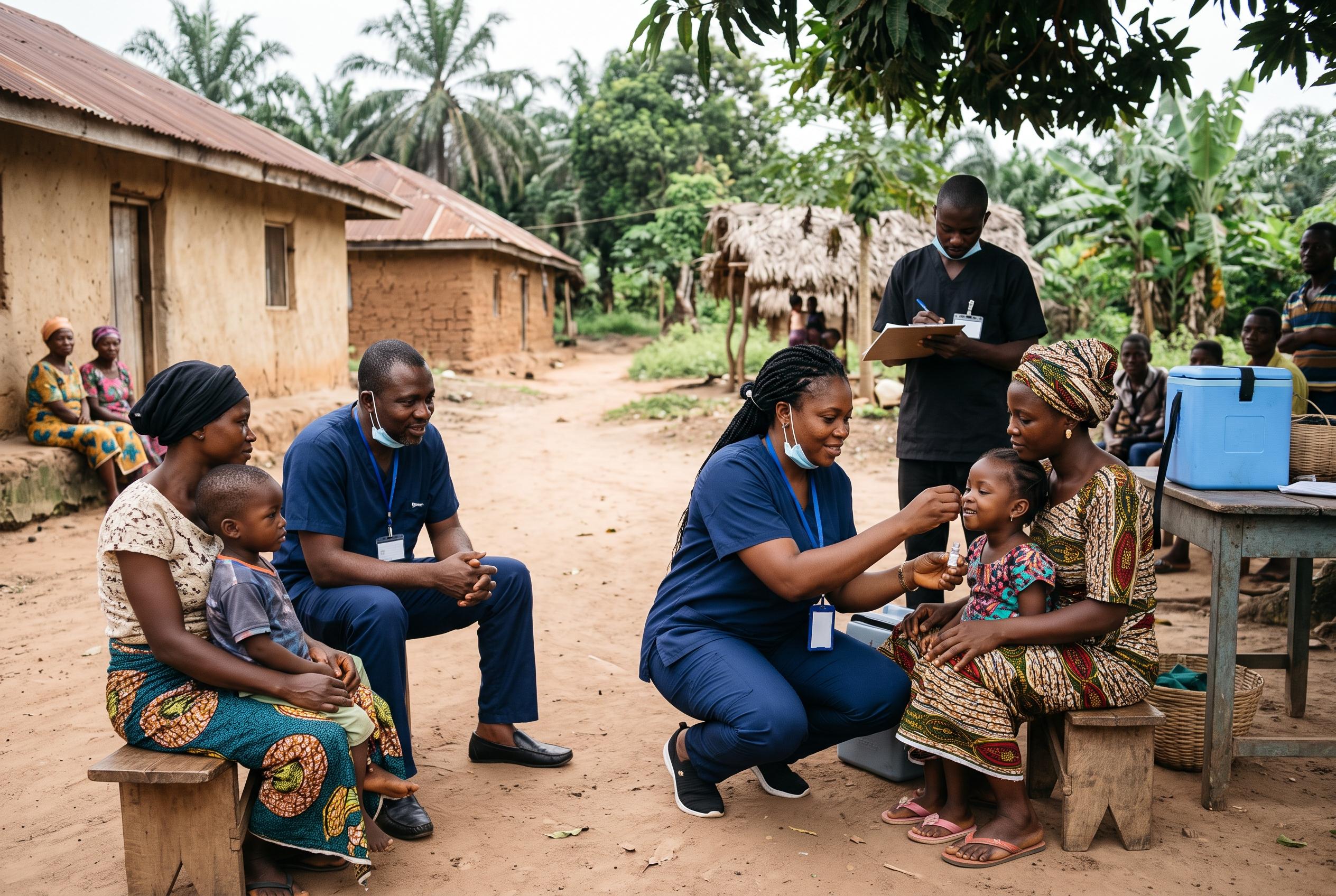

Nigeria’s progress against wild polio has not ended transmission, with vaccine-derived cases persisting and a rise in type 3 infections highlighting the fragile final phase of eradication.
Nigeria’s role in the final push to end polio has become more important, not less, as the campaign enters what health officials describe as its most delicate stage. On World Polio Day, the World Health Organisation and its partners say the world is closer than ever to stopping transmission, but they warn that the last stretch will only be completed if countries move faster, take fuller ownership of the response and reach every child, particularly those who remain missed by routine immunisation.
Nigeria was certified free of wild poliovirus in August 2020, a landmark achievement for the country and for Africa. Yet circulating vaccine-derived poliovirus continues to spread in under-immunised communities, and health authorities say the country has recorded more than 700 paralysed children since 2021. The WHO’s Emergency Committee said in August 2026 that both cVDPV2 and cVDPV3 were still circulating in Nigeria, and urged stronger routine vaccination and better-quality campaigns, especially in high-risk northern states where surveillance and outreach remain under pressure.
The latest data underline the uneven nature of progress. By the end of week 40 in 2026, Nigeria had reported 47 cVDPV2 cases, down from 68 in the same period of 2025, but cVDPV3 cases had risen to 14 from three a year earlier. The Independent Monitoring Board, which tracks the global eradication effort, gave a blunt assessment in its 25th report published on October 2, saying Nigeria is still the principal remaining source of circulating type 2 vaccine-derived poliovirus in Africa. Its warning reflects a broader concern within the eradication campaign: that scientific tools exist, but their impact depends on whether they are deployed consistently, quickly and at scale.
In August and September 2026, Nigeria carried out an independent review of polio and other vaccine-preventable disease surveillance across 13 priority states, 39 local government areas and 111 health facilities. The exercise, led by the National Primary Health Care Development Agency and the National Polio Emergency Operations Centre with WHO and Global Polio Eradication Initiative partners, is intended to identify weaknesses in case detection and investigation. Health officials say the work matters because swift reporting of suspected paralysis in children, followed by rapid investigation and response, remains the best way to interrupt transmission before outbreaks widen.
The challenge is made harder by shrinking external funding and wider strain on multilateral health financing. According to the WHO-supported partnership, budget pressures are already forcing difficult trade-offs and making some response decisions depend on affordability rather than public-health need. That is why officials are pressing for greater domestic financing, stronger routine immunisation and more tailored approaches for zero-dose children, families in insecure areas, mobile populations and border settlements.
Community engagement remains central to that effort. The eradication programme depends not only on vaccines and surveillance but on trust, and in northern Nigeria, where most current cases are being found, traditional leaders remain influential. The Emir of Argungu, Alhaji Mohammed Samaila Mera, said in comments carried by WHO that leaders have a duty to mobilise communities, counter misinformation and treat vaccination as a moral responsibility. WHO says Nigeria’s experience shows that progress is possible when government leadership, health workers, community voices and international partners move in step. The message now is simple: the tools to end polio exist, but they will only succeed if every child is reached every time.
Disclaimer: This content is for informational purposes only and is not intended to be a substitute for professional medical judgment, advice, diagnosis, or treatment.



