
England’s 2026-27 flu campaign has commenced earlier than usual, prioritising children and pregnant women to reduce winter pressures and prevent severe illness, with expanded access through schools, pharmacies, and community services.
England’s 2026-27 flu campaign is now under way in England, with the NHS bringing forward bookings and starting September vaccinations for the groups it wants protected before wider winter pressure builds. Pregnant women and children began receiving jabs from 1 September, after the national booking system opened on 17 August, around a fortnight earlier than last year, in what NHS leaders have presented as an attempt to get ahead of a season that they fear could again start early.
The staggered timetable means most other eligible adults will not be vaccinated until 1 October, but the NHS has made clear that pregnancy and childhood are being treated differently. Children are being brought in first because flu tends to spread quickly through younger age groups, while pregnant women are at greater risk of becoming seriously unwell. Sky News also noted an important cut-off for older patients: people who are 64 can still qualify this season if they turn 65 by 31 March 2027.
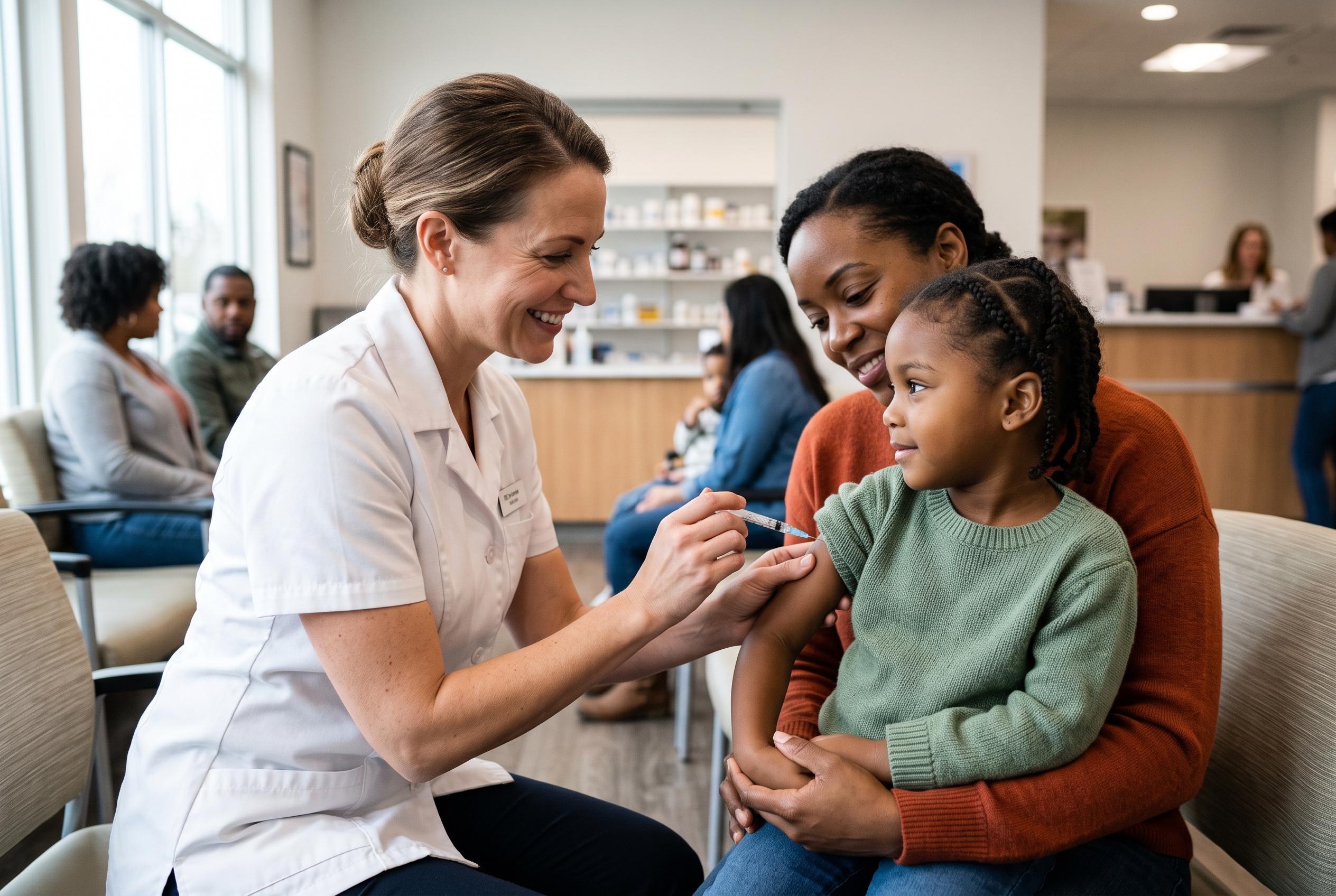
How people get the vaccine will depend on their circumstances. School-aged children are due to receive a nasal spray vaccine in school, while parents of most two- and three-year-olds are being contacted through GP practices. Adults who qualify can book through their surgery, use a pharmacy’s online service, arrange it through the NHS App or find a participating pharmacy. NHS England has also said teams will use high street pharmacies and mobile vans to widen access, while pregnant women may be offered the jab through maternity services as well as general practice or community pharmacy.
The September phase covers pregnant women, children aged two or three on 31 August 2026, pupils from reception to year 11, young people aged 17 and over in special educational needs schools if they are also in a clinical risk group, and children aged from six months to under 18 who have relevant health conditions. In the NHS Central East region – covering Bedfordshire, Cambridgeshire, Peterborough, Hertfordshire and Milton Keynes – local officials used the launch to stress the family benefit of vaccination, saying: “Getting vaccinated during pregnancy helps protect both mother and baby, while children’s flu vaccination helps protect them from serious illness and reduce the spread of flu to family members and others around them.”
From October, the programme broadens to include everyone aged 65 and over, adults in clinical risk groups, residents of long-stay residential care homes, carers, close contacts of people who are immunocompromised, and certain frontline social care workers who cannot get vaccinated through an employer-led occupational health scheme. NHS guidance for patients also says frontline health and social care staff should ordinarily be vaccinated through their employer, with general practice and pharmacies acting as a back-up route where workplace provision is not available.
Officials are using last winter’s figures to argue for faster take-up. NHS estimates cited by ITV News and NHS England say almost 19 million flu vaccinations were given in England last winter, helping to prevent about 104,000 hospital admissions. Dr Amanda Doyle, NHS England’s national director for primary care and community services, warned that flu can do far more than leave people feeling miserable for a few days, and said that for some children and pregnant women it can lead to hospital treatment. She also said the 2025-26 season arrived early and, driven by a new variant, put “enormous pressure” on urgent and emergency care.
For those who do not qualify for a free jab, private alternatives are already being marketed by major pharmacy chains including Boots and Superdrug. That consumer angle has become more visible this year as the NHS has opened its booking system earlier and pushed more information out before autumn begins in earnest. The public health message, however, remains that the best time to be vaccinated is in autumn or early winter, before flu starts circulating widely.
The campaign is also being used to fold in broader winter and pregnancy messaging. NHS England has pointed out that pregnant women may be offered RSV and whooping cough vaccination alongside the flu jab to help protect newborn babies in their first weeks of life. Health Secretary Yvette Cooper said vaccinations were “crucial for relieving pressures on our NHS over the winter months”, and officials say eligible people should expect invitations by phone, post, app or, in the case of school pupils, through their school. The programme runs through the winter, but the NHS is plainly trying to front-load as much uptake as possible before the coldest months arrive.
Disclaimer: This content is for informational purposes only and is not intended to be a substitute for professional medical judgment, advice, diagnosis, or treatment.