

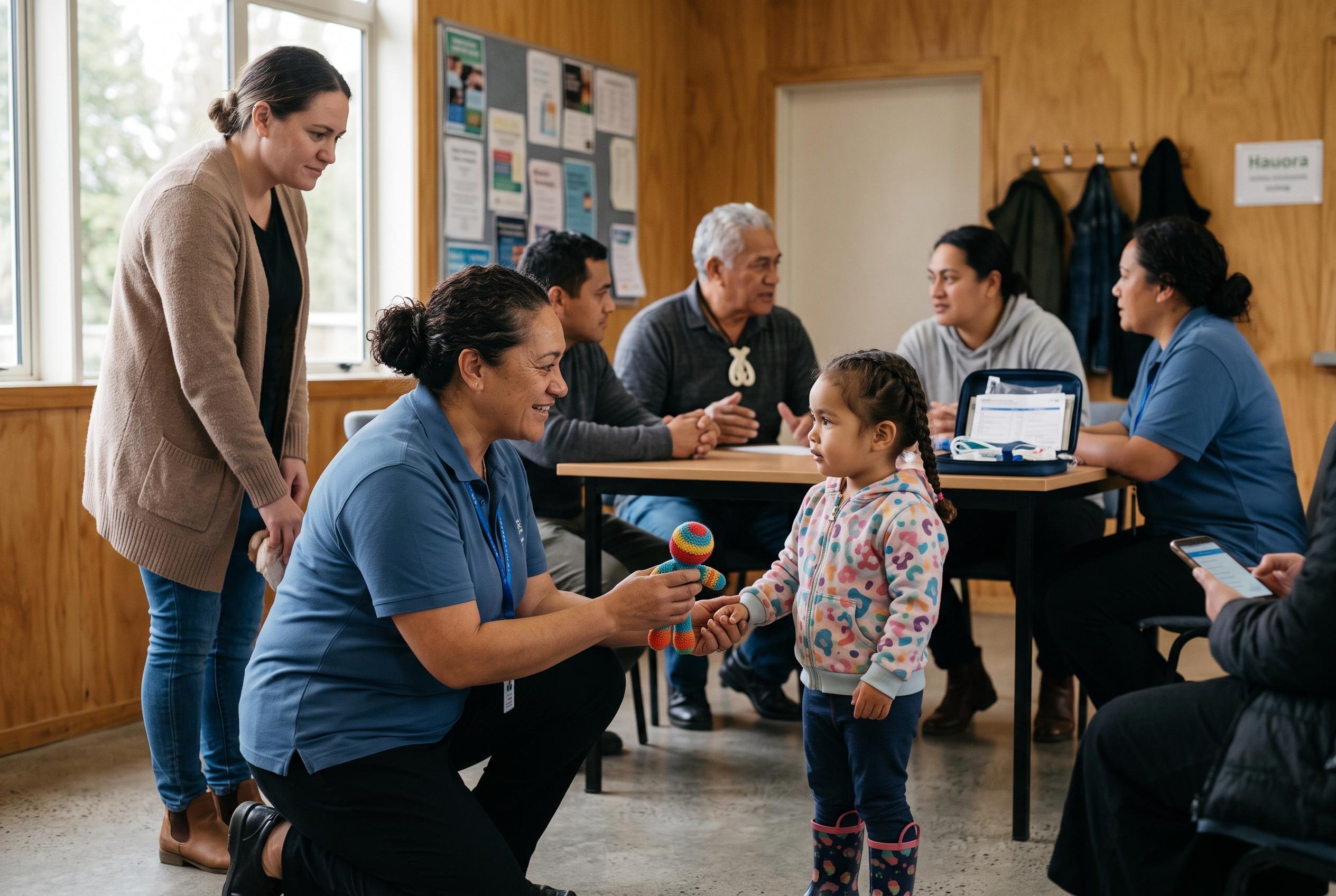

Health New Zealand launches the ‘Story to Tell’ campaign to address declining childhood vaccination rates, especially among Māori children, by sharing real stories to rebuild trust and combat vaccine hesitancy.
Health New Zealand has begun the next stage of its childhood immunisation drive as officials warn that vaccination levels have yet to recover from the disruption of the Covid-19 period. The campaign, called “Story to Tell”, uses a song by Betty-Anne and draws on whānau experiences to encourage families to see themselves in the message and speak openly about immunisation.
Dr Ramon Pink, Health New Zealand South Island’s regional clinical director of public health medicine, told Radio New Zealand that coverage had fallen sharply in recent years, at one point dropping to 63% in 2022. He said Māori coverage now stood at just over 71%, compared with 83% overall, while pre-pandemic rates were in the high 80s for the wider population and for Māori children as well.
The decline has alarmed health officials for some time. A Ministry of Health report commissioned in 2019 concluded that systemic barriers were a major driver of under-immunisation and that Māori children were bearing a widening equity gap. More recent monitoring by the Hauora Māori Advisory Committee has shown that immunisation rates for Māori children remain stuck, even as overall coverage has improved in some groups, with avoidable hospital admissions for vaccine-preventable illness adding to concern.
Pink said mistrust remained one factor behind the downturn, but he stressed that it was not the only one. For many families, he said, the pressures of everyday life , including food costs, heating and simply getting through the week , could push vaccination down the list. He also pointed to difficulties in accessing GPs and the importance of primary care in helping parents and caregivers talk through the decision.
Health officials have been trying to understand why uptake has lagged, but a 2025 Ministry of Health briefing warned that New Zealand’s low childhood immunisation rates, combined with rising cases overseas, leave the country exposed to the risk of a measles outbreak. The concern is especially acute because measles is highly contagious and children receive the MMR vaccine at 12 and 15 months under the national schedule.
Pink said the campaign was shaped by real stories that began during last year’s measles outbreak, when whānau came forward to explain their decisions and experiences. Some families described initially delaying or declining immunisation before changing course after seeing the effects of measles first-hand. Others spoke about the vulnerability of children with weakened immune systems, for whom vaccination in the wider community can provide vital protection.
That approach, Pink said, is meant to build trust rather than simply repeat official messaging. By using stories, music and lived experience, Health New Zealand hopes to reach parents and caregivers who may be unsure, overwhelmed or disengaged, and to reopen conversations that public health experts believe are essential if the country is to move back towards the government’s 95% coverage target by 2030.
Disclaimer: This content is for informational purposes only and is not intended to be a substitute for professional medical judgment, advice, diagnosis, or treatment.



