

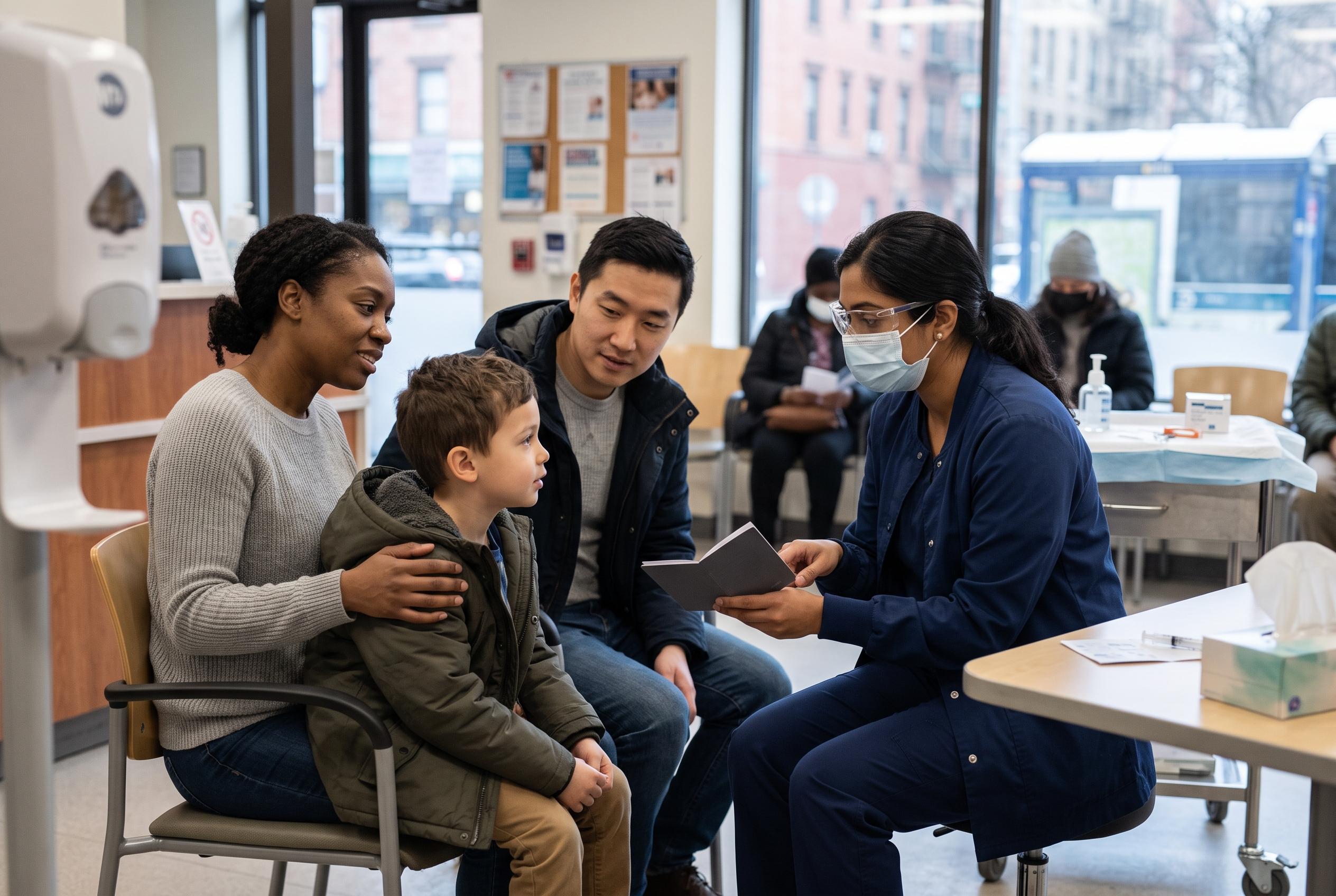

New York State has declared a state of emergency with over 100 confirmed measles cases amid a sharp resurgence, prompting expanded vaccination efforts and heightened alert among health officials.
New York has moved to a state of emergency as measles cases climb past 100 statewide, the sharpest resurgence the state has seen since the disease was declared eliminated in 2000. Governor Kathy Hochul’s order is designed to speed up vaccination and bolster local response as health officials warn that the outbreak is spreading most readily in under-immunised communities, according to reports from WKBW, NBC New York and The New York Times.
In western New York, Erie County has recorded two confirmed cases, while Allegany County has six and Chautauqua County has three, WKBW reported. State figures cited by NBC New York put the total at 108 confirmed cases, with seven in New York City and 101 elsewhere in the state. Officials have said most of those infected are unvaccinated, reinforcing the central role of the MMR jab, which protects against measles, mumps and rubella.
The outbreak has renewed alarm among infectious disease specialists. Thomas Russo, an expert at the University at Buffalo’s Jacobs School of Medicine, told WKBW that many people have forgotten how severe measles can be, describing it as a disease that can kill, land patients in hospital and, in rare cases, cause inflammation of the brain known as encephalitis. He also warned that the virus can weaken immune defences long after the initial illness, leaving people more vulnerable to other infections.
Erie County Health Commissioner Gale Burstein said the emergency order expands who can give the vaccine, including paramedics, pharmacists and, in some cases, midwives, a move meant to widen access quickly. Burstein also stressed how easily measles spreads before a rash appears, saying a person can leave virus particles in the air that remain infectious for up to two hours. She noted that Erie County’s rate of at least one MMR dose before a child’s second birthday stood at 86.2% as of January 1, ahead of the statewide average of about 81%, but still short of the coverage needed to limit outbreaks.
Public health data from the Centres for Disease Control and Prevention show why officials are so concerned. In the first quarter of 2024, the agency reported a rise in confirmed measles cases nationally, with most patients either unvaccinated or of unknown vaccination status. New York health officials have repeatedly urged residents to check their vaccine status and get the MMR dose if needed, saying the disease remains capable of causing pneumonia, miscarriage, preterm birth, hospitalisation and death.
Disclaimer: This content is for informational purposes only and is not intended to be a substitute for professional medical judgment, advice, diagnosis, or treatment.



