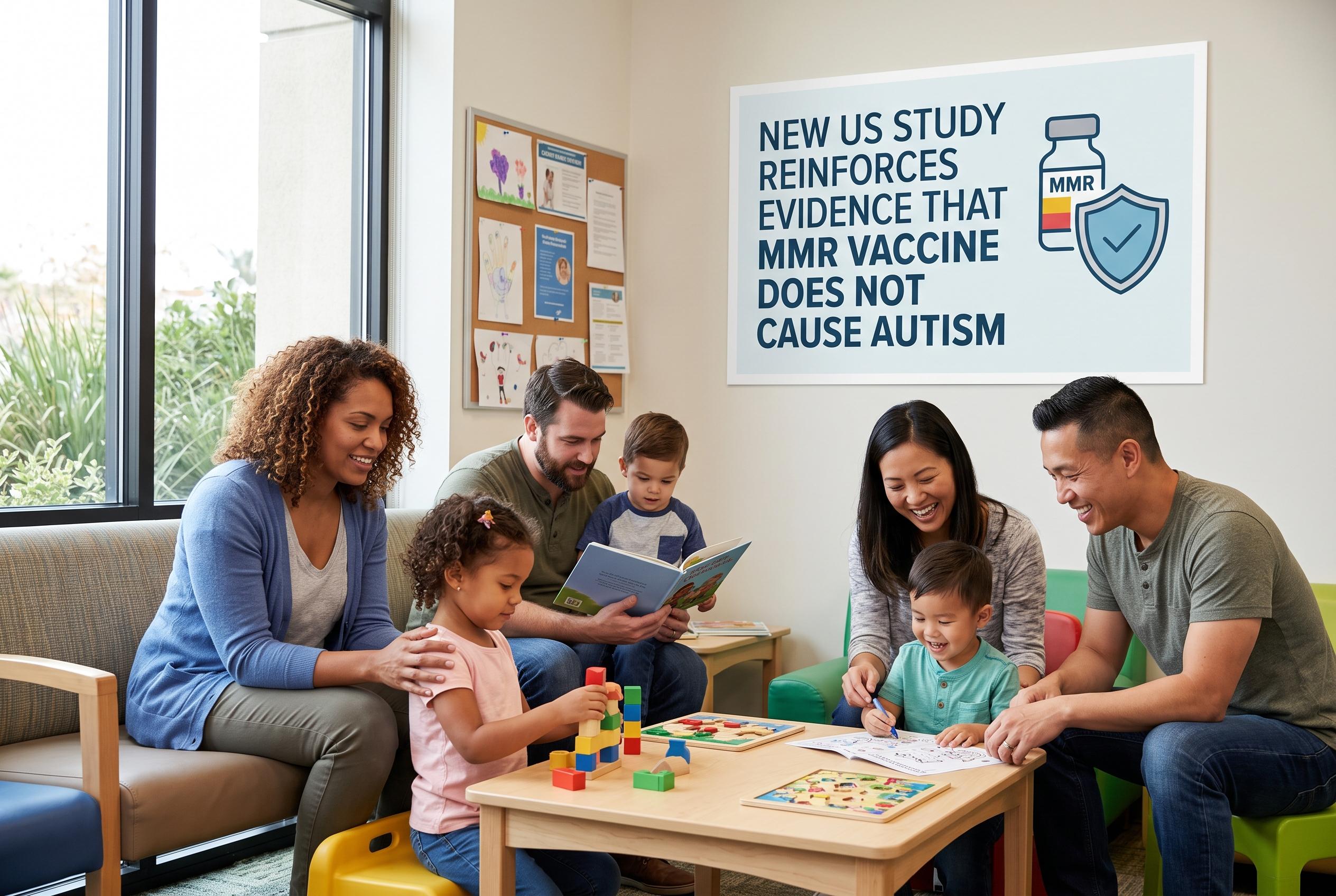

A comprehensive new US study analysing records of over 2.5 million children finds no link between the MMR vaccine and autism, bolstering longstanding scientific consensus amid rising measles cases in the US.
A large new U.S. study has added fresh evidence against a claim that has circulated for decades: that the measles, mumps and rubella vaccine can trigger autism. Researchers examining records for more than 2.5 million children found no increase in autism diagnoses among those who received an initial MMR dose before age 2.
The analysis drew on electronic health records from the Cosmos database, covering January 2015 to December 2024 and including children with linked pregnancy and birth information. Researchers followed children from their first primary-care visit after 12 months of age until an autism diagnosis, their last qualifying visit before age 8 or the end of 2024. They also used age-based landmark methods to reduce timing-related bias that can affect observational research.
The result was effectively flat. Children who received the first MMR shot between 11.5 months and 24 months of age were no more likely to receive an autism diagnosis than those who did not. The adjusted hazard ratio was 0.97, a figure close enough to 1 to indicate no meaningful difference in risk. The authors said the findings reinforce the existing safety evidence around MMR vaccination.
That conclusion fits a long line of earlier research. The UK’s The Lancet reported in 1999 that the rise and timing of autism diagnoses did not support a causal link with MMR. A Danish study in The New England Journal of Medicine in 2002, involving 537,303 children, also found no increased autism risk. Later studies in Pediatrics and The Lancet reached the same conclusion, and a 2014 meta-analysis in Vaccine, along with a 2020 Cochrane review, found no evidence that MMR or related vaccines increase autism risk.
Public health authorities have continued to say the same. The Centres for Disease Control and Prevention says extensive studies have found no link between MMR vaccination and autism spectrum disorders, and that vaccines are rigorously tested before approval. The latest paper arrives as measles cases have surged in the U.S., with the CDC reporting 2,371 cases this year, 93% in people who were unvaccinated or whose status was unknown, the highest national total since 1991. The study was published ahead of print on July 28, 2026, in The Pediatric Infectious Disease Journal.
Disclaimer: This content is for informational purposes only and is not intended to be a substitute for professional medical judgment, advice, diagnosis, or treatment.