


The United States faces its highest measles case numbers in decades as falling vaccination rates and political missteps threaten to undo years of progress, forcing hospitals to revisit strict infection-control measures and highlighting the urgent need for increased immunisation efforts.
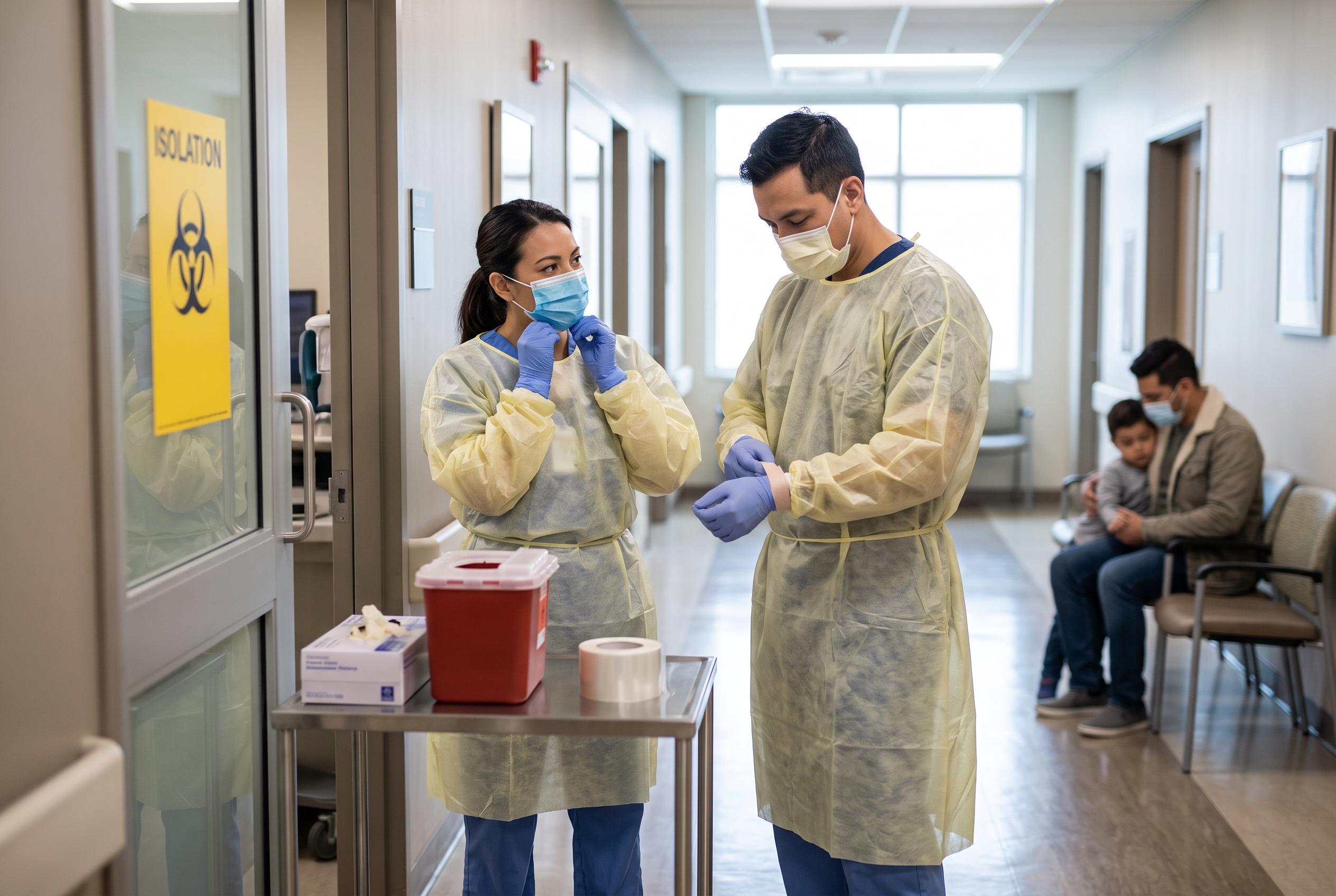
Measles is forcing hospitals in the United States to revive infection-control measures that many had effectively abandoned after the disease was declared eliminated in 2000. Clinicians are once again screening patients by telephone before admission, asking some to wait in car parks, separating patient flows, using negative-pressure rooms and HEPA filtration, and limiting visits in neonatal units, because the virus can remain suspended in the air for up to two hours. The result is not just extra caution, but the reopening of a set of protocols that vaccination had made largely unnecessary.
The scale of the current resurgence is stark. According to the US Centres for Disease Control and Prevention, the country had recorded 3,659 confirmed measles cases by 1 October 2026, overtaking the 2,289 cases reported in all of 2025 and marking the highest annual total since 1991. The CDC says 95% of those cases involved people who were unvaccinated or whose vaccination status was unknown. That matters because public-health authorities say roughly 95% coverage with two doses is needed to block sustained community transmission, and measles can produce up to 18 secondary infections from a single case.
A central part of the problem is the steady erosion of vaccine uptake. CDC data show that two-dose measles vaccination coverage has fallen from 95.2% in 2019-20 to 92.4% in 2026, leaving about 280,000 children without full protection. Fact-checkers at FactCheck.org have said the rise in cases is being driven primarily by falling vaccination rates, not by illegal immigration, and have warned that the outbreak is putting the United States’ measles elimination status at risk ahead of its scheduled review in November. That is a serious marker, because losing elimination status would signal that transmission is again becoming entrenched rather than sporadic.
The political response has not helped. Health Secretary Robert F. Kennedy Jr. has at times encouraged parents to vaccinate children against measles and has acknowledged the vaccine’s effectiveness, but his broader record has fuelled confusion around immunisation and given fresh oxygen to anti-vaccine activism, according to reporting by FactCheck.org and other US outlets. Enrique Dans, in the article that prompted this piece, argues that such messaging turns ignorance into policy. One particular concern is the pressure around the MMR vaccine, which protects against measles, mumps and rubella: separating it into three separate injections is not supported by evidence, and it would create practical barriers to completion of the schedule. Public-health specialists stress that the combined two-dose course is highly effective and far easier to deliver at scale.
The costs of vaccine refusal are borne well beyond the individuals who decline the jab. In South Carolina, a major outbreak produced 997 cases, led to the quarantine of 874 students and affected 33 schools, at a cost of about $2.1 million to the state, according to the figures cited in the source material. In Chicago, a much smaller outbreak of 57 cases was said to have cost $8.7 million, or roughly $153,000 per case, alongside more than 17,000 lost school days. A study published in the journal Vaccine also finds that measles outbreaks place heavy demands on hospitals, public-health agencies and government budgets, while another analysis warned that prolonged declines in childhood vaccination could cost the United States about $7.8 billion over five years. The message from both the data and the hospital precautions is the same: measles is not simply returning as a virus, but as a test of whether policymakers are willing to defend vaccination, or instead to undermine it.
Disclaimer: This content is for informational purposes only and is not intended to be a substitute for professional medical judgment, advice, diagnosis, or treatment.



