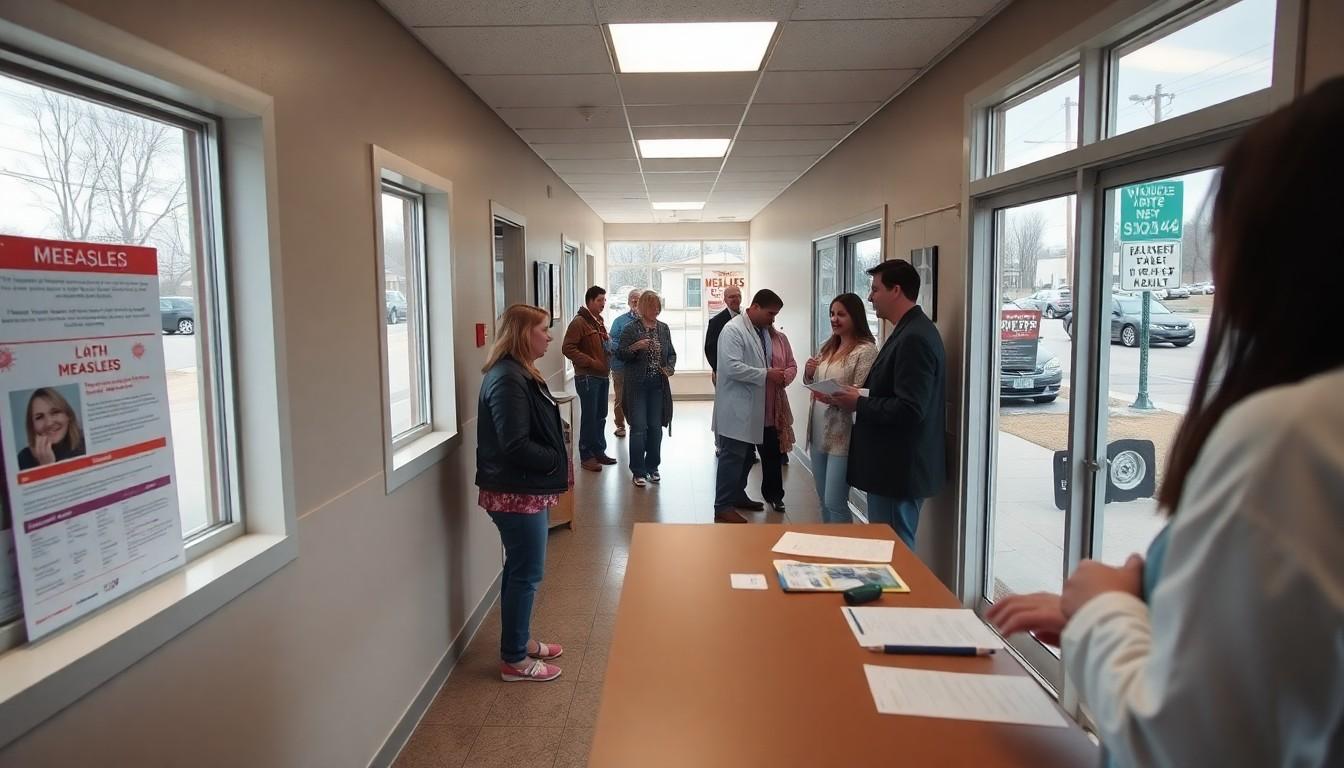

A surge in measles cases across the United States, driven by declining vaccination coverage and misinformation, signals a critical public health challenge as communities face their highest outbreak levels in decades.
Measles is moving through the United States with unusual force this year, with the country having already passed last year’s case total and officials warning that low vaccination coverage is leaving more communities exposed. According to The Guardian, the national tally reached 2,371 confirmed infections by the end of July, the highest level seen in three decades, while local reporting from Axios has described a broader surge across states including Pennsylvania, Virginia and Michigan.
Delaware has become one of the latest places to confront the virus. State officials announced their first measles case in more than a decade in July and declared an outbreak two days later after the number of known infections rose to five. The Delaware Division of Public Health said the initial case was an unvaccinated adult man in Kent County, and later reported an exposure at Nemours Children’s Hospital in Wilmington, underscoring how quickly a single case can widen into a public health response.
Health officials say the underlying problem is not just the virus itself but the shrinking wall of protection around it. Delaware’s kindergarten vaccination rate for MMR has fallen from 98.5% in 2016 to 94.1% now, just below the roughly 95% level needed for herd immunity. Axios reported similar concerns in other states, with Pennsylvania’s student vaccination rate at 92.4% and Virginia’s first-dose coverage among five-year-olds high enough to suggest that the second dose remains the weak link.
Robert Rosenbaum, Delaware’s medical director for emergency medical services and preparedness, told The Guardian that misinformation has helped weaken confidence in vaccination, pointing to the long-running false claim that vaccines are linked to autism and to the broader after-effects of the Covid-19 pandemic. William Chasanov, an infectious disease physician at Beebe Healthcare, said public attitudes shifted as Covid made some families treat vaccines as optional for illnesses they had never personally seen.
The outbreak has also highlighted the public health system’s standard response: vaccination, contact tracing and rapid outreach. Delaware officials say they identified additional cases through tracing and have been working to reach people at highest risk, including young children, pregnant people and those with weakened immune systems. The state has also moved to make vaccines accessible for uninsured or underinsured residents, reflecting the broader challenge of ensuring that prevention is available to everyone who wants it.
Doctors say the stakes are serious. Measles can cause high fever, breathing problems, severe fatigue and encephalitis, and it can be fatal. Chasanov said the disease remains highly preventable, while Rosenbaum stressed that two doses of the MMR vaccine are strongly supported by the evidence. For public health officials across the country, the message is the same: when vaccination rates fall, outbreaks find room to spread.
Disclaimer: This content is for informational purposes only and is not intended to be a substitute for professional medical judgment, advice, diagnosis, or treatment.