

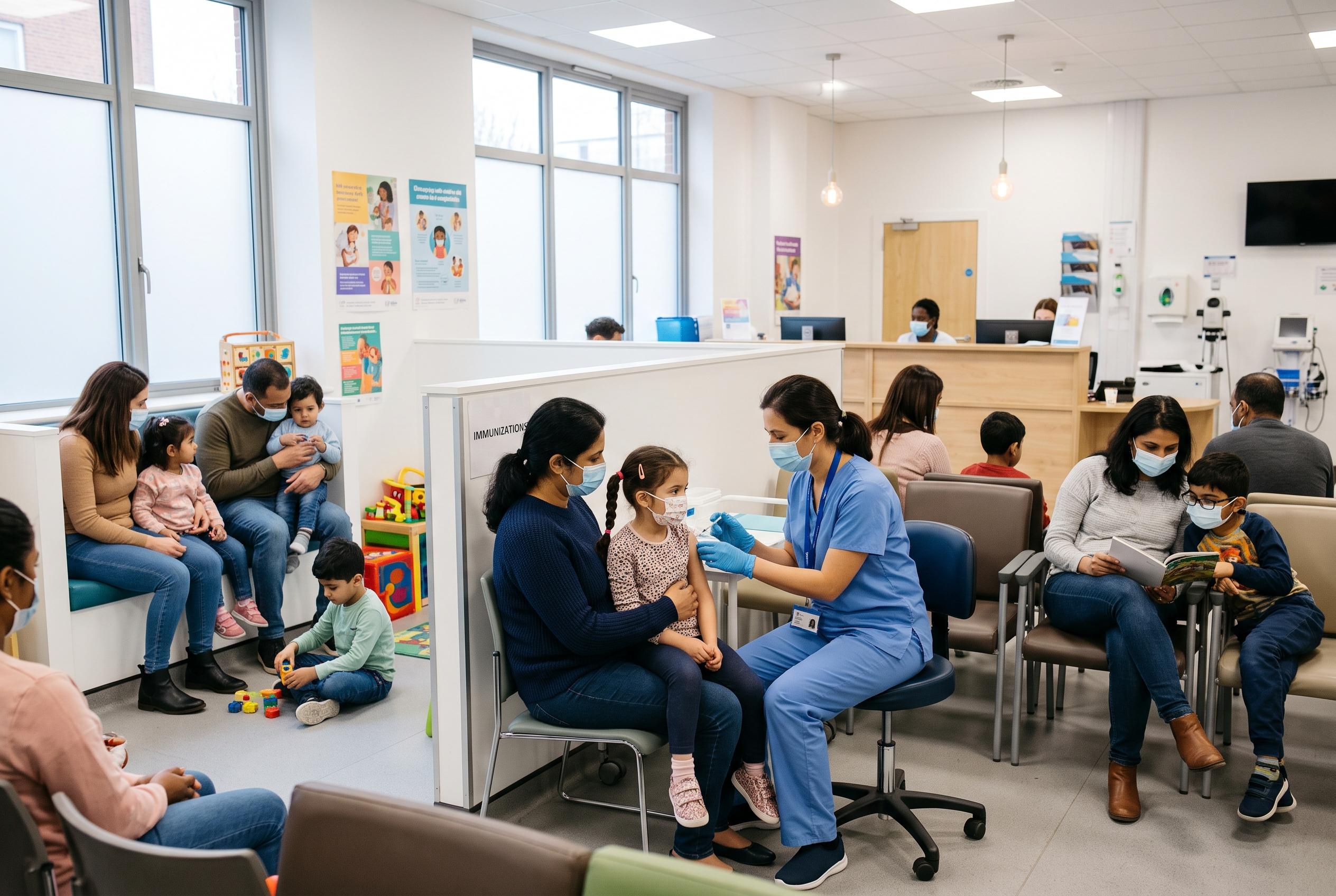

A University of Queensland analysis estimates measles cases among children under five rose by 40% between 2019 and 2023 as pandemic disruption left millions without routine vaccination.
A new University of Queensland analysis suggests that childhood measles immunisation has slipped backwards around the world since the COVID-19 pandemic, with routine vaccination programmes disrupted and health systems under strain. The researchers looked at measles cases, deaths and vaccine gaps in children under five in 204 countries and territories from 1990 to 2023, and found estimated cases climbed by 40% from 11.1 million in 2019 to 15.6 million in 2023. The findings add to growing concern that progress against one of the world’s most contagious childhood infections has been undermined by the pandemic era.
Associate Professor Benn Sartorius, of UQ’s Frazer Institute, said the drop in coverage has helped fuel a resurgence of measles in young children and has reversed decades of gains. He said the global burden had fallen sharply between 1990 and 2019, but that progress has now been interrupted by COVID-19-related disruption to immunisation, health services and funding. The World Health Organization says measles can spread rapidly where immunity is low, with a single case capable of causing many secondary infections.
The UQ study said two doses of measles vaccine remain the most effective protection, and estimated that childhood vaccination has prevented nearly 59 million deaths between 2000 and 2024. Even so, the researchers said 23.7 million infants missed their first dose in 2023, with sub-Saharan Africa accounting for half of those missed vaccinations and South Asia for another fifth. The paper also noted that the disease continues to pose a serious threat in poorer settings, where mortality remains highest, while recent outbreaks in the United States show that immunity gaps can also open up in richer countries.
Evidence from the United States points in the same direction. Johns Hopkins researchers reported in JAMA and in university material that 78% of 2,066 counties across 33 states recorded declines in MMR coverage after the pandemic, with average county-level uptake falling from 93.92% before COVID-19 to 91.26% afterwards. That leaves many places below the 95% level usually needed for herd immunity. Sartorius also warned that misinformation has complicated recovery in some communities, while the UQ analysis found Australasian coverage remained among the strongest in the world, reaching an estimated 96% for second-dose vaccination among children under five by 2023.
Researchers say the data can help authorities identify under-vaccinated populations and direct catch-up campaigns where they are most needed. The broader message is that measles control is only as strong as the routine health systems behind it, and that protecting children now will require both higher vaccination uptake and better preparation for future disruptions.
Disclaimer: This content is for informational purposes only and is not intended to be a substitute for professional medical judgment, advice, diagnosis, or treatment.



