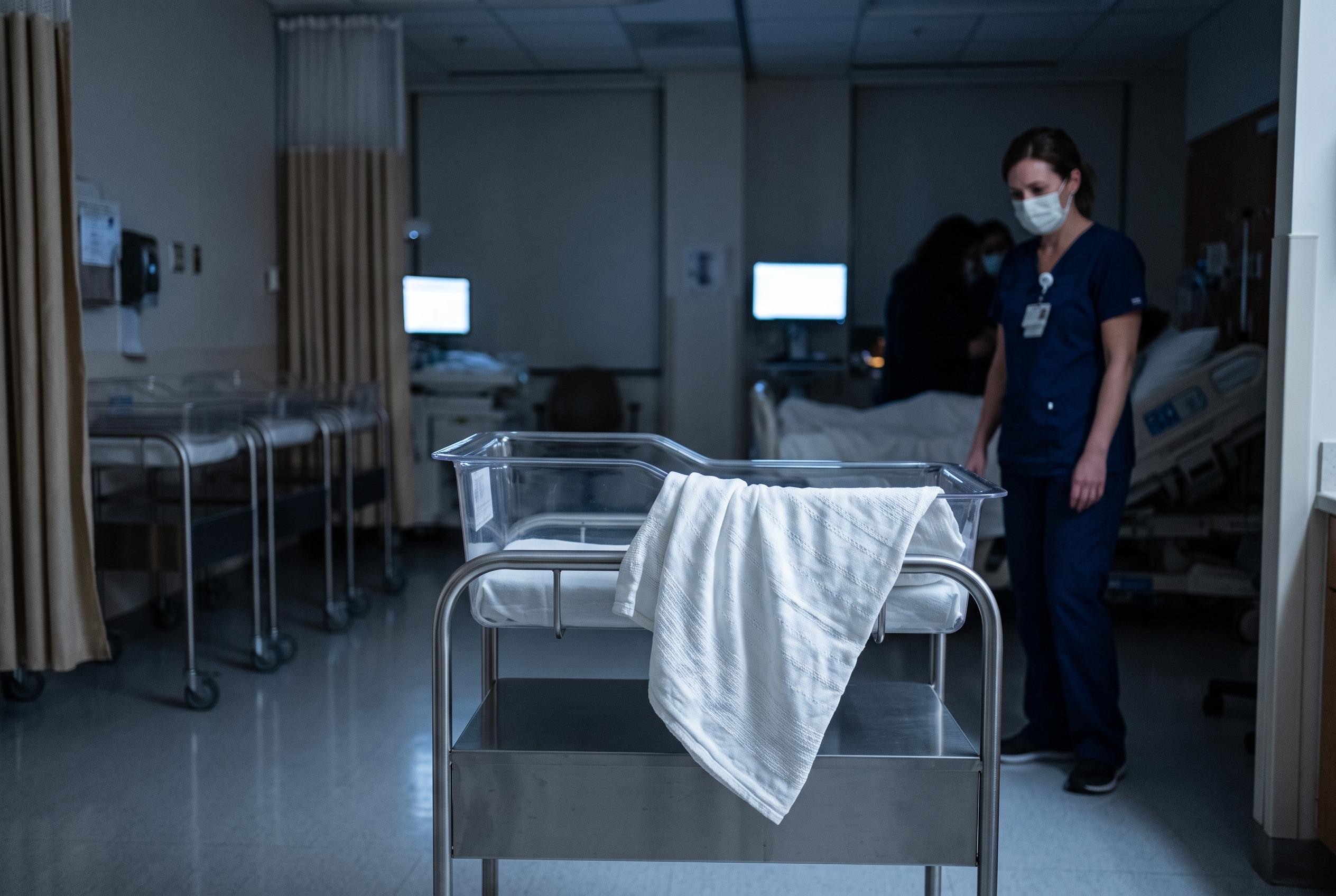

The Lancaster County coroner has officially attributed the death of a six-week-old girl to measles, escalating the debate over how infant deaths are reported amid Pennsylvania’s largest US measles resurgence in decades.
A county coroner’s ruling has sharpened the most contested point in Pennsylvania’s measles outbreak. On Friday, 4 September, Lancaster County Coroner Stephen Diamantoni said a six-week-old girl died because of measles, even as the US Centers for Disease Control and Prevention continued to show no measles deaths in its national count for 2026. By the following day, Reuters reported that Health Secretary Robert F. Kennedy Jr had acknowledged that this infant’s death was caused by measles, while still disputing another Pennsylvania case.
Diamantoni said the child died at home on 18 August after being placed in palliative care soon after birth. According to the Philadelphia Inquirer and The Washington Post, she had Amish lethal microcephaly, a rare inherited disorder associated with severe brain underdevelopment and a very short life expectancy. Diamantoni told The Washington Post: “The child contracted measles, and measles caused the death of the child.” He also said the condition is seen in roughly one in 500 births in the Amish community in Pennsylvania, and that most affected babies live only four to six months.
The infant had been treated by the Clinic for Special Children, a Lancaster County medical and research centre that works with disorders seen in Old Order Amish and Mennonite communities. The Inquirer reported that the clinic did not realise the death needed to be referred to the coroner’s office. That may help explain why Pennsylvania’s health department announced two “measles-associated” deaths on 25 August but has still not said publicly whether the six-week-old girl was one of them. FactCheck.org noted that the state uses that label when laboratory or epidemiological evidence of measles is present, even if a coroner has not certified measles as the immediate cause of death.
The other infant death remains disputed. Associated Press reported that Diamantoni said a newborn boy who died on 14 August did not die from measles but from a ruptured spleen. The baby, delivered by a midwife, died shortly after birth at a birthing centre in Strasburg Township, according to FactCheck.org. Investigators tested lung tissue because measles had been identified in the family, and the infant was found to have evidence of infection. But Diamantoni said there were no signs that measles had damaged the spleen and told reporters: “The baby did not die as a result of measles.” FactCheck.org later reported that measles was still listed in Part II of the child’s death certificate, which the coroner said was intended to give “a broader view of the general health of the child”. The Guardian, citing earlier reporting by The Atlantic, said the boy’s mother had measles and the parents believed the virus contributed to his death.
That split between local certification and state reporting has now become a federal argument as well. The CDC said on 4 September that the National Center for Health Statistics did not yet have any 2026 death records listing measles as the underlying cause, and that the agency was working with the Council of State and Territorial Epidemiologists on a standard definition for measles deaths. Ars Technica reported that Kennedy had earlier suggested, without evidence, that Pennsylvania’s deaths may have been “fabricated”. Reuters later reported that he had asked CDC director Erica Schwartz to remove the Pennsylvania deaths from the agency’s online tally after CDC staff had already accepted the state’s characterisation.
The backdrop is the largest measles resurgence in the United States in decades. The CDC’s latest update, dated 4 September and reflecting cases reported by noon on 3 September, put the national total at 3,134 confirmed cases, the highest annual figure since 1991. In Pennsylvania, the health department said 577 cases had been confirmed across 37 counties, with 98 hospitalisations and 80 new positive cases reported since 31 August. The state also said more than 95 per cent of US cases this year were linked to outbreaks.
Pennsylvania has expanded its vaccination campaign as the outbreak has spread. State officials said more than 3,900 MMR jabs had been given through over 100 pop-up clinics in affected communities since late April, while more than 5,700 doses had been administered through state health centres across the commonwealth in 2026. The Washington Post reported that more than 600 of those doses were given in Lancaster County alone, more than triple the number given there in all of 2025. Doctors told the paper that the next phase may be harder to manage, not easier. Nathan Keller, a paediatrician in Lancaster County, said: “It makes it really hard to tease out what’s what, so having cases in the community and having some cases go unidentified could just prolong things.”
Hospitals are already bracing for that possibility. The Washington Post reported that Penn State Health Golisano Children’s Hospital has admitted a dozen measles patients, mostly babies only a few weeks or months old, too young for their first routine MMR dose. With schools reopening and autumn respiratory illnesses beginning to circulate, officials expect measles to become more difficult to recognise quickly. Diamantoni’s finding resolves one question about the Lancaster outbreak, but not the larger one: whether the federal government will eventually alter its death tally, and whether Pennsylvania’s two infant deaths will ever be described the same way by the state, the coroner and the CDC.
Disclaimer: This content is for informational purposes only and is not intended to be a substitute for professional medical judgment, advice, diagnosis, or treatment.