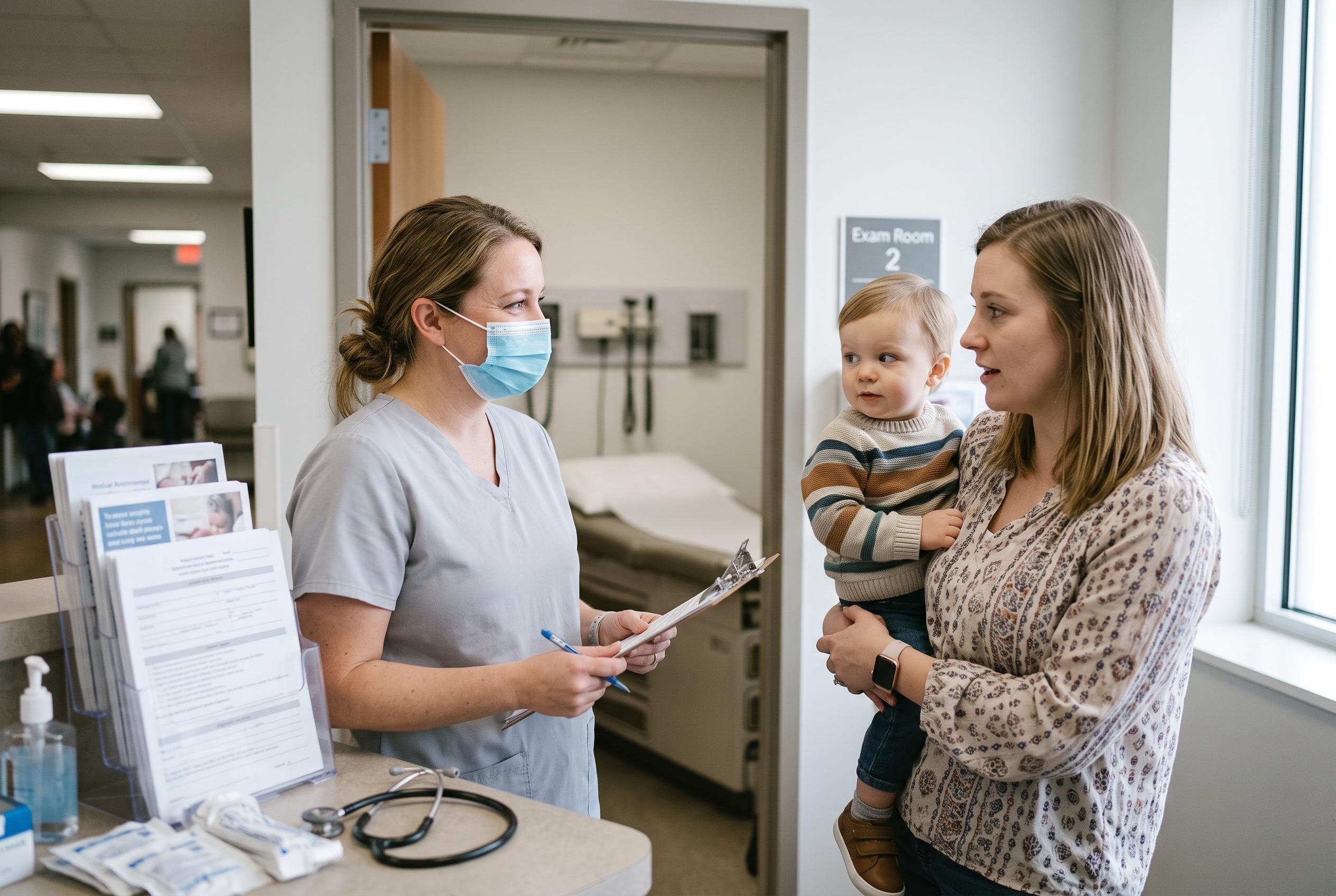

The recent resurgence of measles in Kentucky has seen cases skyrocket to over 80, predominantly among unvaccinated children and adolescents, prompting urgent warnings from health officials.
Kentucky’s measles outbreak has continued to grow, with state health officials now confirming 82 cases this year and Christian County accounting for the largest share, according to the Kentucky Department for Public Health dashboard cited by LEX News. Seven people have been hospitalised and no deaths have been reported.
The latest figures show the outbreak has widened beyond the county that first drew attention for its case count. Christian County has recorded 36 infections, while Barren and Carroll counties have five each, Jessamine County has four, and Caldwell and Lewis counties have two apiece. Earlier reporting by WKYT showed the state had 64 cases on September 24, meaning the total has climbed sharply in just a few days.
Vaccination status remains a central factor in the spread. Of the 82 confirmed cases, 80 involved people who were either unvaccinated or had an unknown immunisation status. The dashboard shows just one case in someone who had received a single dose of the measles, mumps and rubella vaccine, and one case in a person who had received at least two doses.
Children and teenagers make up much of the current outbreak, with 11 cases in children younger than five and 38 in those aged five to 17. Another 33 cases have been reported among adults. The Kentucky outbreak has accelerated through the late summer and early autumn: WKYT reported 46 cases on September 14, 50 cases on September 16, 64 cases on September 24 and 67 cases by September 28, underscoring how quickly the virus has continued to spread.
Measles is a highly contagious respiratory illness that spreads through coughing and sneezing. Symptoms can include a high fever, cough, runny nose, red watery eyes and a rash that typically begins on the face before moving to the rest of the body. Health officials continue to stress that two doses of the MMR vaccine offer strong protection, and they advise anyone who may have been exposed, or who develops symptoms, to call a health-care provider before arriving in person to help prevent further transmission.
Disclaimer: This content is for informational purposes only and is not intended to be a substitute for professional medical judgment, advice, diagnosis, or treatment.