

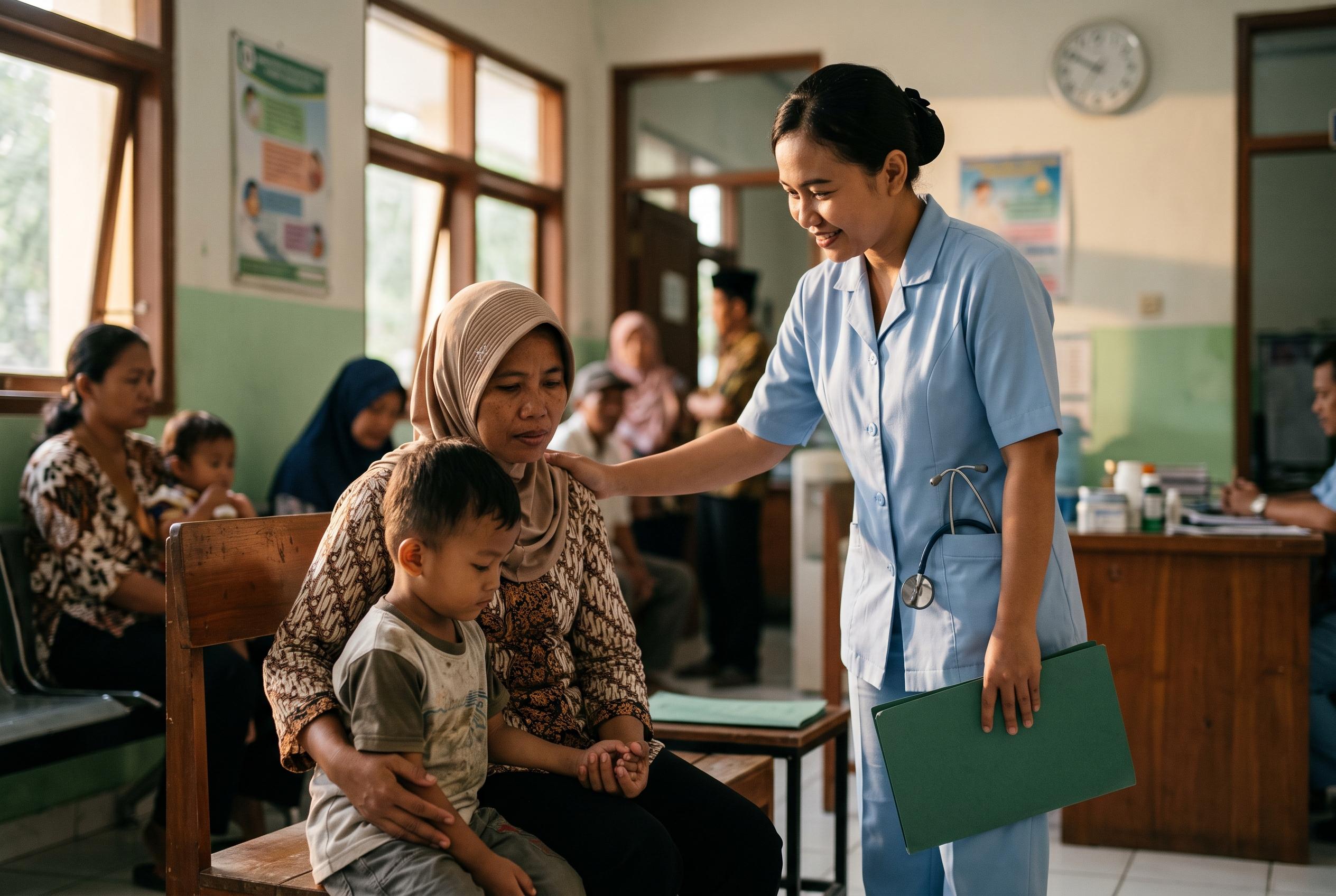

The Indonesian Health Ministry affirms the safety of its immunisation programme following a child’s death in Riau, with investigations ruling out a link to vaccines and emphasising ongoing safety measures and communication efforts.
Indonesia’s Health Ministry has said the national immunisation programme will continue as planned after investigators found no evidence linking a serious medical incident in Kampar, Riau, to the vaccines a three-month-old girl received there.
According to the ministry, the child was given DPT-Hb-Hib, pneumococcal, polio and rotavirus vaccines on 20 August 2026 at Posyandu Melati in Bangkinang Kota. Within hours, she developed fever, breathing difficulties and repeated seizures, and was later treated at RSUD Bangkinang before dying on 22 August 2026. But the National Commission for Post-Immunisation Adverse Events, known as Komnas KIPI, said a medical review classed the case as “inconsistent”, meaning the illness was more likely tied to another condition rather than to the vaccines themselves.
Hindra Irawan Satari, who chairs Komnas KIPI, said the examination found lung infection and bacterial infection, with a diagnosis of pneumonia and sepsis. On that basis, he said there was no strong clinical evidence that the vaccination caused the child’s condition. The ministry has also pointed to its wider safety monitoring system, which tracks adverse events after immunisation and is designed to investigate reports through medical review rather than assumption.
Indri Yogyaswari, the ministry’s director of immunisation, said vaccines used in the national programme are evaluated by the Food and Drug Monitoring Agency and remain under continuous surveillance. She said families understandably worry when a child falls ill after a jab, but stressed that illness appearing after immunisation is not always caused by the vaccine. The ministry is also running a catch-up immunisation month from 1 to 31 October 2026 to help children who missed scheduled doses.
Regional health officials in Riau, together with local KIPI teams in Kampar, have carried out follow-up checks on the cold chain, service procedures and clinic practices. That includes supervision of health workers, stricter use of standard operating procedures from screening through post-vaccination observation, and more open public communication based on evidence. The ministry and local governments are urging parents to keep children’s vaccinations up to date, while promising that every reported adverse event will continue to be examined transparently through the scientific review process.
Disclaimer: This content is for informational purposes only and is not intended to be a substitute for professional medical judgment, advice, diagnosis, or treatment.



