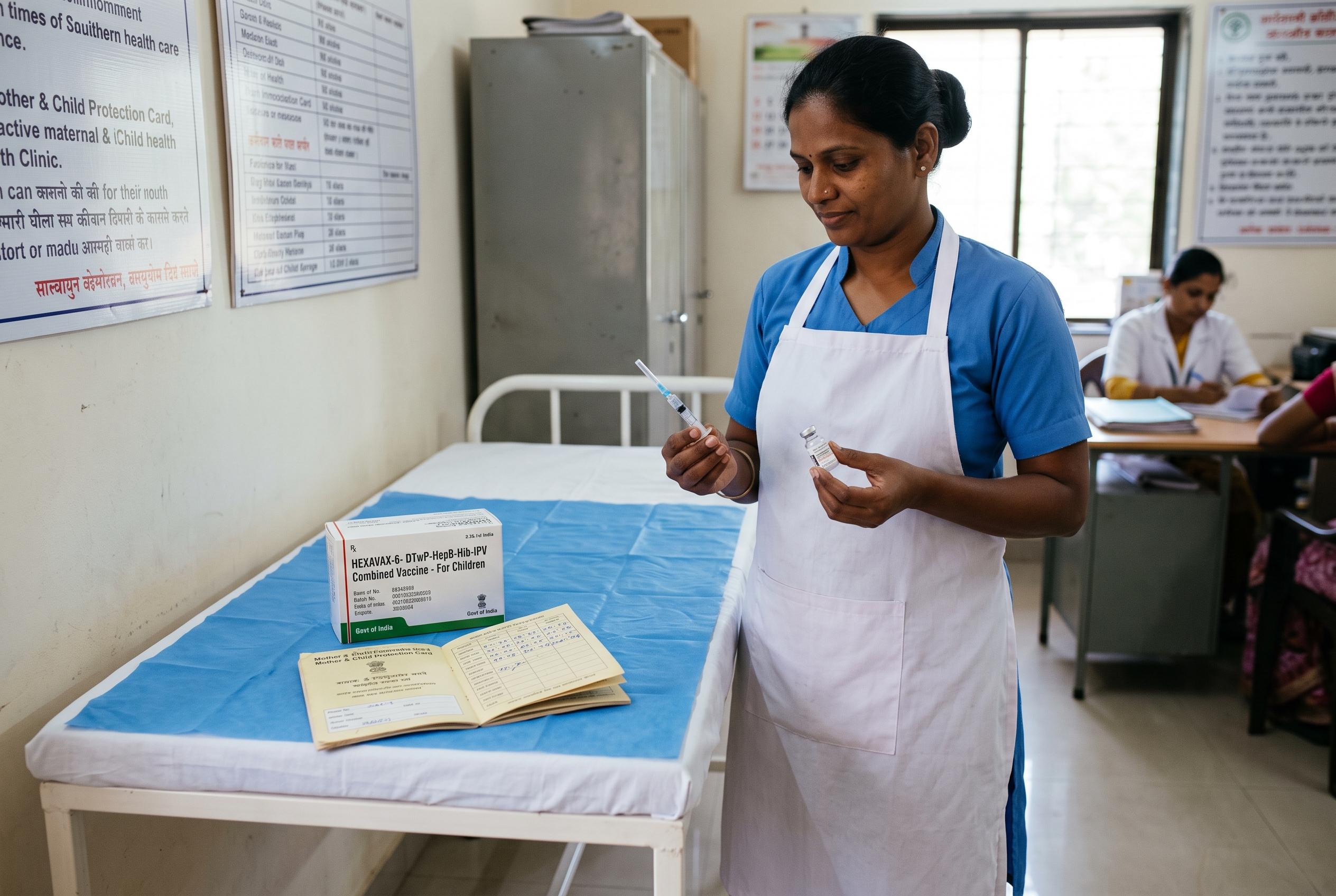

Integrating the six-in-one hexavalent vaccine into India’s Universal Immunisation Programme could streamline procedures, accelerate coverage, and ease the burden on health services, according to a Union Health Ministry-backed study.
Introducing the hexavalent vaccine into India’s Universal Immunisation Programme could make childhood immunisation simpler, faster and easier to deliver, according to a study cited by the Union Health Ministry. The six-in-one shot combines protection against diphtheria, tetanus, pertussis, hepatitis B, polio and Haemophilus influenzae type b, reducing the number of separate injections an infant needs during routine vaccination visits.
Public health experts say the main attraction is practicality as much as protection. By replacing several injections with one, the vaccine can cut the time parents spend at clinics, reduce the number of syringes and other supplies used, and ease pressure on health workers who administer doses, keep records and manage cold-chain storage. Gavi, the Vaccine Alliance, says such combination vaccines can also support broader immunisation goals by simplifying schedules and helping countries improve coverage.
The move would fit a wider trend in childhood immunisation towards combination vaccines that try to deliver more protection with fewer clinic visits. The Sabin Vaccine Institute says hexavalent formulations extend the protection of pentavalent vaccines by adding polio, making them an increasingly common option in national programmes. For India, where the Universal Immunisation Programme already provides a free schedule of vaccines through government facilities, the shift could strengthen efficiency without changing the core aim: wider and more reliable protection for children.
Disclaimer: This content is for informational purposes only and is not intended to be a substitute for professional medical judgment, advice, diagnosis, or treatment.