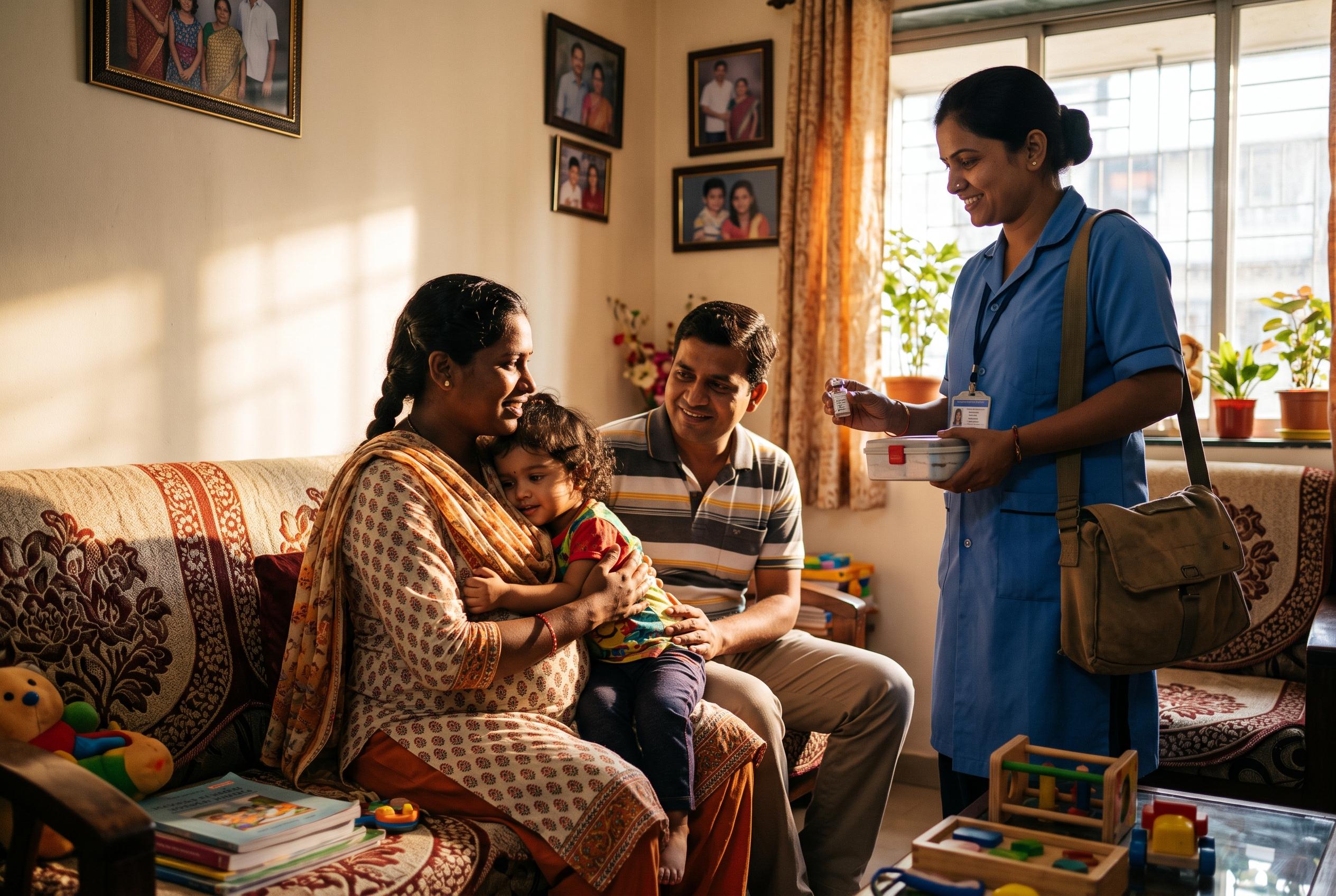

Despite improvements in antenatal care and institutional deliveries, experts highlight a critical gap: the need to prioritise vaccination during pregnancy to protect newborns in India, as the uptake of maternal vaccines like Tdap remains suboptimal.
India has made clear gains in maternal healthcare, but experts say one important piece is still being missed: vaccination during pregnancy. In a guest essay for Express Healthcare, the author pointed to National Family Health Survey-6 data showing that the share of women receiving four or more antenatal care visits rose from 58.5% in 2019-21 to 65.2% in 2023-24, while first-trimester registration increased from 70.0% to 76.2%. Coverage of at least one antenatal visit also climbed, and adherence to iron and folic acid supplementation improved, suggesting that more women are now entering the health system during pregnancy.
That wider reach, the essay argues, should be used to start more conversations about maternal vaccination. The key point is that babies are still highly vulnerable in the first weeks after birth, before routine infant immunisation begins at six weeks. During pregnancy, antibodies can pass from mother to child through the placenta, and after delivery they can continue to be passed through breast milk for a short period. In that way, vaccination in pregnancy can help bridge the gap before an infant’s own immune system is ready to respond fully.
The article says evidence supports the use of recommended inactivated and toxoid vaccines in pregnancy, while live vaccines are generally avoided because of a theoretical risk to the foetus. It highlights Tdap, the vaccine that helps guard against tetanus, diphtheria and whooping cough, as a practical example, saying gynaecologists commonly recommend it between the 27th and 36th week of pregnancy to help protect newborns against pertussis in their earliest weeks.
The wider NFHS-6 picture suggests that India’s maternal health system is reaching more women, but also facing new challenges. According to reporting by The New Indian Express and NDTV on the survey, institutional deliveries rose from 88.6% to 90.6%, even as caesarean births climbed from 21.5% to 27.2%, with the sharpest rise in urban areas and private hospitals. Against that backdrop, public health advocates say every antenatal visit should do more than track pregnancy; it should also be used to discuss preventive care, including vaccination, so that infant protection starts before birth rather than after it.
Disclaimer: This content is for informational purposes only and is not intended to be a substitute for professional medical judgment, advice, diagnosis, or treatment.