

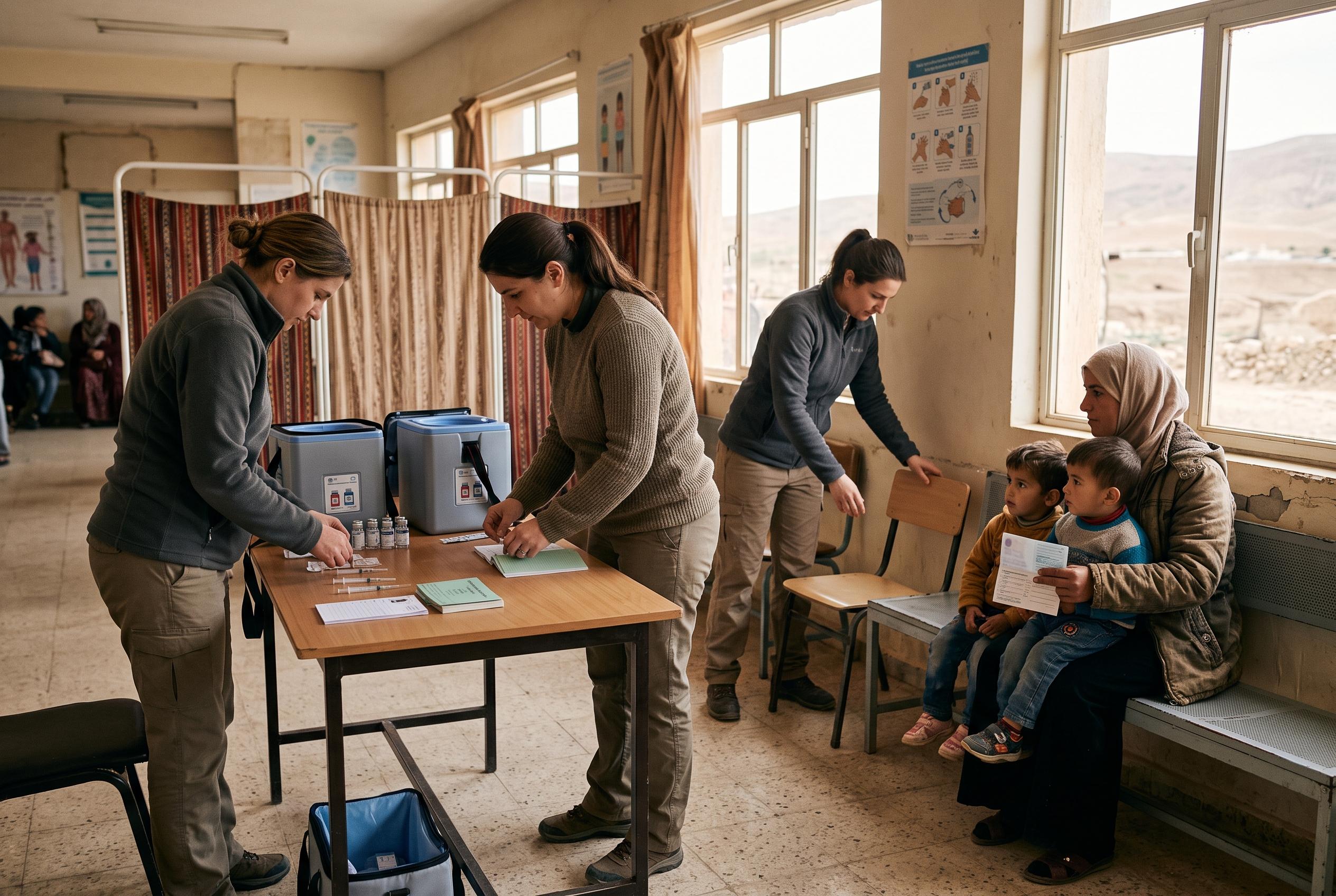

Brazil is tightening measles surveillance and vaccination efforts after imported cases near its borders coincided with a sharp rise in infections across the Americas.
Health authorities in Brazil have stepped up measles surveillance after a renewed rise in cases across the Americas raised concerns about the disease being brought back into circulation in the country. The concern has sharpened after imported cases were confirmed in the tri-border area linking Brazil, Colombia and Peru, prompting a faster epidemiological response in the Amazon region and new technical guidance from the Health Ministry to limit the risk of sustained spread.
The Pan American Health Organization warned in February that measles transmission was continuing across the region and urged countries to intensify surveillance, vaccination and outbreak response. By August, PAHO said the Americas had recorded the highest number of confirmed cases in 22 years, with 47,459 infections and 44 deaths reported by mid-July. In a further alert on 9 October, the agency said the risk of spread was “very high” ahead of major religious gatherings in South America, pointing to increased travel and gaps in vaccination coverage as key drivers of transmission.
Measles is among the most contagious viral diseases known and spreads through respiratory droplets. In communities without immunity, a single infected person can pass the virus to as many as 18 others, which is why public health officials place such emphasis on rapid detection, contact tracing and immediate vaccination of exposed contacts. The warning is especially relevant in border areas, where population movement is frequent and immunisation rates can differ sharply from one municipality or country to the next.
Daniel Prestes, an infectious-diseases specialist at Hospital Israelita Albert Einstein, told EM that the regional situation demands a swift and coordinated response. “The international scenario shows that virus circulation near our borders requires a rapid and joint response. The main barrier against measles is to maintain high vaccination coverage in a uniform way, as well as making health professionals more alert to the early detection of suspected cases,” he said.
Brazil’s guidance now focuses on tighter monitoring at entry points, training primary care teams and reinforcing the use of the triple viral vaccine, which protects against measles, mumps and rubella. Officials say quick diagnosis is essential because the early symptoms , high fever, cough, runny nose, conjunctivitis and the characteristic rash , can be mistaken for other viral infections. The vaccine remains the only reliable protection against measles and its serious complications, including pneumonia, ear infections, blindness and encephalitis, with the greatest risk falling on young children and people with weakened immune systems.
For families, the message from health authorities is straightforward: keeping vaccination records up to date is not just a personal precaution but part of wider disease control. As measles activity increases across the Americas, Brazilian officials are treating immunisation coverage as a core public-health defence rather than an optional reminder.
Disclaimer: This content is for informational purposes only and is not intended to be a substitute for professional medical judgment, advice, diagnosis, or treatment.



