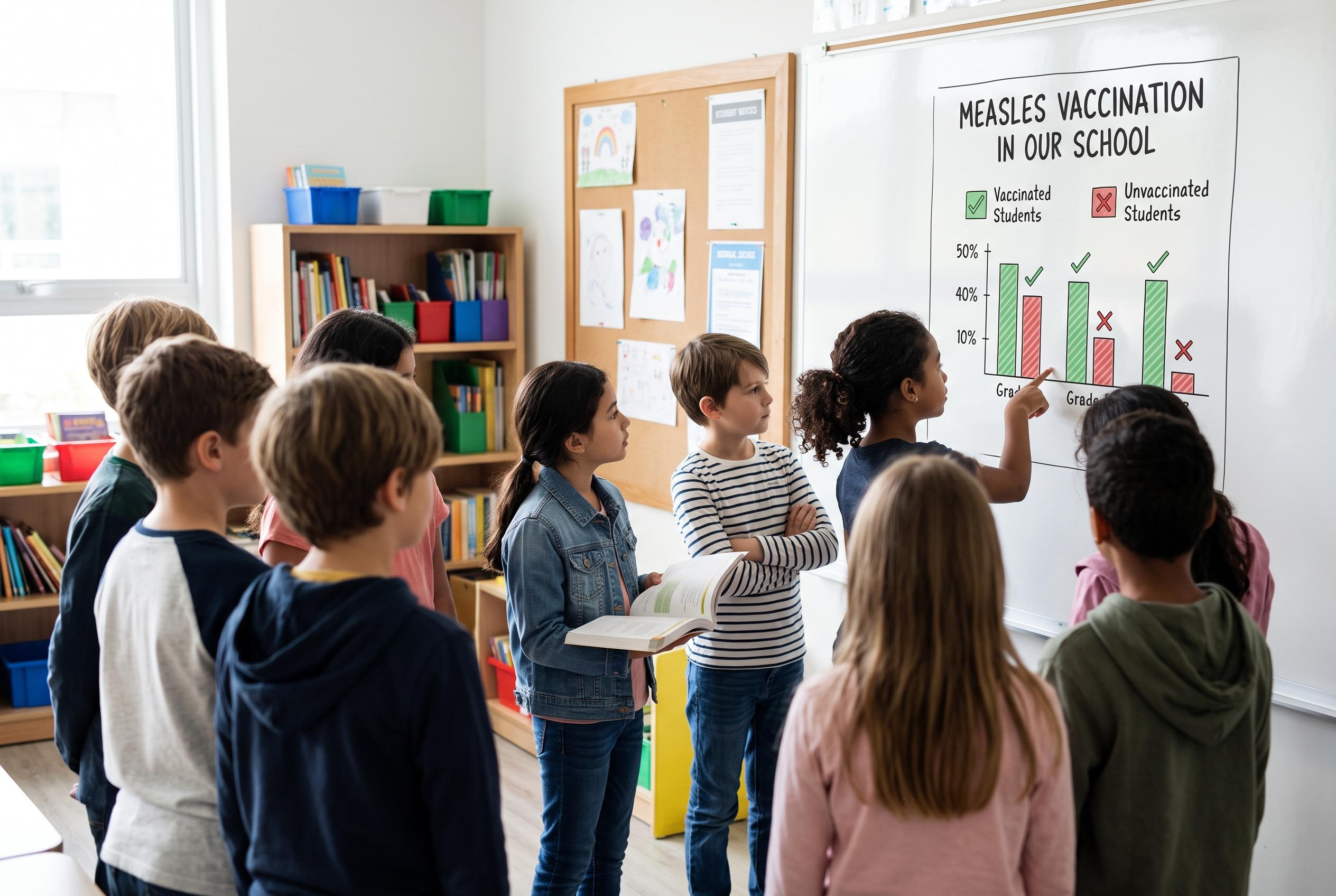

Research reveals that concentrated gaps in school-level vaccination coverage are fueling the resurgence of measles in the US, challenging assumptions based on county-wide immunity rates amid rising cases and preventable outbreaks.
Researchers have found that measles is increasingly finding room to spread in the United States not because county vaccination rates look low on paper, but because those broad averages conceal concentrated gaps in individual schools. The study, published in Nature Medicine on 18 August, suggests that local clusters of unvaccinated children can push transmission risk above the level that county-wide figures would imply.
The findings arrive as the US is already facing a sharp rise in cases. The Centers for Disease Control and Prevention said that as of 2 July 2026 there had been 2,318 confirmed measles cases across 41 states and the District of Columbia, already topping the total for 2025. The World Health Organization said a major outbreak in early 2025 helped mark the first measles deaths in the US in a decade.
Ana Bento, the study’s senior author, said high overall coverage used to be enough to stop isolated introductions from becoming sustained outbreaks. But in remarks reported alongside the paper, she said the country is now dealing with highly uneven vaccination patterns that can allow a single case to ignite a large local flare-up. The study’s lead author, Siyu Chen, said the team had to assemble a nationwide database of kindergarten vaccination records because no single national school-level dataset existed.
The research team analysed publicly available records from schools, school districts and counties, covering about 50,000 schools across 45 states plus the District of Columbia, and modelled how vaccination coverage affects transmission risk. They found that the share of students without full protection roughly doubled after the pandemic, rising from about 5% to nearly 10%. The authors said outbreaks seen in Texas, Arizona, New Mexico and South Carolina followed the same pattern: county figures looked reassuring, but school-level clusters created hidden pockets of danger.
Public health officials have long said measles remains one of the most contagious childhood infections and that vaccination is the best defence. The CDC says 12% of reported US cases in 2025 led to hospitalisation, and there were three confirmed deaths. The new study adds to that warning by suggesting that policymakers need finer-grained data to spot where the real vulnerability lies before the next introduction sets off another outbreak.
Disclaimer: This content is for informational purposes only and is not intended to be a substitute for professional medical judgment, advice, diagnosis, or treatment.