


Falling infections offer Guatemala a chance to consolidate progress, but poverty, difficult access and gaps in older age groups could allow measles transmission to continue without sustained surveillance and vaccination.
Guatemala’s measles decline is welcome, but health authorities still face a task that cannot be treated as finished. According to ALMA/FUNDEGUA, working with the Ministry of Public Health and Social Assistance, the country had reported about 34,500 cases and 53 deaths by 12 October, with most infections concentrated among people aged 15 to 39. Infants under one year old remained among the most vulnerable, a reminder that the response must still protect children while also closing immunity gaps in older age groups.
The recent fall in infections should be read as a sign of progress rather than proof that the outbreak has ended. In September, Guatemalan health officials said cases had been dropping for more than ten weeks, although they warned that transmission was still active. The key question now is where the virus continues to spread and whether surveillance teams can keep finding, testing and investigating suspected cases quickly enough to stop new chains of infection.
The way the figures are presented also matters. Some of the increase in the national total reflects cases confirmed through epidemiological links and clinical criteria, not necessarily a sudden rise in fresh infections. That distinction is important because public confidence can weaken if the public hears only that the tally has climbed, without understanding that some of the change comes from reclassification rather than new contagion.
The outbreak is unfolding in a country where many households already face significant barriers to health care. Guatemala’s National Survey of Living Conditions for 2023 found that 56% of the population lived in poverty and 16.2% in extreme poverty. Those figures do not explain the measles outbreak on their own, but they describe a setting in which transport costs, long distances and the loss of a day’s wages can all make it harder to reach a clinic for preventive care.
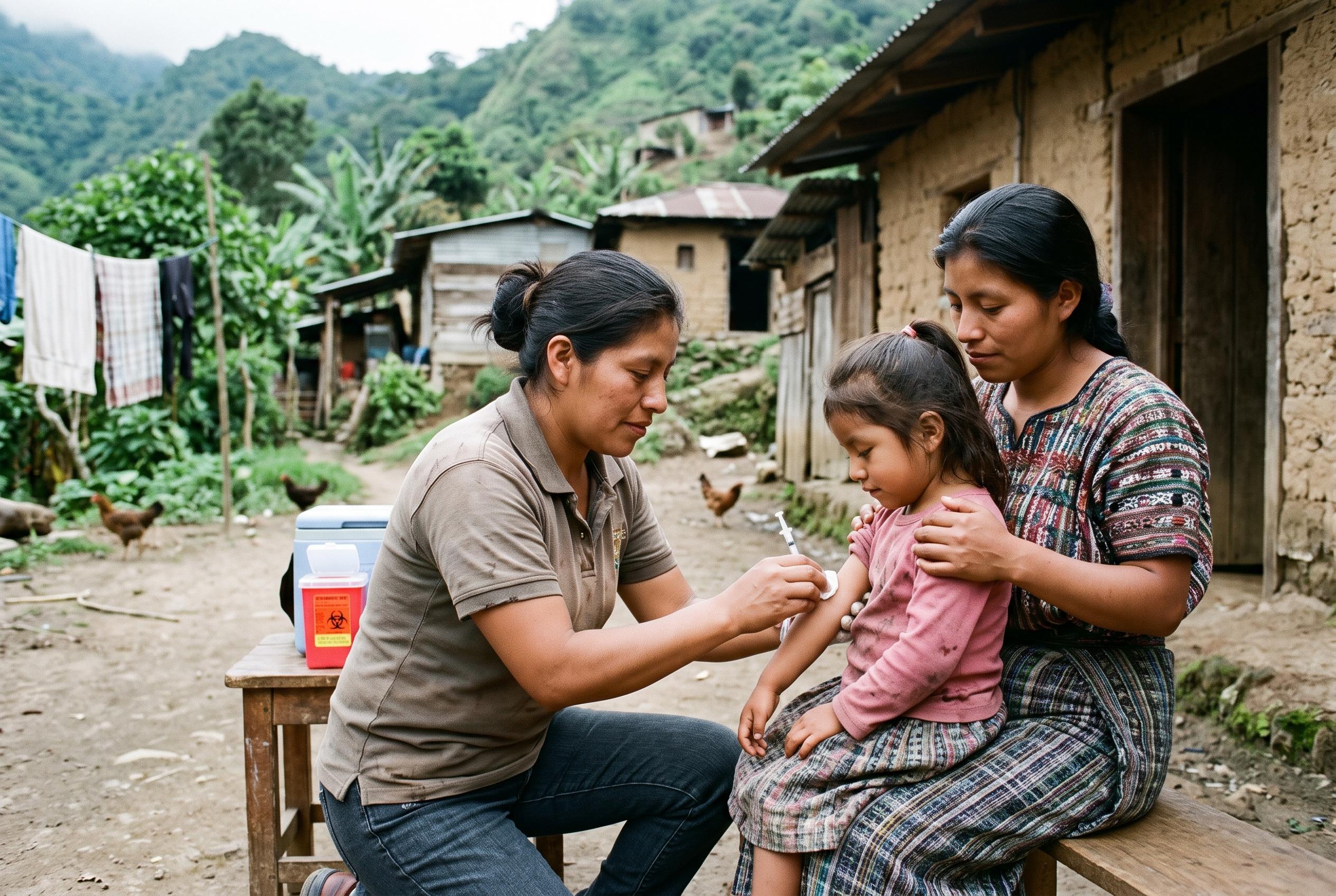
UNICEF has described those obstacles in practical terms in Alta Verapaz, where difficult roads, rain, distance, supply problems and shortages of staff have complicated immunisation work. The agency also says home visits and communication in people’s first language can help bring families into the system. That experience does not represent every part of Guatemala, but it underlines a basic point: a free vaccine is not always an easily reachable one.
For that reason, the problem should not be framed as a simple matter of family reluctance. Some people may have doubts about vaccination, but others are blocked by geography, cost or weak local services. An effective response has to address both sets of barriers, with accessible vaccination posts, suitable opening hours, community outreach and messages that are clear and understandable in local contexts.
There are also signs that institutions have been working to strengthen the response. The Pan American Health Organisation has documented Guatemala’s sectoral operating protocol for measles and the use of immediate response teams, while the Ministry of Public Health and Social Assistance has described micro-planning efforts to identify vulnerable populations and map transport, staffing and supply needs. The challenge is not only to design those plans but to carry them out consistently on the ground.
That execution depends on practical resources. In July, government reporting said two million additional doses of measles and rubella vaccine had entered the country, an important step but not one that covers the full cost of delivery. Vaccine stock alone does not pay for the cold chain, fuel, laboratories, staff time, transport or community communication. Likewise, the ministry’s 2027 budget proposal, presented in October at Q18.615 billion, is only a request awaiting approval and cannot be treated as fully available funding.
The World Health Organisation recommends maintaining a uniform coverage rate of at least 95% with both measles doses. That standard matters because national averages can hide gaps in particular communities. Guatemala’s experience suggests the next phase should focus on recovering missed vaccinations, keeping community services open and making the financing of the response clearer and easier to verify. A fall in cases offers a chance to consolidate gains, but only if attention does not fade before protection becomes durable.
Disclaimer: This content is for informational purposes only and is not intended to be a substitute for professional medical judgment, advice, diagnosis, or treatment.



