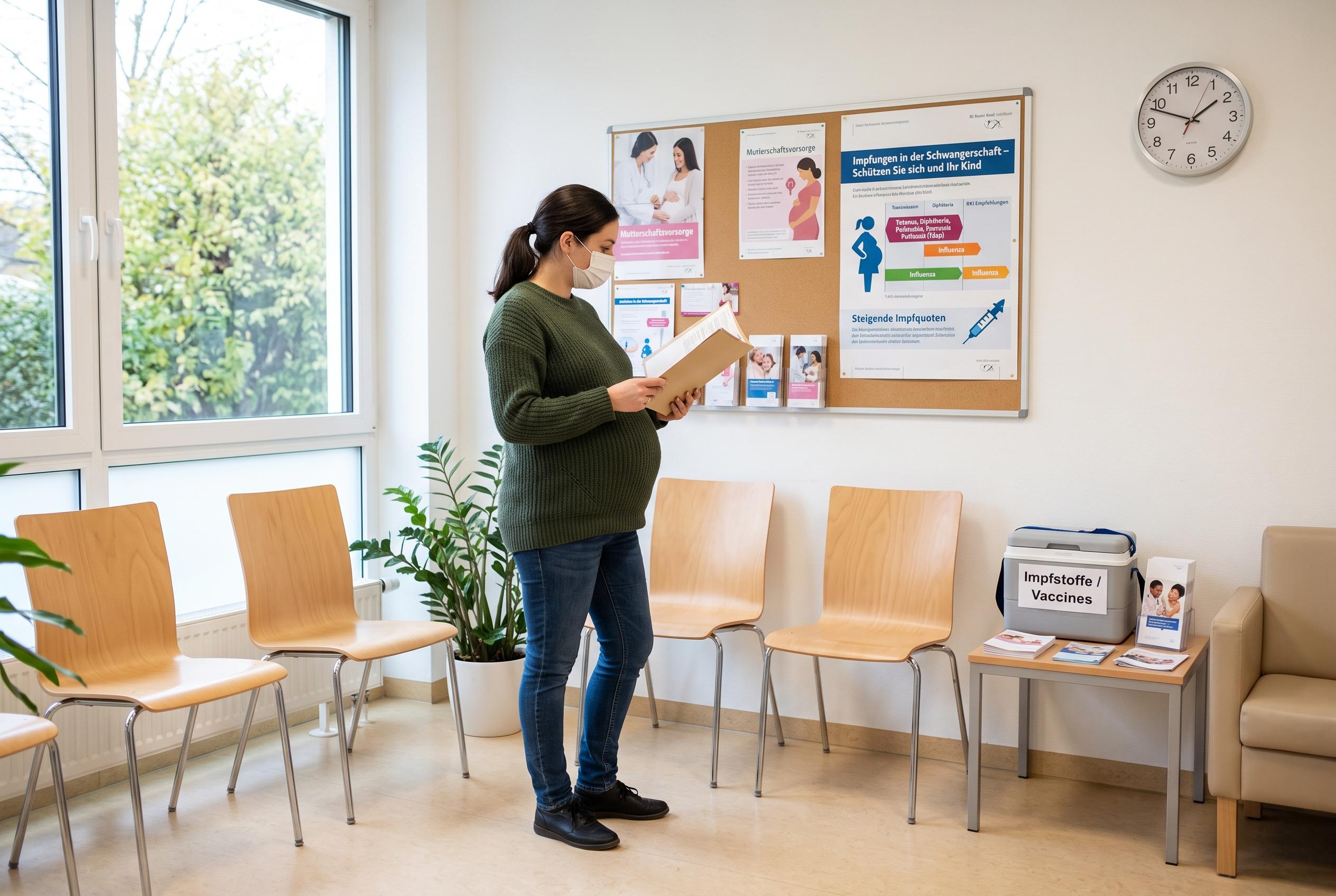

New analysis of nearly two decades of German health insurance data reveals increased vaccination during pregnancy, yet uptake remains modest and below public health ambitions, highlighting the need for improved strategies beyond policy recommendations.
A new analysis of nearly two decades of German health insurance records suggests that vaccination during pregnancy has become much more common, but still falls well short of what public health specialists would like to see. Researchers who examined more than 2.8 million pregnancies between 2004 and 2022 found that recorded vaccine exposure rose sharply after Germany introduced and then expanded recommendations for immunisation in pregnancy, yet fewer than half of pregnancies in the most recent period had any vaccination at all.
The strongest gains were seen with influenza and pertussis vaccines, both of which are specifically recommended in pregnancy. Influenza vaccination was first advised by German public health authorities in 2010, while pertussis vaccination was added in 2020, and the timing of doses shifted accordingly. Among vaccinated pregnancies, first-trimester immunisation became far less common over time, while third-trimester vaccination rose steeply, reflecting the later-stage pertussis recommendation. Even so, uptake remained limited: influenza vaccination reached about 19% in 2020-2022 and pertussis vaccination about 37%, still far below the 75% coverage target set by the European Union.
The study also found that roughly 15% of pregnancies overall, and 17.4% of those ending in live births, had at least one vaccine exposure, with higher rates among women in their 30s and among those with more education. Regional differences were present but modest, and the authors cautioned that the data do not support sweeping conclusions because the underlying insurance database does not cover the same share of pregnancies in every German state. The researchers also identified a small number of exposures to live vaccines that are generally avoided in pregnancy, including measles, mumps and rubella, although they noted that some of these records may reflect vaccinations given before conception was recognised.
The findings fit with earlier German research showing that recommendations alone are often not enough to lift uptake. A review of attitudes and barriers to influenza and pertussis vaccination in pregnancy found that healthcare provider advice, patient education and active reminder systems can all influence whether pregnant women are vaccinated. The new analysis points in the same direction, suggesting that Germany’s progress has been real but incomplete, and that improving maternal vaccination may require more than simply putting a vaccine on the schedule.
Disclaimer: This content is for informational purposes only and is not intended to be a substitute for professional medical judgment, advice, diagnosis, or treatment.