

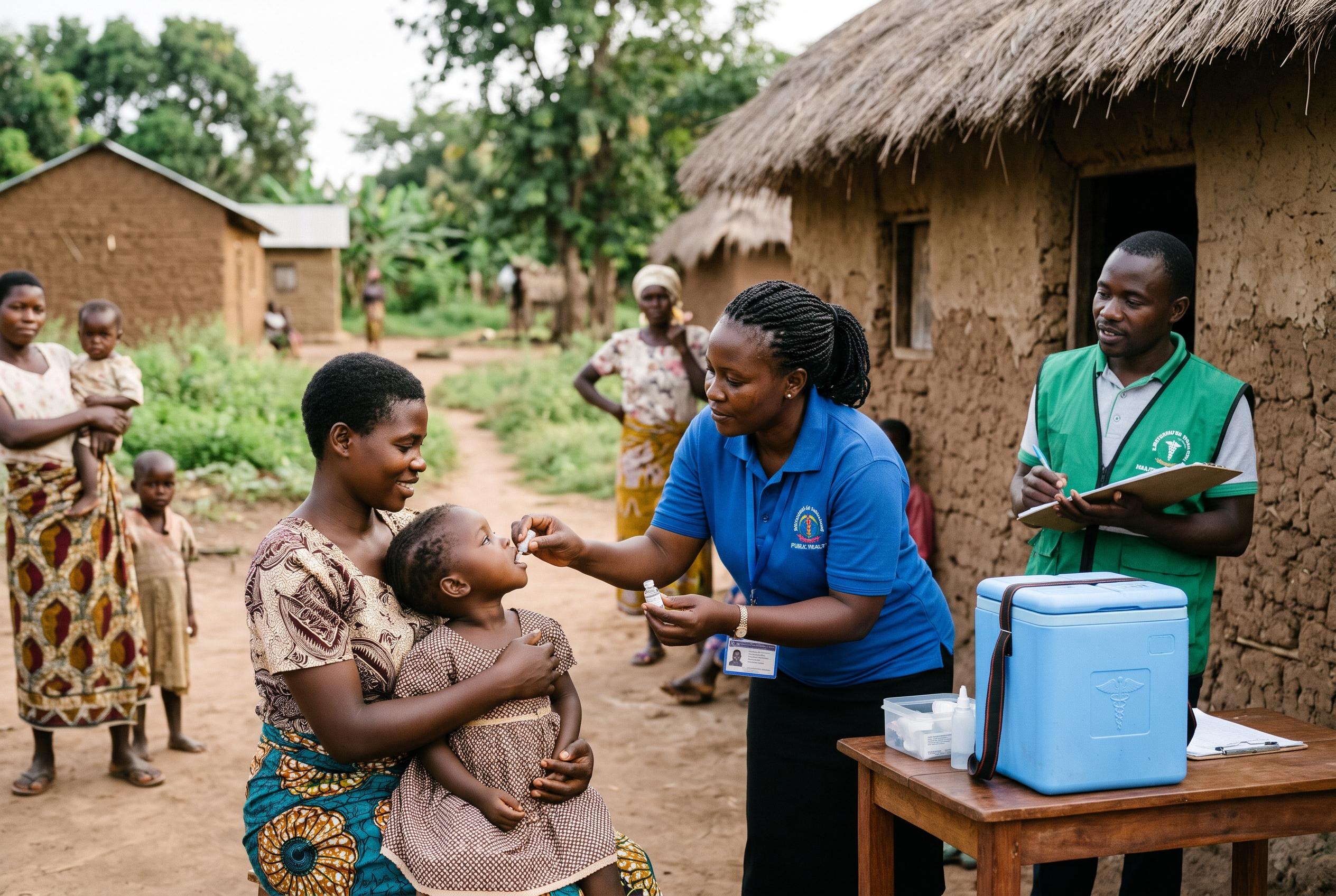

The WHO says uneven immunisation and a shortfall of almost 40% in eradication funding are leaving vulnerable communities exposed, despite vaccination campaigns reaching 168 million children.
The World Health Organization has warned that funding shortages and uneven vaccination coverage are putting Africa’s gains against polio at risk, even as health workers continue to reach millions of children across the continent. In a message marking World Polio Day, the agency’s Africa chief, Mohamed Janabi, said the region could not afford complacency after years of progress that have brought it close to eliminating the disease.
According to the WHO, Africa was certified free of indigenous wild poliovirus in 2020, a milestone that reflected years of political commitment, mass vaccination and cross-border cooperation. Janabi said several recent outbreaks had also been brought under control, including poliovirus type 2 events in Burundi, Ghana, Guinea-Bissau, the Republic of the Congo and Uganda. But he said the detection of poliovirus type 1 in Madagascar, after an earlier outbreak had been closed in 2025, showed how quickly the virus could re-emerge where immunisation coverage is patchy.
The broader financial picture remains troubling. In July 2025, the WHO’s Polio IHR Emergency Committee said the Global Polio Eradication Initiative was facing a funding shortfall of almost 40 per cent, warning that every part of the programme, from vaccination to surveillance, was under pressure. WHO’s results report for 2024-25 later showed that the polio eradication segment received US$694.3 million as of December 2025, while the organisation’s wider programmes were affected by funding mismatches and cost-cutting measures. The Global Polio Eradication Initiative says its extended budget for the 2022-2029 strategic period stands at US$6.9 billion.
Against that backdrop, Janabi said more than 168 million children received at least one dose of polio vaccine between January and September 2026 through 55 campaigns in 22 African countries. He also pointed to joint vaccination drives in Angola, the Democratic Republic of the Congo and Namibia in March, which reached more than 10 million children. Laboratory evidence of genetically linked viruses helped guide that response, underlining the importance of surveillance as well as immunisation.
Still, the WHO regional director said limited resources were forcing health authorities to focus on the highest-risk areas, leaving other vulnerable communities exposed. He singled out the Lake Chad Basin and the Democratic Republic of the Congo, where extra vaccination rounds needed to tackle a type 2 outbreak remain unfunded. The WHO has long argued that polio work must be backed by sustainable domestic financing as well as support from donors, especially because the infrastructure built for eradication can also help countries respond to other outbreaks, including Ebola.
Janabi said one dose of vaccine was not enough to ensure protection and urged governments to strengthen routine immunisation so children receive every recommended shot. He also called for stronger community engagement, saying health workers must address parents’ concerns and make vaccination easier to access for families affected by conflict, displacement and geography. The message was clear: the tools to end polio exist, but without reliable funding and sustained political will, the finish line could still move out of reach.
Disclaimer: This content is for informational purposes only and is not intended to be a substitute for professional medical judgment, advice, diagnosis, or treatment.



