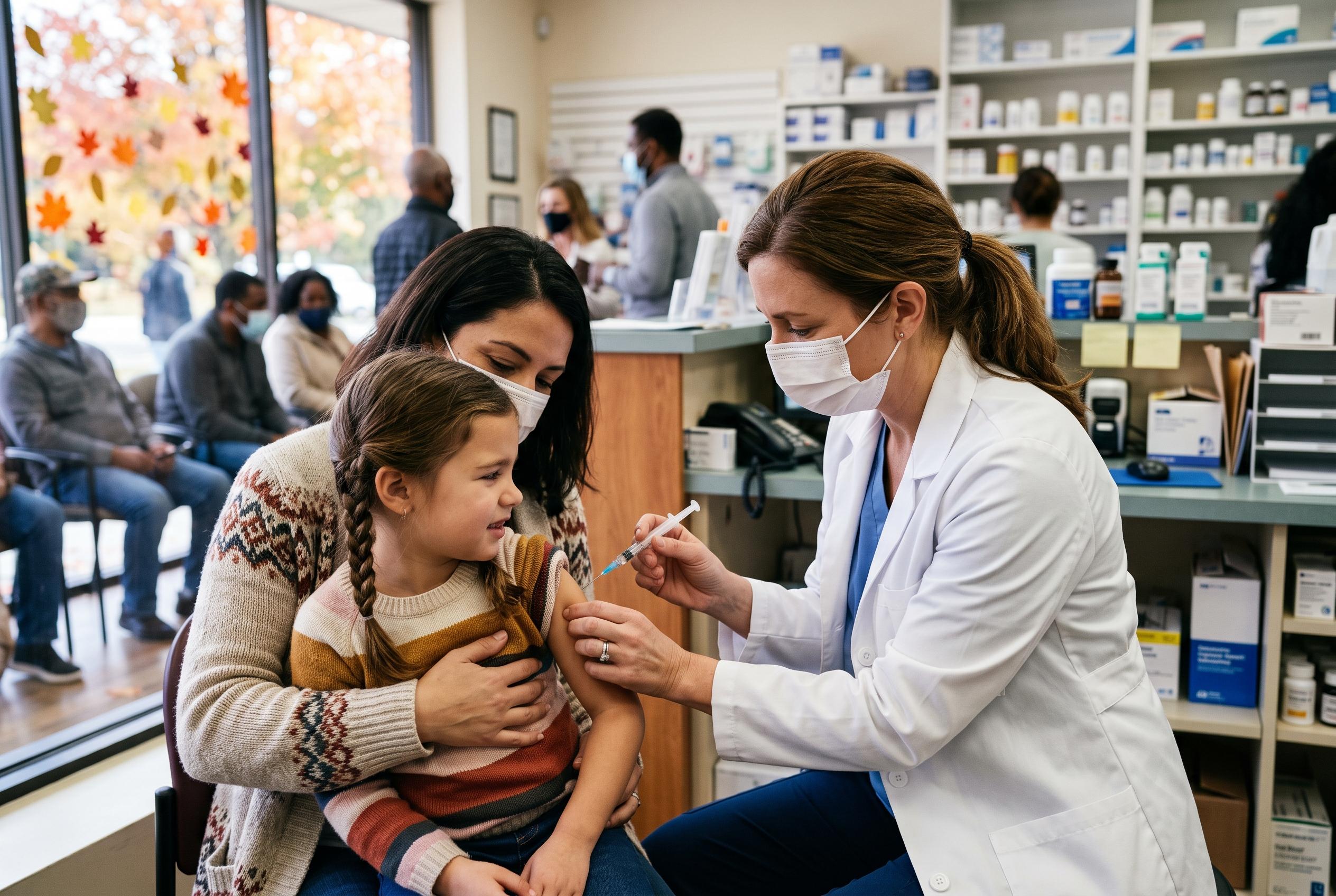

England’s autumn flu vaccination programme is being widened to include vulnerable children aged two to 17 and homeless adults from October, as NHS aims to boost coverage through community pharmacies and targeted policies.
England’s autumn flu campaign is being widened this year, with community pharmacists due to vaccinate a broader group of clinically vulnerable children from 1 October and people sleeping rough or staying in homeless hostels or night shelters becoming eligible for a free NHS jab for the first time.
The practical timetable is more staggered than the headline change suggests. The NHS booking service is already open, but pharmacy appointments begin on 1 September only for pregnant people, with all other eligible adults and children able to book from 1 October. Pharmacies are also expected to offer walk-ins from 1 October. For children, the main school and GP programme starts from 1 September 2026, or as soon as vaccine supplies are available, and pharmacies are then added as an extra route later in the season.
That pharmacy expansion goes further than last year’s limited pilot for two- and three-year-olds. Under the amended flu programme, pharmacies will be able to vaccinate children aged from two years up to, but not including, 18 who are in clinical risk groups, alongside the existing school and general practice offer. The government letter setting out the change also draws a clear line around who cannot use that route: children in risk groups aged from six months to under two still need to be seen elsewhere, not in a community pharmacy.
The detail matters because the service is being built as a supplement rather than a replacement. NHS England’s planning documents say school-age children who miss their school session will be able to use participating pharmacies from 1 December, creating a catch-up route through to winter. The same papers show how tightly managed the programme will be behind the scenes: most vaccinations are meant to be completed by 30 November, although the campaign formally continues until 31 March 2027, and providers have been told to keep public walk-in information up to date so families can see which sites are taking which age groups.
There are also clinical and contractual wrinkles that were absent from the initial coverage. The Department of Health and Social Care’s amendment says children vaccinated in a pharmacy must not be given the egg-cultured inactivated flu vaccine. Instead, most eligible children are expected to receive the live attenuated nasal spray, with pharmacy stock supplied centrally by NHS England through the Federated Data Platform. Community Pharmacy England said the broadened service builds on the 2025/26 season, when more than 4,000 pharmacies vaccinated two- and three-year-olds, and said contractors will be paid £10.06 for each jab, up from £9.58 last year.
Pharmacy leaders are presenting the move as both a convenience measure for parents and a test of whether the sector can take on a bigger vaccination role. Alastair Buxton, Community Pharmacy England’s director of NHS services, said: “We are pleased to be able to agree this expansion of the Advanced service.” He added that “it remains a trial” but argued it would show how pharmacy teams can lift uptake by offering families a more accessible option, after lobbying by pharmacy bodies for a broader remit.
The other major change is aimed at one of the groups least likely to be reached by routine healthcare. People experiencing homelessness, defined narrowly as rough sleepers and those using homeless hostels or night shelters, will enter the national flu programme from 1 October if they are aged 16 or over. That follows advice given by the Joint Committee on Vaccination and Immunisation in June 2024. NHS guidance says they can get a free pharmacy vaccination without booking an appointment and without being registered with a GP, a practical concession designed to remove barriers rather than create another administrative hurdle.
Homeless Link, which welcomed the decision when the policy was announced on 11 June, said people experiencing homelessness often have worse physical health because they struggle to access healthcare, safe shelter, hygiene facilities and nutritious food. Framed that way, the new flu eligibility is not simply an administrative tweak to this winter’s vaccination plan; it is also a small inclusion-health intervention for a group whose respiratory illness risk is routinely higher than that of the general population.
UK Health Security Agency has meanwhile tried to calm some of the alarm around last season’s influenza jargon. In guidance published at the end of August and updated in September, it said “Super-K strain” is not a scientific term and that there is no evidence the H3N2 subclade that dominated in 2025/26 caused unusually severe illness. The agency’s broader message is that the vaccine changes every year because flu viruses do too. Alongside the newly added groups, this season’s free offer still covers pregnant women, children aged two and three, school pupils up to Year 11, over-65s, adults with certain long-term conditions, carers, close contacts of people who are immunocompromised and some frontline social care workers.
Disclaimer: This content is for informational purposes only and is not intended to be a substitute for professional medical judgment, advice, diagnosis, or treatment.