

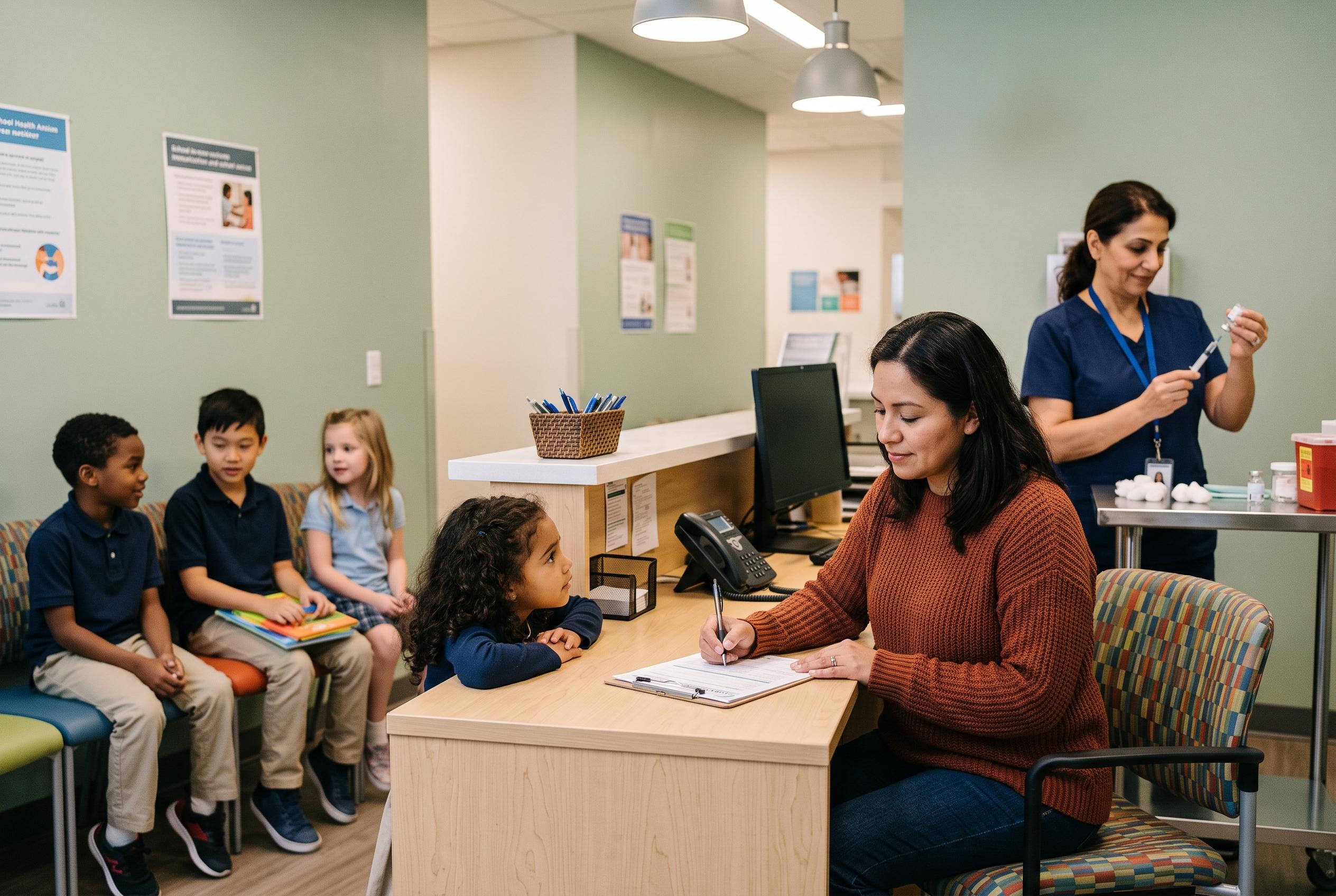

The Department of Health says pupils may take part in the 2026 school-based immunisation campaign only with signed parental or guardian consent, as officials prepare to vaccinate millions of learners.
The Department of Health has pushed back against online claims that students are being forced to receive vaccines under the 2026 School-Based Immunisation Campaign, saying participation is voluntary and depends on a signed consent form from a parent or guardian. In a social media post, the agency warned the public not to believe misinformation circulating online and said vaccination is not mandatory.
The clarification comes as the nationwide campaign moves ahead from October to December 2026, with school health teams administering routine immunisations to pupils in selected year groups. According to the Department of Health, Grade 1 and Grade 7 students are to receive protection against measles-rubella and tetanus-diphtheria, while eligible girls in Grade 4 and Grade 5 are set to receive the human papillomavirus vaccine, which helps prevent cervical cancer.
Health and education officials have been stepping up preparations for the rollout. The Department of Health-Metro Manila Centre for Health Development, working with the Department of Education and local government units, has launched “Bakuna Eskwela 2026” with targets of 95% coverage for Grade 1 and Grade 7 pupils and 90% for eligible girls in Grades 4 and 5. A separate planning workshop led by the Department of Education’s Bureau of Learner Support Services also signalled the programme’s scale, with officials preparing for millions of learners nationwide.
The Department of Health has urged parents and guardians to allow their children to take part, stressing that the diseases the programme aims to prevent can cause severe illness or death. Measles, rubella, tetanus, diphtheria and cervical cancer can all lead to hospitalisation, the agency said, adding that vaccination remains one of the most effective ways to reduce that risk.
Disclaimer: This content is for informational purposes only and is not intended to be a substitute for professional medical judgment, advice, diagnosis, or treatment.



